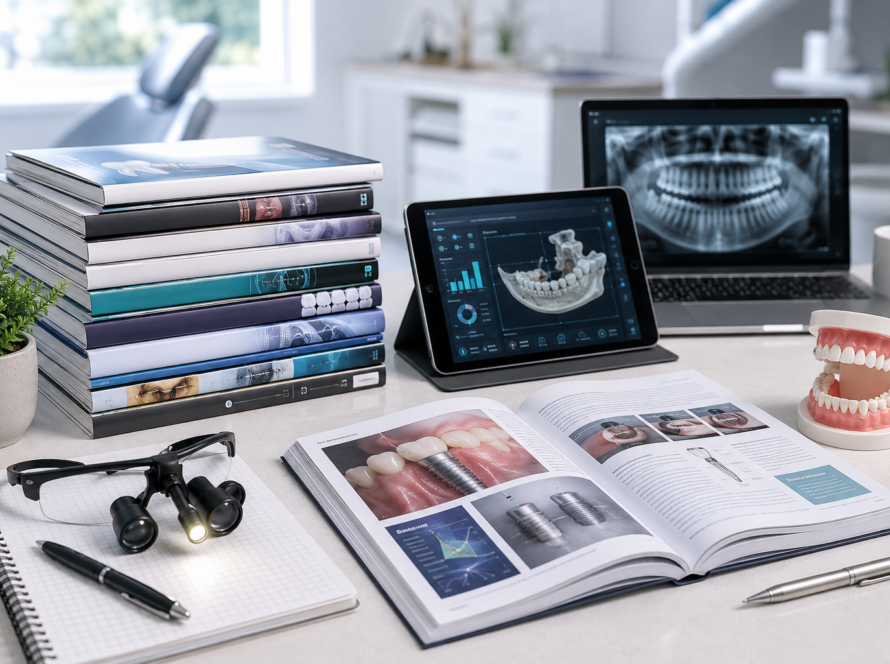

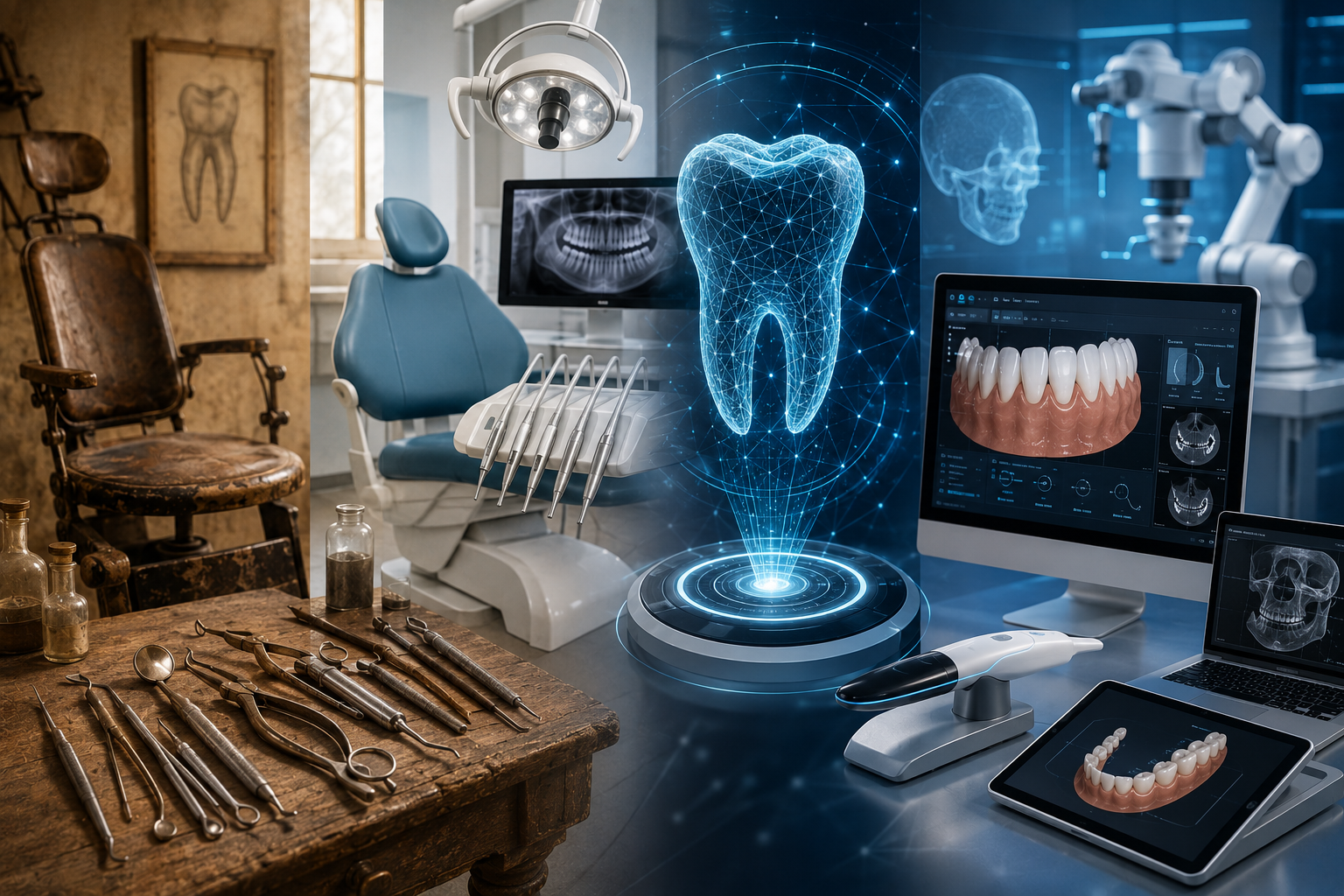
Dentistry has undergone one of the most remarkable transformations in healthcare history. What began centuries ago as a painful and primitive form of tooth extraction has evolved into a sophisticated digital profession powered by Artificial Intelligence, robotics, 3D imaging, cloud systems, and precision-driven technology.
The journey of dentistry reflects not only advances in medicine, but also changes in human expectations, technology, communication, and quality of life. The role of the dentist has transformed dramatically across generations. In the past, dentistry focused primarily on pain relief and tooth removal. Today, it has become a highly advanced healthcare field centered around prevention, esthetics, digital workflows, patient experience, and long-term oral wellness.
And yet, the most dramatic transformation may still be ahead.
The future of dentistry is moving toward a world shaped by AI-assisted diagnostics, robotic workflows, regenerative medicine, personalized treatment planning, and fully connected digital ecosystems. Understanding where dentistry came from helps reveal just how extraordinary its future may become.
Dentistry Before: The Era of Pain, Extraction, and Survival
Centuries ago, dentistry was far from the sophisticated profession we recognize today. In ancient civilizations, dental treatment was often extremely painful, limited, and dangerous. Tooth decay and infections frequently resulted in severe suffering because modern anesthesia, antibiotics, sterilization, and scientific understanding did not exist.
In many cultures, dental procedures were performed by barbers, blacksmiths, or general healers rather than trained dental specialists. Tooth extraction was the most common treatment because preserving natural teeth was often impossible. Instruments were crude, sterilization was minimal, and patients endured procedures with little or no pain control.
For much of history, dentistry focused on survival rather than restoration.
Even during the early 20th century, dental care remained heavily procedure-driven. Patients often visited the dentist only when experiencing severe pain or infection. Preventive care was limited, public awareness was low, and many people feared dental treatment because of painful experiences.
Traditional dentistry relied heavily on:
- Manual impressions
- Handwritten records
- Film radiographs
- Mechanical equipment
- Limited restorative materials
Communication between dentists and laboratories was slower, treatment planning was less precise, and many procedures required multiple appointments spread over long periods.
Dentistry during this era depended largely on the individual hand skills and experience of the practitioner. Technology played only a limited role compared with modern standards.
The Rise of Modern Dentistry
The late 20th century marked a major turning point in dental history. Advances in medicine, materials science, imaging systems, and preventive care dramatically changed the profession.
Dentistry slowly evolved from:
Pain management → Oral healthcare preservation.
The introduction of local anesthesia transformed patient comfort. Fluoride treatments and oral hygiene awareness helped reduce severe decay. Restorative materials improved significantly, allowing dentists to preserve teeth rather than remove them whenever problems appeared.
The development of dental implants revolutionized tooth replacement. Cosmetic dentistry became increasingly popular as patients began valuing not only function, but also esthetics and confidence.
Digital radiography improved diagnostic accuracy while reducing radiation exposure. Infection control standards became more advanced, making dental treatment significantly safer for both patients and providers.
As technology improved, patients also began changing their expectations.
People no longer wanted only treatment for pain.
They wanted:
- Better smiles
- Faster treatment
- Comfortable experiences
- Long-lasting esthetic results
- Personalized care
Dentistry gradually became both a healthcare profession and an experience-driven service industry.
Dentistry Now: The Digital Revolution
Modern dentistry in 2026 is almost unrecognizable compared with previous generations.
Today’s dental clinics increasingly operate as highly connected digital ecosystems powered by:
- Artificial Intelligence
- Intraoral scanners
- CBCT imaging
- 3D printing
- Cloud software
- Facial scanning
- CAD/CAM workflows
- AI diagnostics
Many practices now complete workflows digitally from start to finish. Traditional impression materials are being replaced by intraoral scanners such as 3Shape TRIOS and Medit i900. These systems provide faster, more comfortable, and highly accurate digital impressions.
CBCT imaging systems like Carestream Dental and Vatech allow dentists to visualize anatomy in three dimensions, dramatically improving implant planning, orthodontics, and surgical precision.
AI platforms such as Pearl AI and Overjet AI assist with radiographic interpretation, pathology detection, and workflow efficiency.
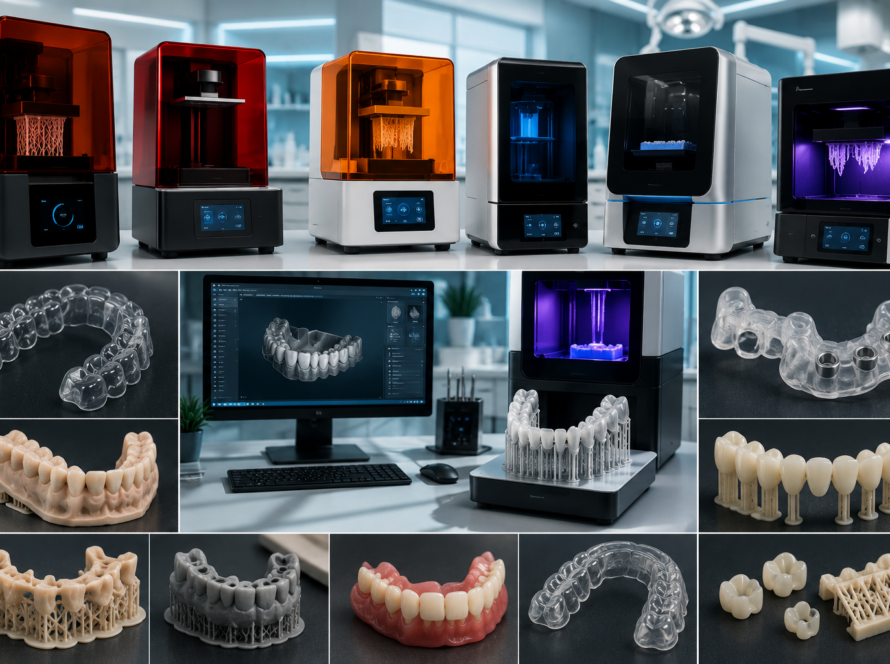
3D printers now allow clinics to produce:
- Surgical guides
- Models
- Aligners
- Temporary restorations
- Dentures
inside the practice itself.
Cloud-based practice management systems enable dentists to manage workflows, imaging, scheduling, analytics, and patient communication from virtually anywhere.
Modern dentistry has become deeply integrated with technology.
But the transformation is not only technical.
Patient expectations have also evolved dramatically.
Today’s patients expect:
- Faster appointments
- Digital experiences
- Visual communication
- Minimally invasive treatment
- Transparent pricing
- Cosmetic excellence
- Comfortable environments
Dentistry is no longer judged only by clinical skill alone.
Patient experience has become equally important.
The Rise of AI in Dentistry
Artificial Intelligence is becoming one of the most disruptive forces in modern dentistry.
AI systems are already assisting with:
- Caries detection
- Bone level analysis
- Periodontal measurements
- Clinical documentation
- Voice charting
- Insurance workflows
- Predictive analytics
Platforms like Diagnocat now analyze CBCT scans using AI-assisted technology, while systems like Bola AI automate perio charting and documentation workflows.
AI is changing dentistry by reducing:
- Repetitive administrative tasks
- Diagnostic inconsistencies
- Workflow inefficiencies
However, AI is not replacing the dentist.
Instead, it is changing the role of the dentist into something more strategic, technology-driven, and patient-centered.
The Future of Dentistry: Intelligent, Predictive, and Personalized
The future of dentistry may be even more transformative than anything seen before.
Over the next 10 to 20 years, dentistry is expected to move toward:
- Predictive healthcare
- AI-assisted treatment planning
- Regenerative dentistry
- Robotic assistance
- Personalized oral medicine
- Fully digital ecosystems
Future AI systems may predict oral disease risk long before symptoms appear. Genetic analysis could help customize preventive care based on each patient’s biological profile.
Regenerative dentistry may eventually allow damaged teeth or tissues to heal biologically rather than relying solely on synthetic restorations.
Researchers are already exploring technologies related to:
- Tooth regeneration
- Stem cell therapy
- Bioengineered tissues
Robotics may assist in highly precise implant placement and microsurgical procedures. Augmented Reality and mixed-reality systems could help dentists visualize anatomy and treatment simulations in real time during procedures.
Future dental clinics may become highly automated environments where:
- AI analyzes diagnostics instantly
- Voice systems generate documentation automatically
- Treatment simulations appear in real time
- 3D printers fabricate restorations chairside
- Patients experience personalized digital workflows
The future patient experience may become:
- Faster
- More predictive
- Less invasive
- More personalized
- More visually driven
The Human Dentist Will Still Matter
Despite all technological advancements, one reality remains clear:
Dentistry is still a deeply human profession.
Patients seek:
- Trust
- Comfort
- Communication
- Reassurance
- Emotional understanding
A machine may analyze radiographs perfectly, but it cannot fully replace:
- Compassion
- Human judgment
- Emotional intelligence
- Trust-building
The future dentist may rely heavily on AI and digital systems, but human connection will remain one of the most important parts of healthcare.
Technology may transform workflows.
But the human relationship between dentist and patient will continue to define great dentistry.
Dentistry Is Becoming More Than Healthcare
Modern dentistry is increasingly becoming a combination of:
- Healthcare
- Technology
- Esthetics
- Data science
- Digital communication
- Personalized experience
The dentist of the future may function not only as a clinician, but also as:
- A digital workflow strategist
- An AI-assisted decision maker
- A facial esthetics consultant
- A healthcare technology leader
The clinics that thrive in the future will likely be those that successfully combine:
- Clinical excellence
- Technology integration
- Human-centered care
- Digital efficiency
Final Thoughts
The story of dentistry is a story of constant evolution.
The profession has moved from:
- Painful extractions
- Primitive instruments
- Manual workflows
to a highly advanced digital ecosystem powered by:
- Artificial Intelligence
- 3D imaging
- Cloud software
- Digital scanners
- Robotics
- Predictive technology
What once focused mainly on survival and pain relief has become one of the most technologically advanced areas of healthcare.
And yet, the future of dentistry is not simply about machines or AI alone.
It is about combining:
- Human expertise
- Compassion
- Technology
- Precision
- Digital intelligence
into a better patient experience.
Because dentistry before was about treating pain.
Dentistry now is about preserving health and improving lives.
And the future of dentistry may become something even greater —
a fully connected, intelligent, personalized healthcare experience unlike anything the profession has ever seen before.