
Dental implants have transformed modern dentistry by offering patients a long-term solution for missing teeth. But as implant technology continues evolving in 2026, patients are increasingly hearing about two different options:
- Mini dental implants
- Traditional dental implants
At first glance, both may appear similar because both are designed to replace missing teeth and improve oral function. However, the reality is far more complex.
Mini implants and traditional implants differ significantly in:
- Size
- Strength
- Surgical complexity
- Cost
- Long-term durability
- Clinical applications
Understanding these differences is extremely important because choosing the wrong implant type can affect:
- Longevity
- Stability
- Chewing performance
- Bone preservation
- Future treatment options
According to implant dentistry trends analyzed by DenTrends.com, one of the biggest misconceptions among patients is the belief that mini implants are simply “smaller versions” of traditional implants with identical long-term performance.
In reality, both systems serve different purposes within modern implantology.
What Are Traditional Dental Implants?
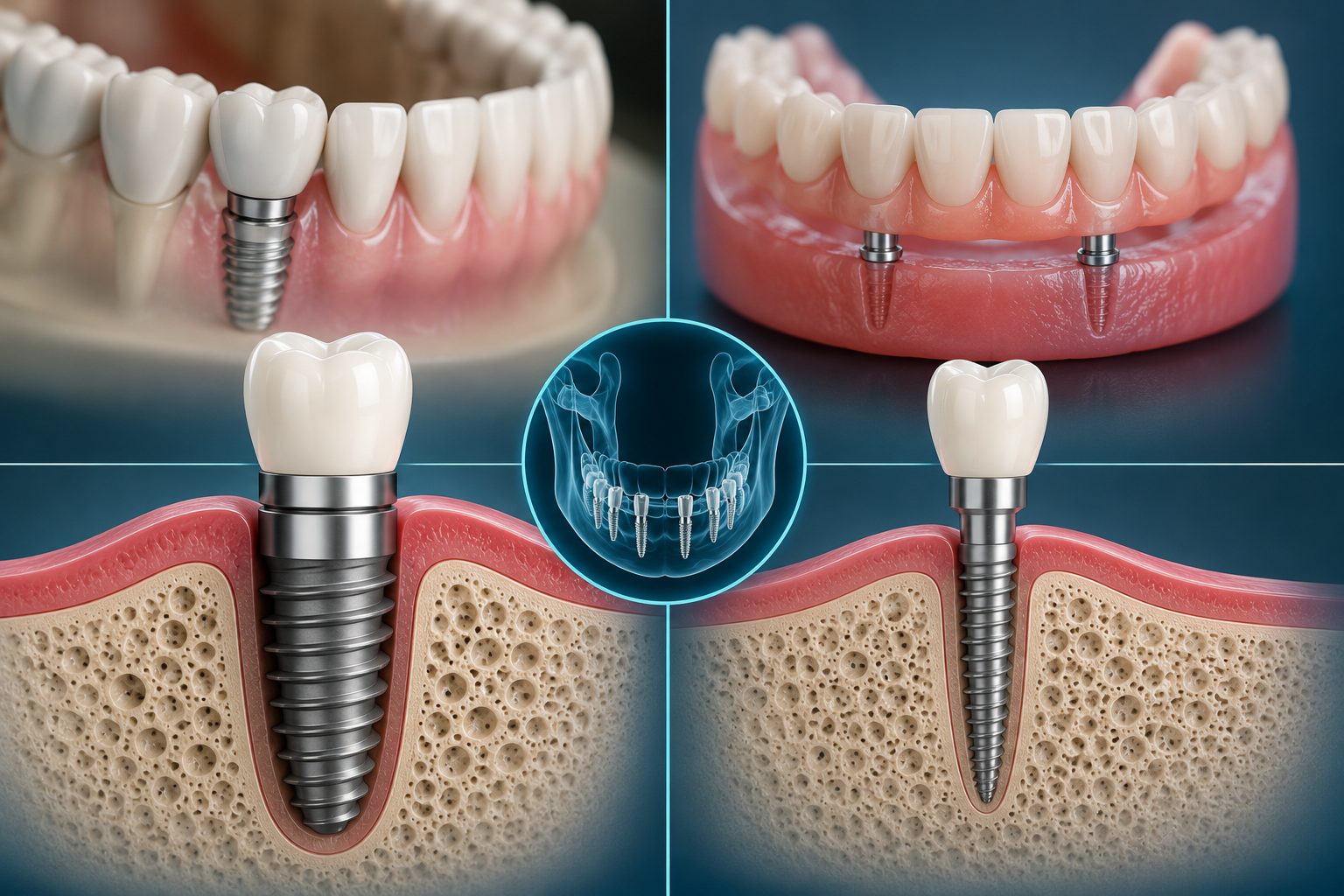
Traditional dental implants are the standard implant systems most commonly used in modern dentistry.
They are typically made from titanium or zirconia and are surgically placed into the jawbone to function as artificial tooth roots.
Traditional implants usually range from:
- 3.5 mm to 6 mm in diameter
depending on the clinical situation.
These implants are designed to support:
- Single crowns
- Bridges
- Full-mouth restorations
- Implant-supported dentures
Once placed, the implant integrates with the jawbone through a biological process called osseointegration.
This integration creates a highly stable foundation capable of handling strong chewing forces over many years.
Traditional implants are considered the gold standard because they have:
- Extensive scientific research
- High long-term success rates
- Strong mechanical durability
- Excellent bone preservation capabilities
Modern premium systems such as:
have decades of clinical documentation supporting long-term performance.
What Are Mini Dental Implants?
Mini dental implants are narrower implants designed primarily for situations where:
- Bone volume is limited
- Space is restricted
- Less invasive treatment is preferred
Mini implants are usually:
- Less than 3 mm in diameter
which makes them significantly smaller than traditional implants.
Originally, mini implants became popular mainly for stabilizing removable dentures. Over time, some clinicians also began using them for:
- Small tooth replacement
- Narrow ridge situations
- Temporary restorations
- Minimally invasive cases
Because mini implants are smaller, they often require:
- Less bone
- Smaller surgical procedures
- Reduced healing time
Some mini implant systems can even be placed using flapless techniques with less surgical trauma.
This has made them attractive for:
- Elderly patients
- Medically compromised patients
- Patients seeking lower-cost alternatives
However, smaller size also creates important limitations.
The Biggest Difference Is Strength
The most important difference between mini implants and traditional implants is mechanical strength.
Traditional implants have larger diameters and greater surface area contacting the bone. This generally provides:
- Better load distribution
- Greater stability
- Higher resistance to fracture
- Stronger long-term support
Mini implants, because of their smaller diameter, naturally have:
- Reduced structural strength
- Less bone contact surface
- Lower load tolerance
This does not mean mini implants are ineffective.
But it does mean they are usually better suited for:
- Lower-force applications
- Specific clinical situations
- Denture stabilization
- Smaller restorations
Traditional implants remain the preferred choice for:
- Full chewing function
- Long-span restorations
- Full-mouth rehabilitation
- High bite-force patients
According to implantology observations featured by DenTrends.com, traditional implants still dominate most premium long-term restorative cases because of their superior durability and biomechanical stability.
Why Mini Implants Became Popular
Mini implants became increasingly popular because they offer several practical advantages.
One major advantage is reduced surgical invasiveness.
Traditional implants sometimes require:
- Bone grafting
- Sinus lifts
- Ridge augmentation
especially in patients with severe bone loss.
Mini implants can sometimes avoid these procedures because they fit into narrower bone structures.
This may reduce:
- Surgical complexity
- Recovery time
- Initial treatment cost
Mini implants also became attractive for stabilizing lower dentures because many denture patients struggle with:
- Movement
- Poor retention
- Chewing difficulty
In these cases, mini implants can dramatically improve denture stability with relatively simple procedures. For elderly patients or medically fragile individuals, less invasive surgery may sometimes be preferable.
Are Mini Implants Permanent?
This is one of the most controversial topics in implant dentistry.
Some mini implants perform successfully for many years, especially when used appropriately for denture stabilization.
However, mini implants generally have:
- Less long-term clinical evidence
- Lower mechanical tolerance
- Greater fracture risk under heavy load
compared with traditional implants.
Traditional implants remain more extensively studied for:
- Long-term survival
- Full-function chewing
- Complex restorative cases
Mini implants may sometimes experience higher risks of:
- Loosening
- Overload
- Mechanical fracture
- Bone stress
especially in patients with strong bite forces or heavy chewing habits.
Cost Differences in 2026
One reason mini implants attract patient attention is lower initial pricing.
In many cases, mini implants cost significantly less because they often involve:
- Smaller surgery
- Reduced treatment time
- Less grafting
- Simpler workflows
Mini implant procedures may sometimes cost:
- 30% to 50% less
than traditional implant treatment.
However, lower upfront cost does not always equal better long-term value.
Traditional implants may ultimately provide:
- Greater longevity
- Better durability
- Lower future maintenance risk
This is why many implant specialists still prefer traditional systems whenever bone conditions allow.
Digital Dentistry Is Improving Both Systems
Modern digital dentistry is improving both mini and traditional implant workflows.
Today’s implant clinics increasingly use:
- CBCT imaging
- AI-assisted planning
- Guided surgery
- Intraoral scanners
- Digital prosthetics
to improve precision and safety.
Systems such as:
allow highly accurate digital impressions and restorative workflows.
CBCT systems from:
help clinicians evaluate bone anatomy in three dimensions before surgery begins.
AI-assisted planning platforms like:
are increasingly supporting implant planning and anatomical analysis.
Digital technology is making implant treatment:
- More predictable
- More precise
- More personalized
for both implant categories.
Which Option Is Better?
There is no universal answer.
The best implant system depends on:
- Bone quality
- Bite force
- Medical condition
- Budget
- Treatment goals
- Long-term expectations
Mini implants may work well for:
- Denture stabilization
- Narrow spaces
- Limited bone situations
- Patients seeking minimally invasive treatment
Traditional implants are usually preferred for:
- Maximum strength
- Long-term durability
- Full chewing performance
- Complex restorations
- Full-mouth rehabilitation
The most important factor is proper case selection. A well-planned mini implant case may perform far better than a poorly planned traditional implant case.
The Future of Implant Dentistry
The future of implantology is becoming increasingly connected with:
- AI diagnostics
- Robotic surgery
- Regenerative bone technologies
- Digital treatment planning
- Personalized implant systems
Researchers continue developing:
- Stronger implant materials
- Improved surface technologies
- Faster healing systems
- More conservative surgical techniques
As digital dentistry evolves, both mini and traditional implants will likely become:
- More precise
- More efficient
- More patient-specific
According to ongoing implant technology analysis from DenTrends.com, future implant systems may eventually combine:
- Minimally invasive surgery
- Advanced biomaterials
- AI-guided workflows
- Personalized digital planning
into fully intelligent implant ecosystems.
DenTrends Thoughts
Mini dental implants and traditional implants both play important roles in modern dentistry.
Mini implants offer:
- Less invasive treatment
- Lower initial costs
- Faster procedures
- Useful solutions for specific cases
Traditional implants continue providing:
- Superior strength
- Long-term durability
- Better biomechanical performance
- Stronger scientific support
The best choice ultimately depends on proper diagnosis, treatment planning, and realistic patient expectations.
Modern implant dentistry is no longer simply about replacing missing teeth.
It is about creating long-term functional, biological, and esthetic solutions tailored to each individual patient. And as digital dentistry continues evolving, implant treatment itself is becoming more personalized, precise, and technologically advanced than ever before.