
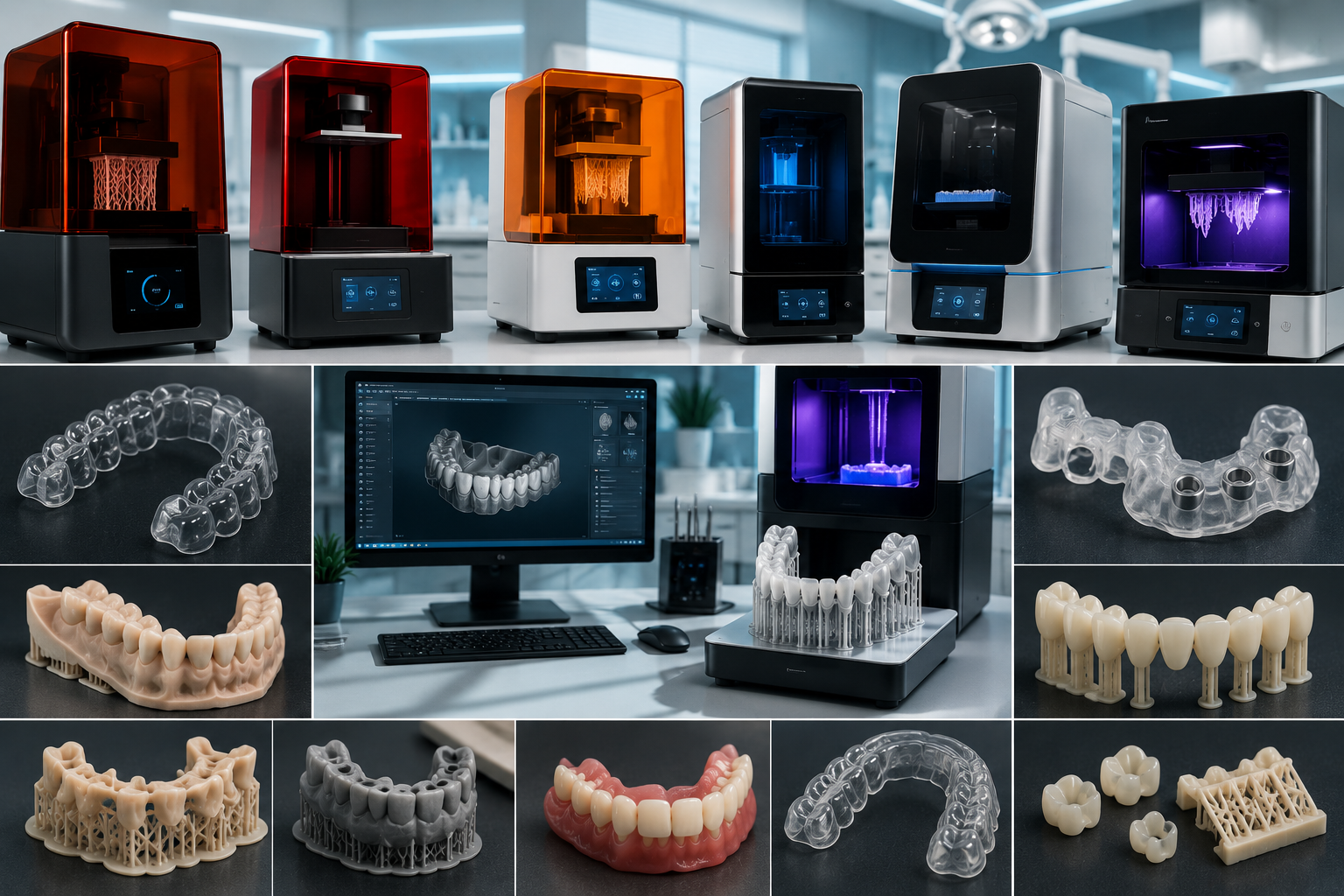
3D printing has become one of the most transformative technologies in modern dentistry. In 2026, dental clinics and laboratories are rapidly adopting advanced 3D dental printers to produce surgical guides, crowns, dentures, aligners, models, splints, temporary restorations, and even full digital prosthetic workflows with incredible speed and precision.
What was once limited to large dental laboratories is now becoming standard inside modern dental clinics.
Today’s leading dental 3D printers offer:
- Ultra-fast printing
- High-resolution precision
- AI-assisted workflows
- Cloud integration
- Chairside production
- Digital smile design compatibility
- Same-day restorative workflows
As digital dentistry continues evolving, 3D printing is becoming a critical component of:
- Implantology
- Orthodontics
- Prosthodontics
- Cosmetic dentistry
- Surgical planning
- Full digital workflows
Industry experts increasingly describe 3D printing as one of the foundational technologies driving the future of dentistry. (instituteofdigitaldentistry.com) This guide explores the Top 10 Leading 3D Dental Printers in 2026, based on print accuracy, speed, workflow integration, material compatibility, innovation, and real-world clinical adoption.
1. Formlabs Form 4B
The Form 4B from Formlabs has become one of the most respected dental 3D printers globally because of its:
- Exceptional print quality
- User-friendly workflow
- Broad material ecosystem
- Affordable professional performance
The Formlabs dental ecosystem is widely used in:
- Clinics
- Laboratories
- Orthodontic workflows
- Surgical guide production
Key Features
- Ultra-fast Low Force Display™ printing
- High-resolution accuracy
- Large dental material library
- Cloud workflow support
- AI-assisted print optimization
Best For
- General dentistry
- Surgical guides
- Crown and bridge models
- Orthodontics
- Denture workflows
Why Dentists Love It
Formlabs combines:
- Reliability
- Simplicity
- Professional-grade output
at a highly competitive price point.
2. SprintRay Pro 2
The SprintRay Pro 2 is one of the most advanced chairside dental printers available in 2026.
SprintRay heavily focuses on:
- Same-day dentistry
- AI-powered workflows
- Ultra-fast print production
- Cloud-based integration
Key Features
- High-speed printing
- AI workflow ecosystem
- Cloud case management
- Chairside restorative production
- Automated print optimization
Best For
- Same-day dentistry
- Cosmetic workflows
- Implant surgical guides
- Orthodontic appliances
Biggest Advantage
SprintRay strongly emphasizes: Fully integrated chairside digital dentistry.
3. Asiga MAX UV
The Asiga MAX UV is highly respected for precision and open material compatibility.
Unlike closed ecosystems, Asiga allows users greater flexibility in resin selection.
Key Features
- Open material system
- Ultra-high print accuracy
- Advanced UV curing
- Industrial-grade consistency
- Broad dental applications
Best For
- Dental laboratories
- Prosthodontics
- Implant restorations
- High-detail applications
Why Labs Prefer It
Asiga is known for:
- Exceptional print reliability
- Material freedom
- Fine-detail precision
4. NextDent 5100
The NextDent 5100 from 3D Systems remains one of the most widely used professional dental printers globally.
It is heavily integrated into:
- Dental lab workflows
- Orthodontics
- Denture production
Key Features
- Large validated material ecosystem
- High-speed printing
- FDA-cleared dental resins
- Precision workflow support
Best For
- Dentures
- Models
- Surgical guides
- Orthodontics
Why It Matters NextDent pioneered many modern dental resin workflows.
5. Carbon M3
The Carbon M3 is one of the most technologically advanced dental production systems available.
Carbon’s Digital Light Synthesis™ technology focuses on:
- Speed
- Material strength
- Mass production efficiency
Key Features
- High-speed industrial printing
- Advanced material science
- Large-scale aligner production
- High mechanical performance
Best For
- Large labs
- Aligner production
- High-volume workflows
Major Advantage
Carbon dominates many large-scale orthodontic production environments.
6. Ackuretta SOL Plus
The SOL Plus is becoming popular for its:
- Compact footprint
- Precision printing
- AI-assisted workflows
- User-friendly interface
Key Features
- Smart print automation
- Compact design
- High-resolution printing
- Open material compatibility
Best For
- Smaller clinics
- Chairside printing
- General dentistry
Why It’s Growing
Smaller practices increasingly seek affordable in-house digital production.
7. EnvisionTEC Vida HD
The Vida HD focuses heavily on:
- Precision
- Surface quality
- Restorative accuracy
Key Features
- Ultra-high-detail printing
- Advanced DLP technology
- High surface smoothness
- Broad dental applications
Best For
- Cosmetic dentistry
- Restorative workflows
- Precision prosthetics
Biggest Strength
Excellent esthetic-quality output.
8. Phrozen Sonic XL 4K Dental
The Sonic XL 4K Dental has become increasingly popular for budget-conscious digital dentistry adoption.
Key Features
- 4K printing resolution
- Affordable pricing
- Fast printing speeds
- Open resin compatibility
Best For
- Entry-level digital clinics
- Small labs
- Orthodontic models
Why It’s Trending
Affordable digital adoption is driving strong growth.
9. Straumann P Series
The Straumann P Series integrates heavily with:
- Implantology
- Guided surgery
- Full digital implant workflows
Key Features
- Implant-focused workflows
- Surgical guide production
- Precision restorative integration
- Digital ecosystem connectivity
Best For
- Implant specialists
- Full-mouth rehabilitation
- Guided surgery centers
Why Implant Clinics Prefer It
Strong integration within Straumann’s implant ecosystem.
10. Rapid Shape D30+
The D30+ is known for:
- Fast print production
- German engineering precision
- AI-supported workflow automation
Key Features
- Smart print optimization
- Automated calibration
- High-speed production
- Multi-application compatibility
Best For
- Mid-sized labs
- General digital workflows
- Orthodontics
Why It Matters
Automation is becoming critical in modern dental production environments.
Biggest 3D Printing Trends in Dentistry for 2026
The AI documentation market is evolving rapidly.
Voice-Controlled Dentistry
Hands-free charting is becoming increasingly common in:
- Hygiene
- Periodontics
- General dentistry
Automated Clinical Notes
AI systems now generate:
- SOAP notes
- Progress notes
- Treatment summaries
- Insurance narratives
automatically.
Burnout Reduction
AI documentation tools directly target:
- Administrative fatigue
- Repetitive charting
- Staff overload
Cloud-Based AI Ecosystems
Documentation systems increasingly integrate with:
- Practice management software
- Imaging platforms
- AI diagnostics
Remote workflows
Why AI Documentation Tools Matter in Modern Dentistry
Modern dental practices face enormous pressure from:
- Staffing shortages
- Productivity demands
- Administrative complexity
- Insurance compliance
- Burnout
AI documentation tools improve:
- Workflow speed
- Accuracy
- Team efficiency
- Clinical consistency
- Provider focus
Most importantly:
They allow clinicians to spend more time with patients instead of screens.
What Dentists Should Consider Before Choosing AI Documentation Software
Before investing in AI voice systems, clinics should evaluate:
- Voice recognition accuracy
- Software integration
- Cloud compatibility
- HIPAA compliance
- Ease of use
- Workflow fit
- Support quality
The best AI systems should simplify workflows —
not create additional complexity.
Final Thoughts
AI voice charting and clinical documentation tools are becoming one of the fastest-growing technologies in modern dentistry.
The best systems in 2026 combine:
- Voice recognition
- AI automation
- Workflow integration
- Cloud connectivity
- Administrative intelligence
As dentistry continues evolving toward:
- AI-powered clinics
- Digital ecosystems
- Workflow automation
- Efficiency-driven operations
AI documentation platforms will likely become standard in advanced dental practices.
Because the future of dentistry is no longer built around endless manual charting. It is intelligent, voice-driven, automated, and clinically optimized.