
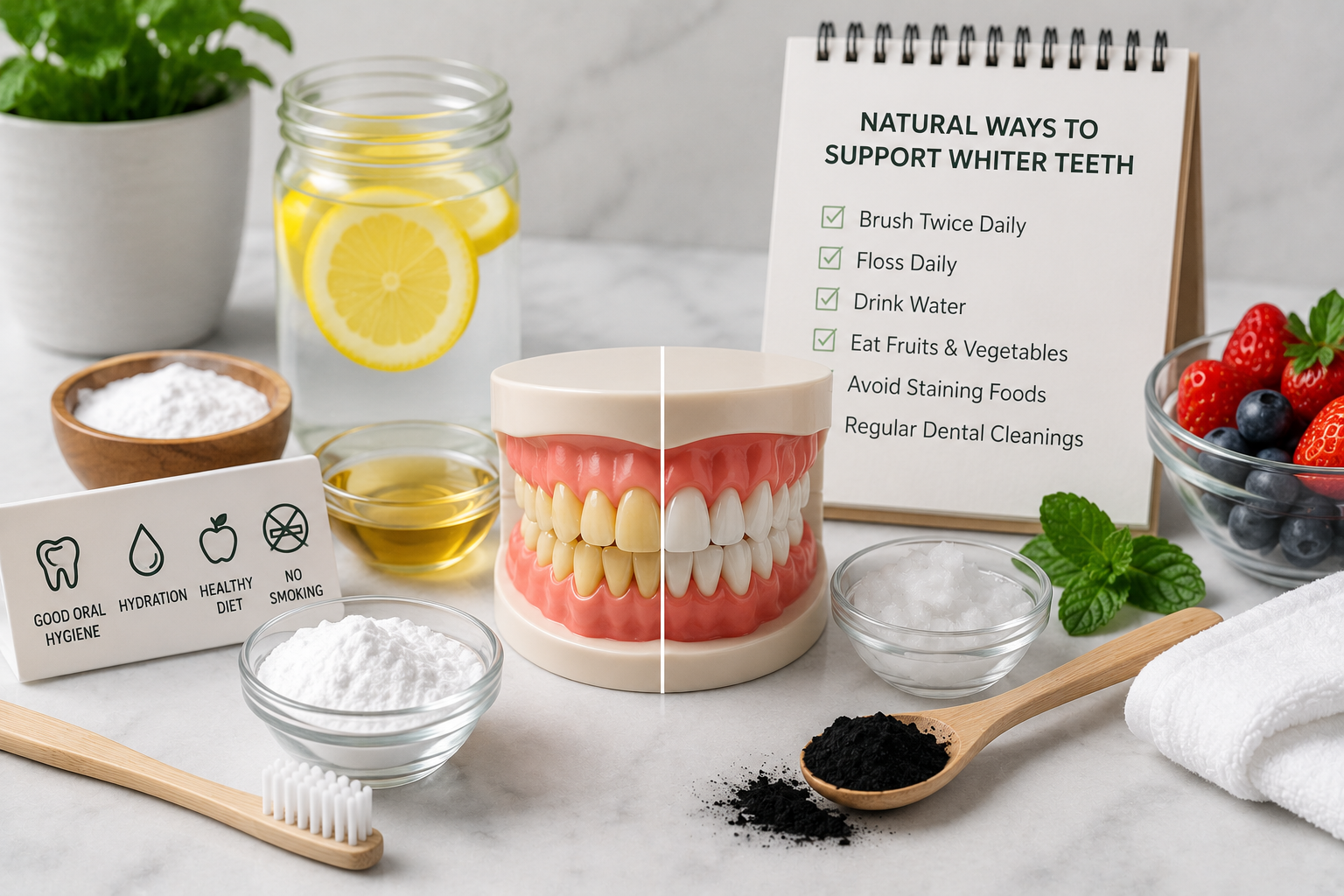
A bright white smile is often associated with health, youth, and confidence. As a result, millions of people search online for natural ways to whiten yellow teeth. Social media is filled with DIY remedies claiming that ingredients like baking soda, lemon juice, activated charcoal, coconut oil, and turmeric can restore a dazzling smile without professional treatment.
But do these methods actually work?
The answer depends on why your teeth appear yellow in the first place. While some causes of discoloration can be improved through lifestyle changes and better oral hygiene, others require professional dental treatment. Understanding the difference is essential before trying any natural whitening method.
According to preventive dentistry trends highlighted by DenTrends, the safest approach to a brighter smile begins with identifying the cause of discoloration rather than relying on viral home remedies.
Why Do Teeth Turn Yellow?
Not all yellow teeth are unhealthy.
Natural tooth color varies from person to person. The outer layer of the tooth, called enamel, is naturally translucent, allowing the slightly yellow dentin underneath to show through.
As people age, enamel gradually becomes thinner, making teeth appear more yellow even when they are healthy.
Other common causes include:
- Coffee and tea
- Red wine
- Smoking and tobacco
- Poor oral hygiene
- Certain medications
- Aging
- Fluorosis
- Trauma
- Genetics
Determining the underlying cause helps identify the most appropriate treatment.
Can Yellow Teeth Be Reversed Naturally?
In some cases, yes—but only to a limited extent.
If discoloration is caused by surface stains from food, beverages, or smoking, improving oral hygiene and making healthy lifestyle changes may gradually restore a brighter appearance.
However, yellowing caused by aging, enamel loss, medications, or internal staining cannot usually be reversed naturally.
Professional evaluation remains the best way to determine the cause of tooth discoloration.
Natural Methods That May Help
Several evidence-based habits can help reduce surface staining and support overall oral health.
Maintain Excellent Oral Hygiene
Brushing twice daily with fluoride or hydroxyapatite toothpaste removes plaque and many external stains before they become deeply embedded.
Daily flossing also helps prevent discoloration between teeth.
Professional dental cleanings remain one of the most effective ways to remove hardened stains that cannot be eliminated at home.
Reduce Stain-Causing Foods and Drinks
Frequent consumption of:
- Coffee
- Tea
- Red wine
- Cola
- Dark-colored berries
can gradually stain enamel.
Drinking water after consuming these beverages and using a straw when appropriate may help reduce staining.
Stop Smoking
Tobacco is one of the leading causes of persistent yellow and brown tooth discoloration.
Quitting smoking benefits not only tooth color but also gum health, oral cancer risk, and overall health.
Many patients notice gradual improvement after tobacco cessation combined with professional dental cleaning.
Eat Crunchy Fruits and Vegetables
Foods such as:
- Apples
- Carrots
- Celery
help stimulate saliva production and gently clean tooth surfaces during chewing.
While they do not whiten teeth directly, they support healthier enamel and reduce plaque accumulation.
Stay Hydrated
Saliva naturally protects teeth by neutralizing acids and washing away food particles.
Drinking adequate water throughout the day helps maintain oral health and reduce stain accumulation.
What About Baking Soda?
Baking soda is one of the most studied home whitening ingredients.
Its mild abrasive properties can help remove superficial stains from the enamel surface.
Many dentist-recommended whitening toothpastes include carefully formulated baking soda.
However, excessive or aggressive brushing with pure baking soda may contribute to enamel wear over time.
Moderation is important.
Does Oil Pulling Whiten Teeth?
Oil pulling, typically using coconut oil, has become popular on social media.
Current scientific evidence suggests that oil pulling may help reduce oral bacteria and improve overall oral hygiene.
However, there is limited scientific evidence that it significantly whitens teeth.
It should not be considered a substitute for brushing, flossing, or professional dental care.
Should You Use Activated Charcoal?
Activated charcoal toothpastes have gained popularity as natural whitening products.
Although charcoal may remove some surface stains through abrasion, scientific evidence supporting its long-term whitening effectiveness remains limited.
Some charcoal products may also be abrasive enough to increase enamel wear if used excessively.
Dentists generally recommend caution when using highly abrasive whitening products.
Avoid Lemon Juice and Vinegar
One of the most common myths is that acidic substances can whiten teeth safely.
Lemon juice, vinegar, and similar acidic ingredients may temporarily remove some stains but also dissolve enamel.
Once enamel is lost, it cannot regenerate naturally.
Repeated exposure to acids increases the risk of:
- Tooth sensitivity
- Cavities
- Permanent enamel erosion
For this reason, dentists strongly discourage using acidic DIY whitening methods.
Professional Whitening Remains the Most Effective Option
When natural methods are insufficient, professional whitening offers predictable and safe results.
Dentists may recommend:
- In-office laser whitening
- LED whitening systems
- Custom take-home whitening trays
- Professional whitening gels
These treatments are designed to minimize sensitivity while providing significantly greater whitening than home remedies.
Can Yellow Teeth Become White Again?
The answer depends on the type of discoloration.
Surface Stains
Often respond well to:
- Professional cleaning
- Better oral hygiene
- Whitening toothpaste
- Professional whitening
Internal Stains
May require:
- Professional bleaching
- Composite bonding
- Porcelain veneers
- Crowns
In cases where discoloration is caused by enamel thinning, whitening alone may not fully achieve the desired result.
The Role of Preventive Dentistry
The best whitening strategy is preventing stains from developing.
Dentists recommend:
- Brushing twice daily
- Daily flossing
- Regular dental check-ups
- Professional cleanings
- Healthy diet
- Smoking cessation
- Limiting staining beverages
Prevention is always more effective than correcting severe discoloration later.
The Future of Tooth Whitening
Modern dentistry continues to develop safer and more effective whitening technologies.
Emerging innovations include:
- AI-assisted shade analysis
- Personalized whitening protocols
- Hydroxyapatite-based remineralizing whitening products
- Low-sensitivity whitening agents
- Biomimetic enamel repair technologies
These advances aim to improve both aesthetics and long-term enamel health.
DenTrends Thoughts
Natural methods can help reduce mild surface staining and support healthier teeth, but they cannot reverse every type of yellow discoloration.
Maintaining excellent oral hygiene, reducing stain-causing habits, staying hydrated, and receiving regular professional cleanings are among the safest and most effective natural approaches.
Avoid highly acidic or abrasive DIY whitening methods that may permanently damage enamel.
If your teeth remain yellow despite good oral care, a dentist can identify the underlying cause and recommend the safest treatment to achieve a brighter, healthier smile.
The goal should not simply be whiter teeth—but healthier teeth that stay beautiful for years to come.
References
- American Dental Association (ADA) – Tooth Whitening
https://www.ada.org/resources/ada-library/oral-health-topics/tooth-whitening - Mayo Clinic – Teeth Whitening: Does It Work?
https://www.mayoclinic.org/healthy-lifestyle/adult-health/expert-answers/teeth-whitening/faq-20058436 - National Health Service (NHS) – Teeth Whitening
https://www.nhs.uk/conditions/teeth-whitening/ - Journal of Esthetic and Restorative Dentistry
https://onlinelibrary.wiley.com/journal/17088240 - Cochrane Library – Whitening Toothpastes and Bleaching Treatments
https://www.cochranelibrary.com
American Academy of Cosmetic Dentistry (AACD)
https://www.aacd.com