
The way patients choose dentists has changed dramatically.
A decade ago, most people found dentists through:
- Word of mouth
- Local newspaper ads
- Insurance directories
- Nearby signage
In 2026, the decision-making process is completely different.
Patients now evaluate dentists through:
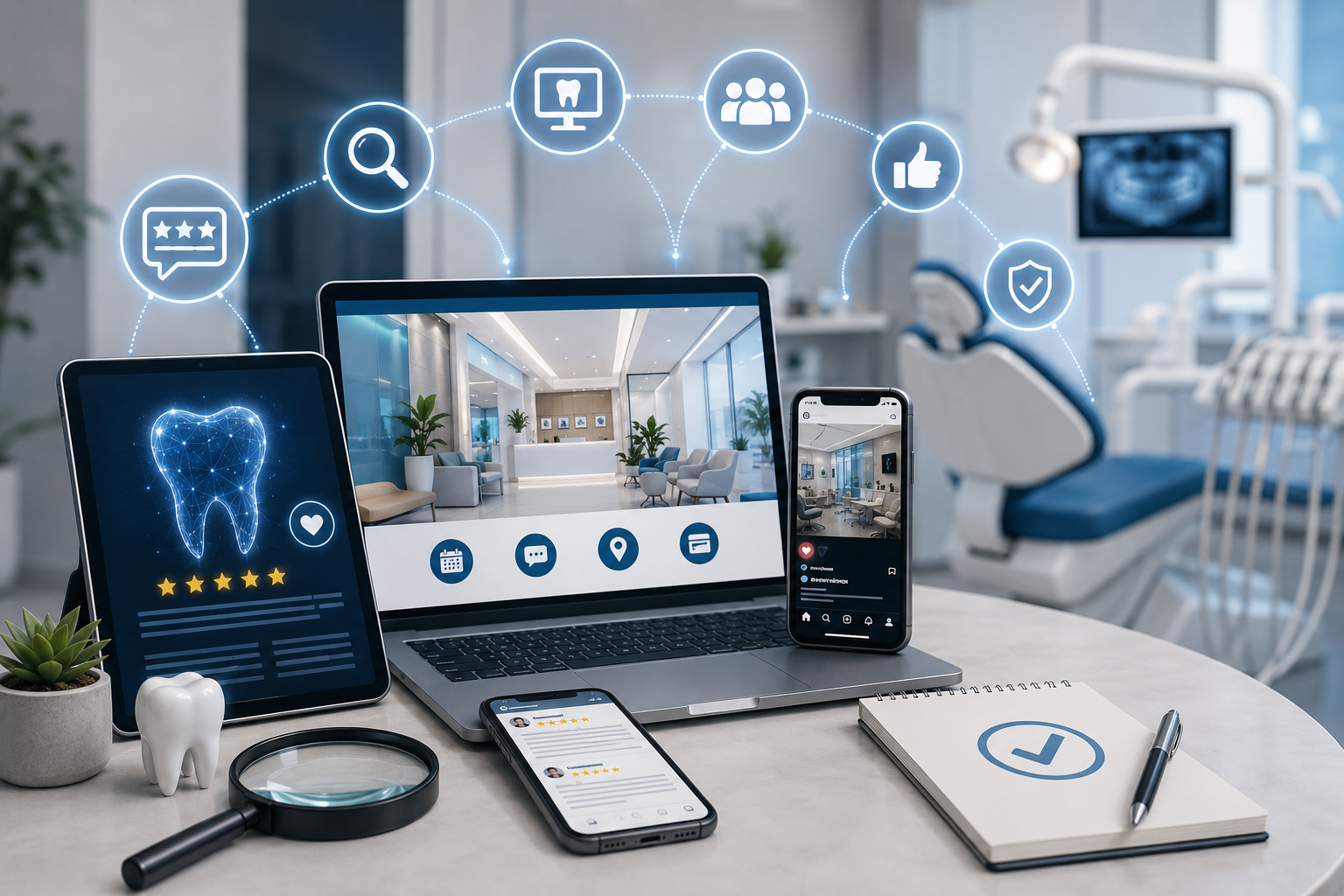
- Google reviews
- AI-powered search results
- TikTok and Instagram
- YouTube videos
- Website experience
- Online reputation
- Digital trust signals
Modern patients behave more like informed consumers than passive healthcare seekers.
Before booking an appointment, many patients now:
- Research extensively
- Compare multiple clinics
- Read reviews carefully
- Analyze social media presence
- Evaluate branding and professionalism
This shift is transforming dental marketing, patient expectations, and practice growth strategies across the industry.
So how exactly are patients choosing dentists in 2026?
The answer reveals how modern dentistry itself is evolving.
The Era of “Automatic Trust” Is Over
Years ago, many patients trusted dentists automatically.
Today, trust must be earned digitally before the first visit even happens.
Patients increasingly ask:
- Is this clinic modern?
- Are the reviews genuine?
- Does the dentist seem trustworthy?
- Is the experience comfortable?
- Are prices transparent?
- Does the clinic feel advanced and professional?
In many cases:
The online impression determines whether the patient ever calls the clinic.
1. Google Reviews Became the New Word-of-Mouth
Reviews are now one of the most powerful factors influencing patient decisions.
Patients heavily analyze:
- Star ratings
- Number of reviews
- Review recency
- Review quality
- Response professionalism
A clinic with:
- 4.9 stars
- 500+ recent reviews
often creates stronger trust than a clinic with decades of experience but weak digital visibility.
According to healthcare consumer studies, online reviews strongly influence provider selection behavior. (brightlocal.com)
What Patients Look for in Reviews
Patients specifically search for comments about:
- Pain-free treatment
- Friendly staff
- Honest recommendations
- Cleanliness
- Wait times
- Emergency care
- Pricing transparency
- Anxiety management
Emotional reassurance matters more than technical terminology.
Most patients cannot judge clinical quality directly.
So they evaluate:
Experience signals.
2. AI Search Is Changing Discovery
One of the biggest shifts in 2026 is AI-driven search behavior.
Patients increasingly use:
- ChatGPT-style assistants
- AI-generated search summaries
- Voice search
- Conversational search queries
Instead of searching:
“Dentist near me”
patients now ask:
- “Who is the best cosmetic dentist for nervous patients?”
- “Which dentist is best for implants?”
- “Affordable Invisalign dentist with good reviews”
This means search engines are prioritizing:
- Authority
- Reputation
- Helpful content
- Local trust
- Patient education
Traditional SEO alone is no longer enough.
3. Website Experience Now Shapes Trust Instantly
Patients judge dental clinics within seconds of visiting a website.
An outdated website creates immediate doubt.
Patients subconsciously associate:
- Poor design
with - Lower professionalism
In 2026, patients expect:
- Mobile-friendly websites
- Fast loading speed
- Online booking
- Transparent information
- Modern visuals
- Real patient photos
- Educational content
A clinic website now acts as:
A digital first impression.
Biggest Dental Website Mistakes
Patients quickly lose trust when websites have:
- Old designs
- Broken pages
- Poor mobile experience
- Generic stock photos
- Confusing navigation
- No reviews displayed
- No pricing guidance
- No dentist personality
Trust is emotional and visual before it becomes logical.
4. Social Media Influences Patient Decisions
Patients increasingly discover dentists through:
- Instagram Reels
- TikTok videos
- YouTube Shorts
- Facebook recommendations
Especially younger patients.
Popular content includes:
- Smile transformations
- Invisalign journeys
- Veneer cases
- Educational videos
- Behind-the-scenes content
- Dentist personality clips
Social media helps patients feel familiar with the dentist before visiting.
This reduces anxiety and increases comfort.
The Rise of “Dentist Personal Branding”
In 2026, patients often choose:
People, not just clinics.
Dentists with strong personal brands gain advantages through:
- Trust
- Visibility
- Authority
- Familiarity
Patients increasingly prefer dentists who appear:
- Friendly
- Confident
- Modern
- Educational
- Transparent
The “invisible dentist” model is fading.
5. Convenience Became a Major Decision Factor
Modern patients value convenience heavily.
They prefer clinics offering:
- Online scheduling
- Text reminders
- Easy communication
- Flexible hours
- Fast response times
- Digital forms
- Financing options
Patients now compare dental experiences with:
- Amazon
- Uber
- Apple
- Modern digital services
Healthcare convenience expectations increased dramatically after the pandemic.
6. Patients Fear Aggressive Sales Tactics
One growing issue in dentistry is trust around treatment recommendations.
Many patients fear:
- Overtreatment
- Upselling
- Hidden costs
- Corporate-driven care
As a result, patients increasingly choose dentists who appear:
- Honest
- Conservative
- Educational
- Transparent
Reviews mentioning:
“Did not pressure me”
can significantly influence booking decisions.
7. Dental Anxiety Strongly Influences Choice
Dental anxiety remains one of the biggest emotional drivers in patient behavior.
Patients actively search for:
- Gentle dentists
- Sedation options
- Compassionate communication
- Anxiety-friendly environments
Clinics that address emotional comfort openly often gain strong patient loyalty.
Words that resonate strongly include:
- Gentle
- Calm
- Caring
- Painless
- Understanding
8. Younger Patients Research Extensively
Millennials and Gen Z patients behave differently from previous generations.
They typically:
- Compare multiple providers
- Watch videos before booking
- Read long reviews
- Research procedures deeply
- Verify reputation online
They are less likely to:
- Choose blindly
- Trust advertisements automatically
- Remain loyal without strong experience
This forces clinics to compete continuously on:
- Experience
- Communication
- Reputation
- Transparency
9. Insurance Is No Longer the Only Factor
Traditionally, patients mainly selected in-network dentists.
But in 2026, many patients increasingly prioritize:
- Experience
- Trust
- Reputation
- Cosmetic expertise
- Technology
- Comfort
Some patients willingly pay more for:
- Better service
- Specialized care
- Strong reviews
- Premium experience
This is especially true in:
- Cosmetic dentistry
- Implants
- Invisalign
- Full-mouth rehabilitation
10. Video Content Builds Faster Trust Than Text
Video has become one of the most powerful trust-building tools in dentistry.
Patients respond strongly to:
- Dentist introductions
- Office tours
- Patient testimonials
- Educational videos
- Procedure explanations
Video creates:
- Familiarity
- Emotional connection
- Confidence
Clinics using video marketing effectively often outperform competitors with stronger traditional advertising budgets.
What Patients Really Want in 2026
At the deepest level, patients want:
1. Trust
They want confidence that the dentist is honest and competent.
2. Comfort
They want reduced anxiety and emotional reassurance.
3. Transparency
They dislike surprises, hidden fees, and unclear communication.
4. Convenience
Modern scheduling and communication matter greatly.
5. Confidence in Results
Especially for cosmetic procedures.
Technology matters —
but emotional trust matters more.
The Rise of Experience-Based Dentistry
Dentistry is evolving from:
“Procedure-focused care”
to:
“Experience-focused healthcare.”
Patients now evaluate:
- Atmosphere
- Communication
- Technology
- Branding
- Online presence
- Emotional comfort
The best clinics understand:
Dentistry is both clinical and psychological.
What This Means for Dentists
The modern dental practice must now think beyond:
- Clinical skill alone
Success increasingly depends on:
- Branding
- Reputation management
- Content creation
- Patient communication
- Online visibility
- Experience design
Clinics invisible online are becoming invisible in reality.
The Future of Patient Decision-Making
By 2030, patient discovery may rely even more on:
- AI assistants
- Predictive healthcare platforms
- Personalized search recommendations
- Video-first content
- Reputation algorithms
Patients may increasingly trust:
- AI-curated recommendations
over - Traditional advertising
The digital trust economy will continue growing.will continue to gain a strategic advantage through operational efficiency, improved diagnostics, enhanced patient experiences, and scalable practice management.
Final Thought
Patients no longer choose dentists the way they did 10 years ago.
Today’s patients behave like informed digital consumers who carefully evaluate:
- Reputation
- Trust
- Technology
- Experience
- Communication
The clinics that succeed in 2026 are not always the cheapest or the largest.
They are often the practices that build:
- Emotional trust
- Strong online presence
- Consistent patient experiences
- Authentic relationships
Because modern dentistry is no longer just about fixing teeth.
It is about creating confidence before the patient even walks through the door.