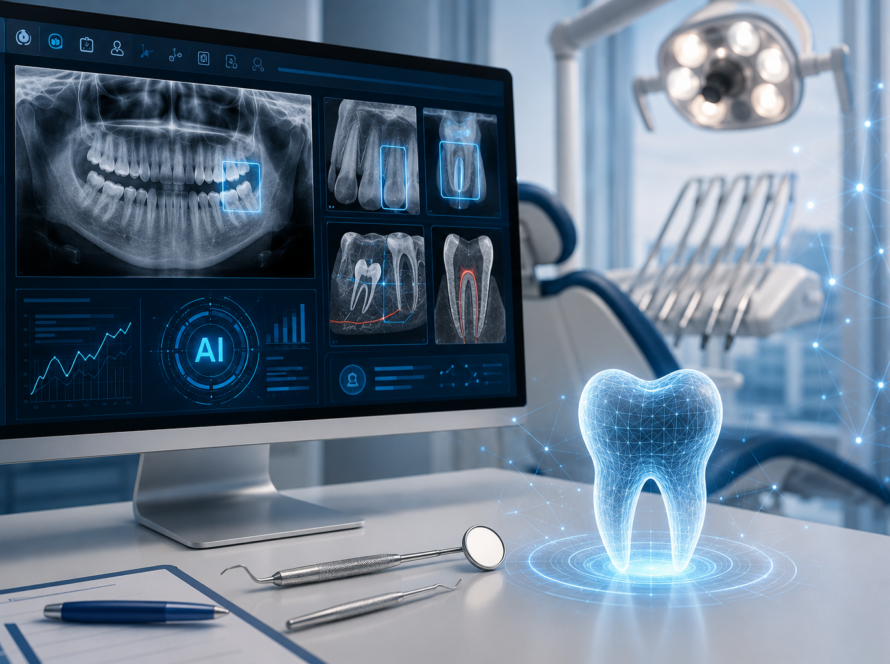

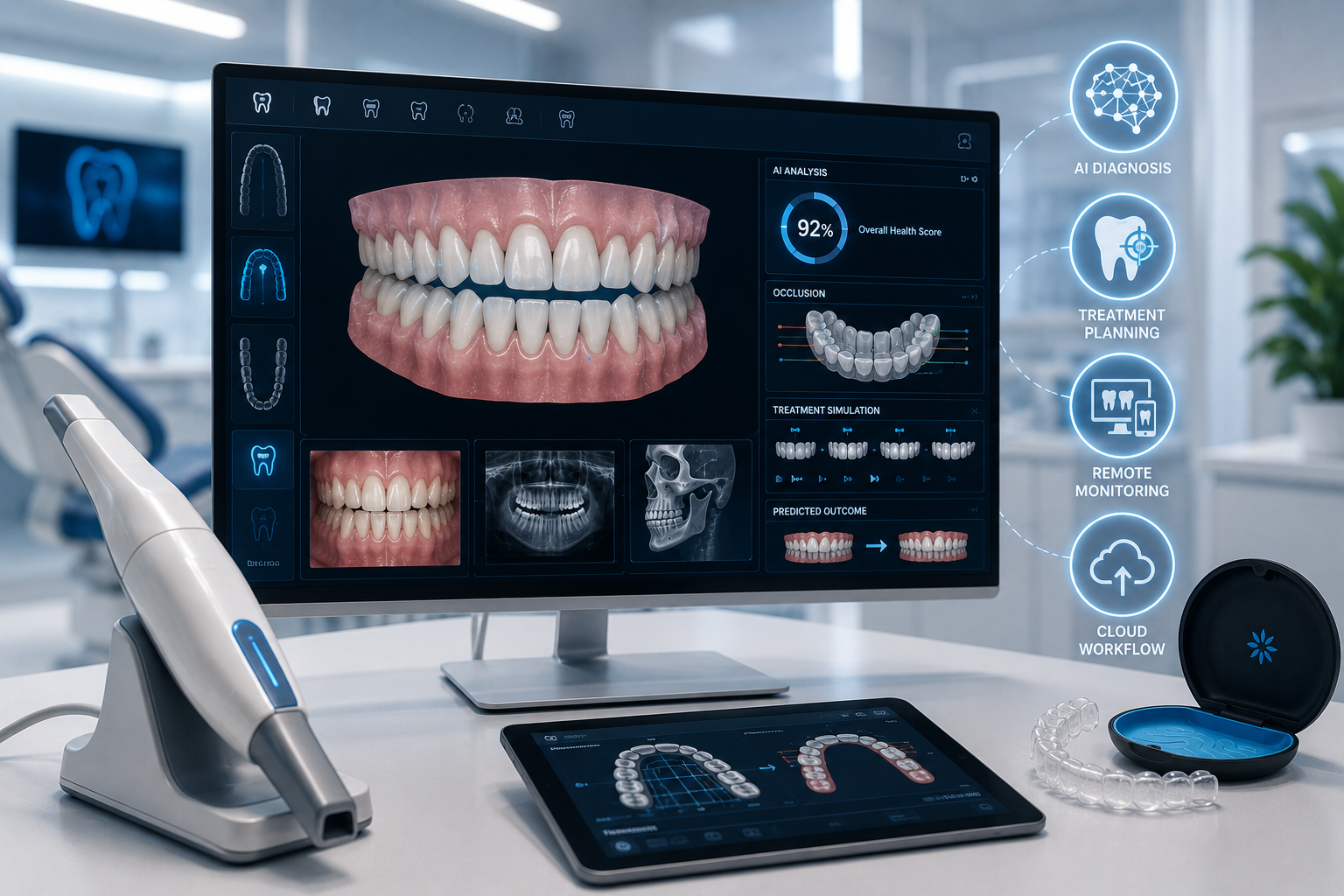
Orthodontics has undergone a remarkable transformation over the past decade. What began as a shift from conventional alginate impressions to digital intraoral scanning has evolved into a comprehensive digital ecosystem powered by Artificial Intelligence (AI). Today, orthodontic scanning software does much more than create accurate digital models—it assists with diagnosis, predicts tooth movement, supports treatment planning, monitors patient progress, and integrates seamlessly with digital workflows.
In 2026, AI-driven orthodontic scanning platforms have become indispensable tools for orthodontists, general dentists, and aligner providers. These intelligent systems improve diagnostic accuracy, streamline clinical workflows, enhance patient communication, and deliver more predictable treatment outcomes.
According to digital orthodontic trends highlighted by DenTrends, AI-powered scanning technology is redefining orthodontic care by moving beyond simple digital impressions toward fully integrated, data-driven treatment planning.
The Evolution from Traditional Impressions to Intelligent Scanning
For decades, orthodontists relied on physical impressions made from alginate or polyvinyl siloxane materials. Although effective, these methods often caused patient discomfort, were prone to distortion, and required physical storage and shipping to laboratories.
The introduction of intraoral scanners replaced these traditional techniques with highly accurate digital impressions. Today, AI has taken the next step by transforming these scanners into intelligent diagnostic systems capable of analyzing occlusion, identifying malocclusions, and simulating treatment outcomes in real time.
Digital impressions are no longer the destination—they are simply the beginning of a much larger digital workflow.
What Is AI-Driven Orthodontic Scanning?
AI-driven orthodontic scanning combines intraoral scanning hardware with machine learning algorithms and cloud-based software to automatically analyze digital models and assist clinicians in treatment planning.
These systems can evaluate:
- Tooth alignment
- Arch form
- Crowding and spacing
- Overbite and overjet
- Midline discrepancies
- Occlusal relationships
- Tooth wear
- Eruption patterns
By processing large datasets, AI provides clinicians with detailed analyses and treatment recommendations while leaving final decisions in the hands of the orthodontist.
Leading AI-Driven Orthodontic Scanning Platforms
Several manufacturers are leading innovation in AI-assisted orthodontic workflows.
1. iTero Lumina
Developed by Align Technology, the iTero Lumina scanner combines high-speed digital impressions with AI-powered orthodontic analysis and seamless integration into the Invisalign ecosystem.
Key capabilities include:
- High-resolution intraoral scanning
- AI-assisted occlusal analysis
- Invisalign Outcome Simulator
- Caries detection support (NIRI technology on compatible models)
- Restorative and orthodontic workflows
- Cloud-based case management
The scanner allows patients to visualize potential orthodontic outcomes before treatment begins, improving communication and case acceptance.
2. 3Shape TRIOS
The 3Shape TRIOS platform has become one of the most versatile digital scanners in dentistry.
Its orthodontic features include:
- AI-supported treatment planning
- Orthodontic model analysis
- Digital study models
- Treatment simulation
- Open workflow integration
- Laboratory connectivity
The TRIOS ecosystem supports both aligner therapy and conventional orthodontics while integrating with numerous third-party software solutions.
3. Medit i900
The Medit i900 continues to gain popularity due to its open architecture and AI-enhanced software ecosystem.
The platform provides:
- Fast digital impressions
- Orthodontic simulations
- Cloud collaboration
- AI-powered scan optimization
- Treatment planning support
Medit’s flexibility allows practices to integrate multiple orthodontic workflows without being locked into a single aligner system.
4. DEXIS IS Scanner
The DEXIS IS scanning platform integrates digital impressions with advanced imaging and orthodontic planning tools.
Features include:
- AI-enhanced scanning accuracy
- Digital model creation
- Implant and orthodontic workflows
- CBCT integration
- Cloud-based collaboration
This integration allows clinicians to coordinate multidisciplinary treatments more efficiently.
AI-Assisted Orthodontic Diagnosis
One of the most significant advances is AI-assisted diagnosis.
Modern software can automatically detect:
- Crowding severity
- Arch asymmetry
- Rotated teeth
- Crossbites
- Deep bites
- Open bites
- Midline deviations
AI rapidly processes digital models, reducing manual measurements and improving diagnostic consistency.
Rather than replacing orthodontists, these systems function as intelligent assistants that support clinical decision-making.
Digital Treatment Planning
AI is also transforming treatment planning.
Orthodontists can now simulate:
- Tooth movement
- Arch expansion
- Interproximal reduction
- Extraction scenarios
- Aligner staging
- Final occlusion
Patients can preview expected outcomes before treatment begins, making consultations more interactive and informative.
Digital planning also allows clinicians to compare multiple treatment approaches before selecting the most appropriate option.
Workflow Integration Across the Practice
Modern orthodontic software integrates with virtually every stage of patient care.
Today’s digital ecosystem may include:
- Intraoral scanners
- CBCT imaging
- Facial scanning
- AI diagnostics
- CAD/CAM systems
- 3D printing
- Practice management software
- Cloud collaboration
- Laboratory communication
This fully digital workflow reduces duplication, minimizes errors, and accelerates treatment delivery.
AI Monitoring During Treatment
The role of AI does not end after treatment begins.
Remote monitoring platforms now allow patients to submit smartphone photographs or digital scans from home.
AI evaluates treatment progress and alerts clinicians to issues such as:
- Poor aligner fit
- Delayed tooth movement
- Broken attachments
- Missed appointments
- Oral hygiene concerns
Remote monitoring improves efficiency while reducing unnecessary office visits.
Benefits for Patients
Patients experience several advantages with AI-driven orthodontic scanning.
These include:
- No messy impression materials
- Faster appointments
- Greater comfort
- Real-time treatment visualization
- Improved communication
- More predictable treatment
- Shorter turnaround times
Digital records are also easier to store, retrieve, and share with specialists when multidisciplinary care is required.
Benefits for Orthodontists
Clinicians benefit from:
- Improved diagnostic accuracy
- Enhanced treatment planning
- Faster digital workflows
- Better patient education
- Reduced impression remakes
- Increased clinical efficiency
- Improved interdisciplinary collaboration
AI enables orthodontists to spend less time performing repetitive measurements and more time focusing on patient care.
Challenges and Considerations
Despite its many advantages, successful implementation requires investment in:
- Staff training
- Digital infrastructure
- Cybersecurity
- Workflow integration
- Software updates
Clinicians should also remember that AI-generated analyses are decision-support tools rather than replacements for professional judgment.
Treatment planning must always be guided by clinical expertise and individual patient needs.
The Future of AI in Orthodontics
Over the next decade, AI-driven orthodontics is expected to evolve even further.
Future innovations may include:
- Fully automated cephalometric analysis
- Predictive tooth movement algorithms
- AI-assisted appliance design
- Real-time treatment optimization
- Robotic wire bending
- Personalized orthodontic simulations
- Augmented reality treatment visualization
As these technologies mature, orthodontic care will become increasingly precise, personalized, and efficient.
DenTrends Thoughts
AI-driven orthodontic scanning software has transformed digital impressions into intelligent clinical platforms that support diagnosis, treatment planning, workflow integration, and patient communication.
By combining intraoral scanning, machine learning, cloud computing, and digital collaboration, orthodontists can deliver more accurate, efficient, and patient-centered care than ever before.
While digital impressions remain the foundation, the true value now lies in the intelligence built around them. In 2026, AI is not simply digitizing orthodontics—it is reshaping the future of orthodontic practice.
References
- Align Technology – iTero Digital Scanners
https://www.itero.com - 3Shape – TRIOS Intraoral Scanner
https://www.3shape.com - Medit – Digital Dentistry Solutions
https://www.medit.com - DEXIS – Digital Imaging and Intraoral Scanners
https://www.dexis.com - American Association of Orthodontists (AAO)
https://www.aaoinfo.org - Progress in Orthodontics (Springer Nature)
https://progressinorthodontics.springeropen.com - Angle Orthodontist Journal
https://angle.org