

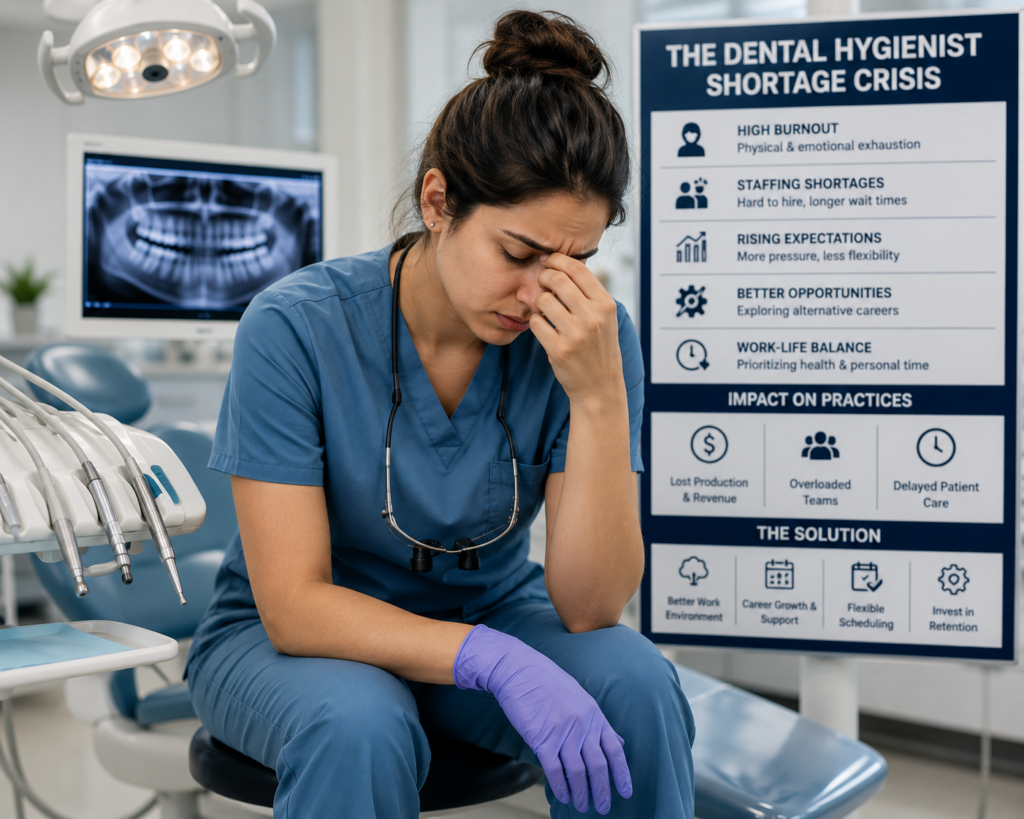
The dental industry is facing one of its most serious workforce crises in decades.
Across the United States, dental practices are struggling to hire and retain hygienists. Appointment delays are increasing, dentists are overloaded, and many clinics are operating below capacity — not because of a lack of patients, but because there simply are not enough hygienists available.
What was once viewed as a stable and attractive healthcare profession is now experiencing widespread burnout, dissatisfaction, and career exits.
So what is really happening?
Why are dental hygienists leaving the industry in such large numbers?
The answer is not simple. It is the result of multiple pressures colliding at once: physical strain, emotional burnout, rising expectations, workplace culture issues, changing generational priorities, and the evolving economics of dentistry.
This article explores the deeper reasons behind the hygienist shortage crisis in 2026 and what it means for the future of dentistry.
The Dental Staffing Crisis Is Real
Dental staffing shortages have become one of the biggest operational problems in modern dentistry.
According to the American Dental Association, many practices continue to report significant difficulty recruiting hygienists and assistants. (ada.org)
In many cities:
- Open positions remain unfilled for months
- Hygienist salaries have risen sharply
- Smaller clinics struggle to compete with DSOs
- Practices reduce patient schedules due to staffing shortages
Some dentists report losing thousands of dollars monthly because they cannot fully utilize operatories.
But the deeper issue is this:
Many hygienists are no longer viewing the profession as sustainable long-term.
1. Physical Burnout Is Extremely High
Dental hygiene is physically demanding.
Most hygienists spend hours daily:
- Leaning forward
- Maintaining repetitive hand movements
- Working in awkward positions
- Performing precision scaling procedures
This creates chronic:
- Neck pain
- Back pain
- Wrist injuries
- Shoulder strain
- Musculoskeletal disorders
Studies consistently show high rates of physical discomfort among hygienists. (dimensionsofdentalhygiene.com)
Many professionals eventually realize:
“My body cannot do this for another 20 years.”
Unlike some healthcare careers, dental hygiene offers limited physical flexibility once pain becomes severe.
2. Emotional Exhaustion After the Pandemic
COVID-19 changed dentistry permanently.
Dental hygienists faced:
- Increased infection fears
- PPE exhaustion
- Aerosol concerns
- Patient anxiety
- Workflow pressure
- Staffing instability
Even after the pandemic, the emotional effects remained.
Many hygienists now report:
- Anxiety
- Emotional fatigue
- Career dissatisfaction
- Feeling undervalued
The profession became more stressful while expectations continued increasing.
Some simply decided:
“The stress is no longer worth it.”
3. Rising Workload & Production Pressure
Modern dental practices are increasingly productivity-driven.
Many hygienists feel pressure to:
- See more patients faster
- Upsell treatments
- Maintain strict production goals
- Reduce appointment times
- Handle additional administrative tasks
In some corporate environments, hygienists describe feeling like production machines rather than healthcare professionals.
This creates frustration because many entered the profession to help patients — not operate under constant revenue pressure.
4. Workplace Toxicity & Lack of Respect
One of the most overlooked issues in dentistry is workplace culture.
Many hygienists report problems such as:
- Micromanagement
- Poor communication
- Lack of appreciation
- Scheduling overload
- Limited autonomy
- Difficult office politics
Social media and dental forums increasingly reveal frustrations about toxic office environments.
Some hygienists say:
“It’s not the dentistry that made me leave — it’s the workplace.”
In smaller clinics especially, interpersonal dynamics heavily influence retention.
5. Younger Generations Want Better Work-Life Balance
The expectations of younger healthcare workers are changing.
Many younger hygienists prioritize:
- Flexible schedules
- Mental health
- Personal time
- Reduced stress
- Career freedom
Traditional dental office culture often conflicts with these priorities.
Older models of:
- Full-time rigid schedules
- High physical demands
- Minimal flexibility
are becoming less attractive to younger professionals.
This generational shift is affecting healthcare broadly — but dentistry feels it intensely because staffing margins are already tight.
6. Better Opportunities Exist Elsewhere
Some hygienists are leaving clinical practice entirely for careers such as:
- Dental sales
- Education
- Insurance consulting
- Healthcare administration
- Remote healthcare support
- Content creation and coaching
These alternatives often provide:
- Better flexibility
- Reduced physical strain
- Comparable income
- Remote work opportunities
As digital healthcare expands, hygienists now have more career options outside the operatory.
7. Corporate Dentistry Is Changing the Work Environment
The rapid growth of Dental Service Organizations (DSOs) has reshaped workplace expectations.
Large corporate groups often offer:
- Higher salaries
- Signing bonuses
- Benefits packages
- Structured systems
But some hygienists report downsides such as:
- Higher production pressure
- Reduced autonomy
- Faster-paced schedules
- Corporate performance metrics
Independent practices sometimes struggle to compete financially, while corporate environments may feel emotionally draining.
This creates instability across the workforce.
8. Compensation Expectations Have Changed
One of the most visible effects of the shortage is rising wages.
In many U.S. regions:
- Hygienist hourly rates increased dramatically
- Signing bonuses became common
- Temporary hygienist rates surged
However, salary alone is not solving retention problems.
Many hygienists now prioritize:
- Schedule flexibility
- Office culture
- Physical sustainability
- Mental health
- Respect
Dentists offering only higher pay without improving work conditions often still face turnover.
9. Dental Hygiene Schools Are Not Filling the Gap Fast Enough
Another issue is supply.
Some dental hygiene programs report:
- Lower enrollment
- Faculty shortages
- Limited clinical capacity
- High education costs
Meanwhile, older hygienists continue retiring.
This creates a dangerous imbalance:
- Growing patient demand
- Shrinking workforce pipeline
The shortage may continue for years unless educational capacity expands significantly.
10. Dentistry Underestimated the Problem for Too Long
For years, many viewed hygienists as replaceable staff roles.
That mindset is now collapsing.
Dental hygienists are essential for:
- Preventive care
- Periodontal maintenance
- Patient relationships
- Treatment acceptance
- Practice revenue
Without hygienists:
- Schedules collapse
- Production drops
- Patient retention suffers
- Dentists become overloaded
The industry is beginning to realize:
The hygienist shortage is not a temporary inconvenience — it is a structural crisis.
How This Impacts Dental Practices
The consequences are already severe.
Practices Are Experiencing
- Longer patient wait times
- Reduced hygiene capacity
- Lost production revenue
- Increased dentist stress
- Patient dissatisfaction
- Overworked remaining staff
Some clinics now limit new patients simply because they lack hygiene coverage.
How Smart Practices Are Responding
Forward-thinking practices are adapting by:
- Improving workplace culture
- Offering flexible schedules
- Investing in ergonomics
- Reducing burnout
- Supporting continuing education
- Using AI and automation for admin tasks
- Creating healthier team environments
Retention is becoming more important than recruitment.
Will AI Replace Hygienists?
This question is increasingly discussed.
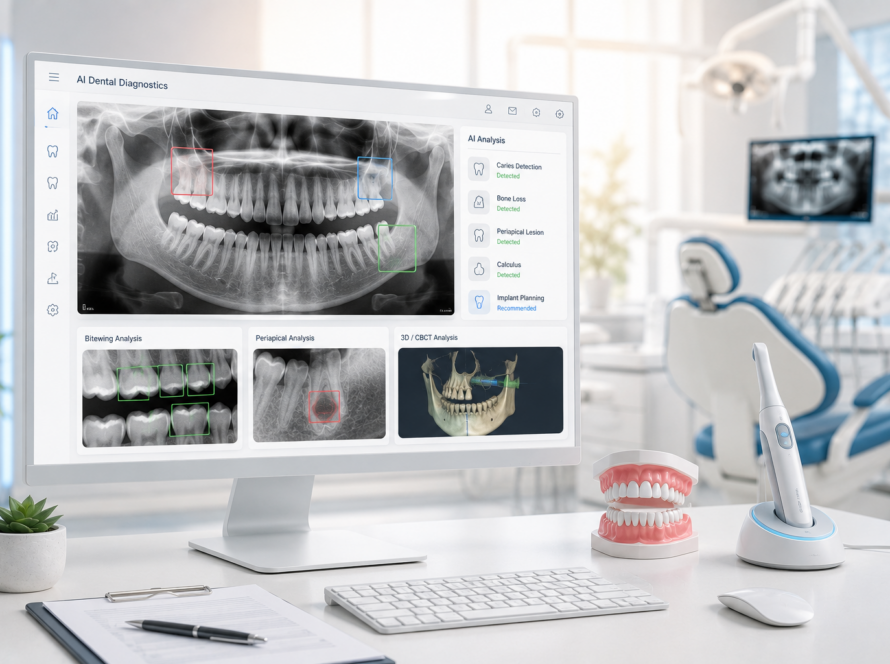
AI may automate:
- Charting
- Documentation
- Patient reminders
- Imaging analysis
But hygienists provide:
- Human interaction
- Preventive education
- Behavioral motivation
- Clinical judgment
- Emotional reassurance
AI may reduce administrative burden —
but human preventive care remains highly valuable.
The Future of Dental Hygiene
The profession is unlikely to disappear.
But it may evolve significantly.
Future trends may include:
- Shorter clinical workweeks
- Expanded preventive roles
- Better ergonomic technology
- AI-assisted workflows
- Greater career flexibility
- Increased salary expectations
Practices that adapt to these changes will likely attract and retain stronger teams.vantage through operational efficiency, improved diagnostics, enhanced patient experiences, and scalable practice management.
Final Thought
Dental hygienists are not leaving because they dislike dentistry alone.
They are leaving because:
- The work became physically exhausting
- Stress levels increased dramatically
- Workplace expectations changed
- Better alternatives emerged
- Work-life priorities shifted
The shortage is not caused by one issue —
it is the result of multiple long-building pressures reaching a breaking point.
The future of dentistry will depend heavily on whether the industry can create healthier, more sustainable careers for hygienists.
Because without them, modern dentistry simply cannot function efficiently.
Key Takeaways:
- Dental hygienist shortages are worsening across the U.S.
- Physical burnout remains a major issue
- Pandemic stress accelerated workforce exits
- Workplace culture strongly impacts retention
- Younger professionals prioritize flexibility and mental health
- Corporate dentistry changed staffing expectations
- Higher salaries alone are not solving the crisis
- AI may reduce workload but will not fully replace hygienists
- Retention strategies are becoming critical for dental practices