
A bright, white smile has become one of the most desired cosmetic features worldwide. With social media, video conferencing, and digital photography influencing personal appearance, professional teeth whitening procedures have seen unprecedented demand. Among the most popular treatments is laser teeth whitening, a procedure that promises dramatic results in a single dental visit.
But many patients still ask an important question:
Is laser teeth whitening safe?
The short answer is yes—when performed by a qualified dental professional on suitable candidates, laser teeth whitening is considered a safe and effective cosmetic procedure. However, like any dental treatment, it has benefits, limitations, and potential side effects that patients should understand before undergoing treatment.
According to cosmetic dentistry trends highlighted by DenTrends, laser whitening continues to evolve with safer whitening gels, improved light technologies, and personalized treatment protocols that deliver faster and more predictable results.
What Is Laser Teeth Whitening?
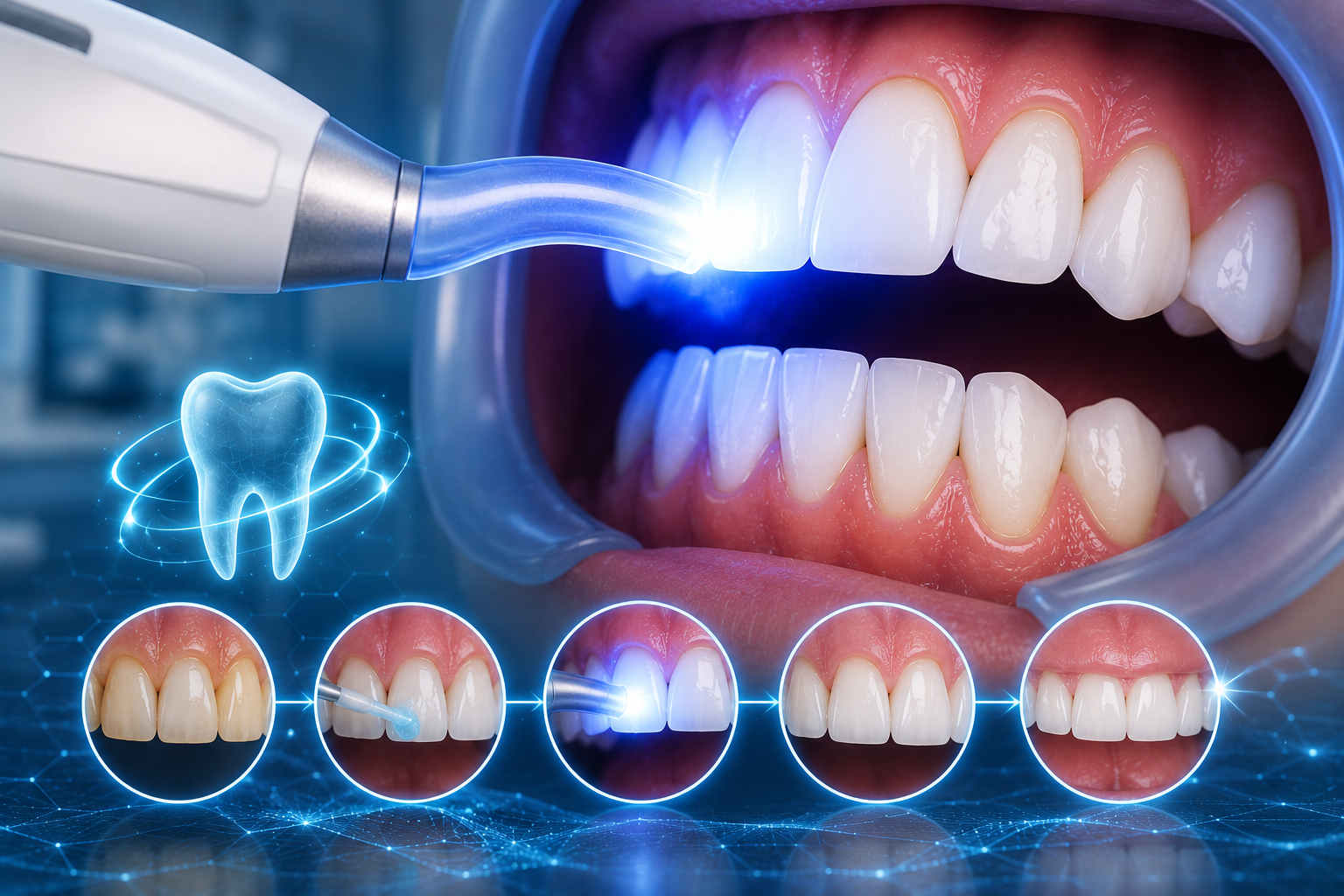
Laser teeth whitening is an in-office cosmetic dental procedure designed to lighten the color of natural teeth.
The process involves applying a professional-grade whitening gel, typically containing hydrogen peroxide or carbamide peroxide, to the tooth surface. A specialized laser or LED light is then used to activate the gel, accelerating the chemical reaction that breaks down stains within the enamel and dentin.
Unlike over-the-counter whitening products, laser whitening is performed under professional supervision, allowing higher concentrations of whitening agents to be used safely.
Many patients notice significant improvement after just one appointment.
How Does Laser Teeth Whitening Work?
Tooth discoloration occurs when pigments from foods, beverages, tobacco, and aging penetrate the enamel and underlying dentin.
The whitening gel releases oxygen molecules that penetrate the tooth structure and break apart stain molecules into smaller, less visible particles.
The laser or activating light helps speed up this oxidation process, allowing stains to be removed more efficiently.
The result is a brighter and more youthful-looking smile without damaging the natural tooth structure when performed correctly.
Is Laser Teeth Whitening Safe?
Clinical research and years of professional use indicate that laser teeth whitening is generally safe when carried out by trained dental professionals.
Before treatment, dentists evaluate:
- Oral health
- Existing restorations
- Gum condition
- Tooth sensitivity
- Enamel quality
- Presence of cavities
This assessment helps ensure that whitening is appropriate and minimizes the risk of complications.
Professional isolation techniques protect the gums and soft tissues during the procedure, reducing exposure to whitening agents.
Common Side Effects
Although safe, temporary side effects may occur.
The most common is tooth sensitivity, which usually lasts from a few hours to several days after treatment.
Patients may also experience mild gum irritation if whitening gel contacts soft tissues.
These effects are typically temporary and resolve without permanent damage.
Dentists often recommend desensitizing toothpaste and avoiding extremely hot or cold foods for a short period after treatment.
Does Laser Whitening Damage Enamel?
One of the most common myths is that whitening permanently damages enamel.
Current scientific evidence indicates that professionally supervised whitening does not remove enamel or weaken healthy teeth when performed according to manufacturer guidelines.
The whitening process changes the color of internal pigments rather than physically removing tooth structure.
However, excessive or repeated whitening without professional supervision may increase sensitivity and should be avoided.
Moderation and professional guidance are essential.
Who Is a Good Candidate?
Laser whitening is most effective for patients with healthy natural teeth affected by:
- Yellow discoloration
- Food stains
- Coffee stains
- Tea stains
- Tobacco stains
- Age-related discoloration
Patients should have healthy gums and no untreated decay before whitening begins.
A professional dental examination is recommended to determine suitability.
Who Should Avoid Laser Whitening?
Laser whitening may not be appropriate for:
- Pregnant or breastfeeding women
- Children and adolescents
- Patients with untreated cavities
- Individuals with active gum disease
- Patients with severe enamel erosion
- People with significant tooth sensitivity
Additionally, crowns, veneers, bridges, and composite fillings do not whiten and may require replacement if color mismatch occurs after treatment.
Laser Whitening vs At-Home Whitening
Professional laser whitening offers several advantages over over-the-counter products.
It provides:
- Faster results
- Higher whitening effectiveness
- Professional supervision
- Better gum protection
- Customized treatment
Home whitening kits are generally more affordable but require longer treatment periods and may produce less dramatic results.
Many dentists recommend combining in-office whitening with custom home trays for long-term maintenance.
How Long Do Results Last?
The longevity of whitening depends largely on lifestyle habits.
Patients who frequently consume:
- Coffee
- Tea
- Red wine
- Tobacco
- Colored soft drinks
may experience faster stain recurrence.
With good oral hygiene and occasional maintenance, professional whitening results often last between one and three years.
Regular dental cleanings also help preserve a brighter smile.
New Advances in Whitening Technology
Modern whitening systems have become safer and more effective than previous generations.
Innovations include:
- Low-sensitivity whitening gels
- LED-assisted activation systems
- AI-assisted shade analysis
- Digital smile simulation
- Personalized whitening protocols
These advances improve treatment predictability while reducing post-treatment discomfort.
The future of cosmetic dentistry is increasingly personalized and technology-driven.
The Importance of Professional Supervision
Although many whitening products are available online, professional supervision remains the safest approach.
Dentists can identify conditions such as cracks, decay, exposed roots, or defective restorations that may increase the risk of sensitivity or complications.
Professional whitening also ensures appropriate gel concentration, correct application, and proper protection of soft tissues.
Attempting aggressive whitening without dental evaluation may lead to avoidable problems.
DenTrends Thoughts
Laser teeth whitening remains one of the safest and most effective cosmetic dental procedures available in 2026 when performed by qualified professionals.
It offers rapid, noticeable improvements in smile aesthetics without damaging healthy enamel and can significantly boost confidence for suitable candidates.
While temporary sensitivity may occur, serious complications are uncommon when proper protocols are followed.
The key to successful whitening lies in professional assessment, individualized treatment planning, and realistic expectations.
For patients seeking a brighter smile, laser teeth whitening continues to be an excellent option as part of a comprehensive cosmetic dental care plan.For patients seeking a brighter smile, laser teeth whitening continues to be an excellent option as part of a comprehensive cosmetic dental care plan.
References
- American Dental Association (ADA) – Tooth Whitening
https://www.ada.org/resources/ada-library/oral-health-topics/tooth-whitening - Mayo Clinic – Teeth Whitening Overview
https://www.mayoclinic.org/healthy-lifestyle/adult-health/expert-answers/teeth-whitening/faq-20058436 - National Health Service (NHS) – Teeth Whitening
https://www.nhs.uk/conditions/teeth-whitening/ - Journal of Esthetic and Restorative Dentistry – Evidence on Tooth Whitening Safety and Effectiveness
https://onlinelibrary.wiley.com/journal/17088240 - Cochrane Library – Home and Professionally Applied Tooth Whitening
https://www.cochranelibrary.com/