
Dental implants have become the gold standard for replacing missing teeth, with success rates exceeding 95% in many cases. While much attention is given to the implant placement procedure itself, the recovery phase is equally important for long-term success.
One of the most common questions patients ask is:
“How long does it take to recover from dental implant surgery?”
The answer depends on several factors, including:
- Number of implants placed
- Bone quality
- Overall health
- Whether bone grafting was performed
- Smoking habits
- Implant location
- Individual healing ability
The good news is that most patients are surprised by how manageable the recovery process actually is.
According to implant treatment trends analyzed by DenTrends.com, modern digital implant planning, guided surgery, and minimally invasive techniques have significantly reduced discomfort and healing complications compared with older implant procedures. Understanding what happens during each stage of healing helps patients recover more confidently and recognize what is normal—and what may require professional attention.
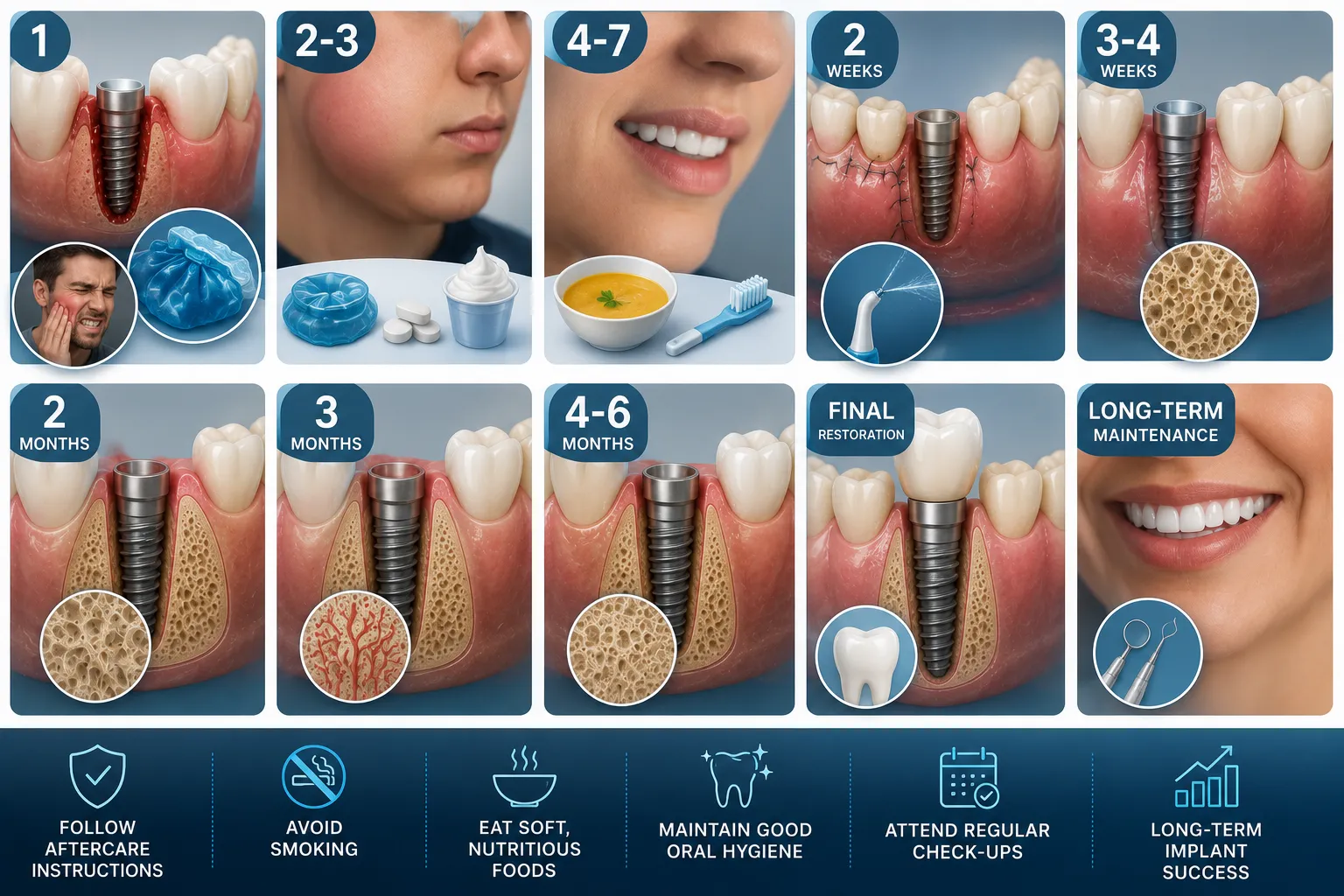
Day 1: The First 24 Hours
The first day after implant surgery is when the body begins its immediate healing response.
Patients commonly experience:
- Mild bleeding
- Swelling
- Tenderness
- Minor discomfort
- Tightness around the surgical site
The intensity depends on the complexity of the procedure. A single implant often causes minimal discomfort, while full-arch procedures may create more noticeable swelling.
Dentists typically recommend:
- Resting
- Applying cold compresses
- Taking prescribed medications
- Avoiding vigorous rinsing
- Eating soft foods
During this stage, blood clot formation is critical because it initiates the healing process. Most patients describe the discomfort as milder than expected and often less severe than a difficult tooth extraction.
Days 2–3: Peak Swelling Phase
For many patients, swelling reaches its highest point around the second or third day.
This is completely normal.
Patients may notice:
- Facial puffiness
- Mild bruising
- Jaw stiffness
- Tender gums
The body’s inflammatory response is actively repairing tissue and protecting the surgical site.
Soft foods remain important, including:
- Yogurt
- Soup
- Mashed potatoes
- Smoothies
- Scrambled eggs
Patients should continue avoiding:
- Smoking
- Alcohol
- Hard foods
- Excessive physical activity
By the end of Day 3, discomfort usually begins improving significantly.
Days 4–7: First Week of Recovery
By the fourth day, most patients notice a major improvement.
Swelling begins decreasing and normal daily activities become easier.
During the first week:
- Gum tissue starts healing
- Surgical soreness decreases
- Eating becomes more comfortable
- Energy levels return to normal
Patients may still experience mild tenderness when touching the area, but severe pain is not typical.
If severe pain develops during this period, professional evaluation may be necessary because infection or other complications could be present. By the end of the first week, many patients feel nearly back to normal.
Week 2: Soft Tissue Healing
The second week focuses primarily on gum healing.
The surgical site becomes:
- Less sensitive
- Less swollen
- More comfortable
Stitches, if present, may be:
- Dissolving naturally
- Removed by the dentist
Many patients are surprised at how normal the area begins to feel.
However, even though symptoms improve, the implant is still far from fully healed. The most important healing process—osseointegration—is only beginning.
Weeks 3–4: Bone Integration Begins
At this stage, most visible signs of surgery have disappeared.
Patients typically:
- Eat comfortably
- Speak normally
- Return fully to daily routines
Internally, however, the jawbone is actively bonding with the implant surface.
This biological process is called osseointegration.
During osseointegration:
- Bone cells attach to the implant
- Stability gradually increases
- Long-term support develops
Patients often feel completely healed at this point, but the implant remains biologically vulnerable. Following professional instructions remains extremely important.
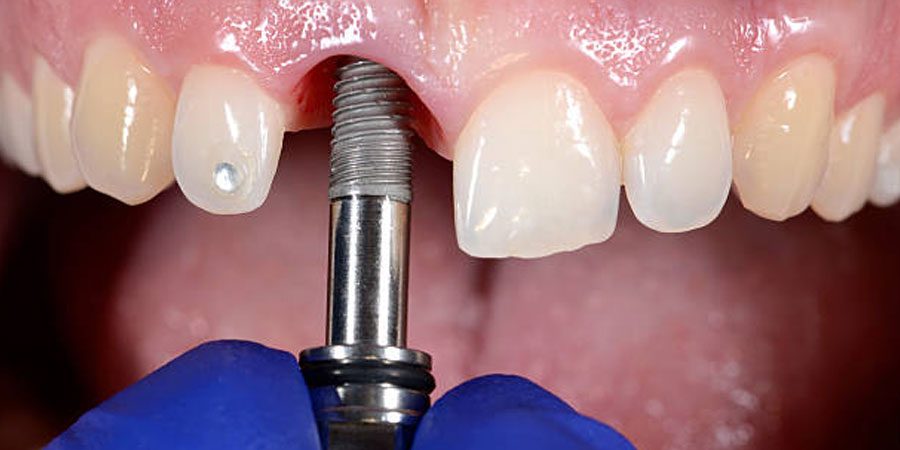
Month 2: Increasing Stability
By the second month, bone integration continues strengthening.
The implant becomes progressively more stable as bone density increases around the implant threads.
Patients usually experience:
- No pain
- No swelling
- Normal oral function
In many cases, the implant cannot yet support full chewing forces, but the biological foundation is becoming stronger every week.
Modern implant systems with advanced surface technologies often accelerate this process.
Premium systems from:
are designed specifically to improve bone attachment and healing predictability.
Month 3: Osseointegration Progresses
Around the third month, many implants achieve substantial biological integration.
This is often a key evaluation point.
Dentists may perform:
- Clinical stability tests
- X-rays
- Digital assessments
to confirm healing progress.
For many straightforward implant cases, restoration planning begins around this stage. The patient may notice nothing unusual, but internally the implant is transitioning from a healing implant into a functioning artificial root.
Months 4–6: Final Integration Phase
Between months four and six, osseointegration typically reaches maturity.
The implant becomes fully anchored within the jawbone.
At this stage:
- Final crowns may be placed
- Implant-supported bridges may be completed
- Full chewing function is restored
For patients receiving immediate temporary restorations, this is often when permanent prosthetics replace temporary teeth.
The final restoration is designed to provide:
- Strength
- Function
- Esthetics
- Long-term durability
Most patients consider this the true completion of treatment.
Recovery After Full-Arch Implant Procedures
Procedures such as All-on-4 or full-mouth rehabilitation follow a similar timeline but often involve more extensive healing.
Patients may experience:
- Greater swelling
- Longer adjustment periods
- More dietary restrictions initially
However, many full-arch patients also receive temporary fixed teeth immediately after surgery.
This allows them to enjoy:
- Improved appearance
- Better speech
- Increased confidence
while osseointegration occurs. Despite having teeth immediately, the implants themselves still require several months of biological healing.
Factors That Can Slow Recovery
Not all patients heal at the same speed.
Several factors can delay implant healing, including:
- Smoking
- Uncontrolled diabetes
- Poor oral hygiene
- Severe bone loss
- Chronic inflammation
- Certain medications
- Excessive chewing forces
Patients who follow post-operative instructions carefully generally experience smoother recovery and better long-term outcomes.
How Digital Dentistry Improves Recovery
Modern implant recovery is becoming faster and more predictable because of digital technology.
Today’s advanced implant clinics increasingly use:
- CBCT imaging
- Guided surgery
- AI-assisted planning
- Intraoral scanning
- Digital bite analysis
Systems such as:
allow highly accurate treatment planning and restoration design.
CBCT imaging from:
helps dentists evaluate bone anatomy with remarkable precision.
AI-driven platforms such as:
are increasingly supporting implant planning and risk assessment. These technologies reduce surgical trauma and improve healing predictability.
When Should Patients Be Concerned?
While mild discomfort is normal, patients should contact their dentist if they experience:
- Severe or worsening pain
- Persistent bleeding
- Pus or discharge
- Fever
- Significant implant mobility
- Increasing swelling after the first week
Early intervention can often prevent more serious complications.
DenTrends Thoughts
Dental implant recovery is a gradual biological process that extends far beyond the day of surgery.
Most patients feel significantly better within:
- A few days
- One to two weeks
However, complete osseointegration typically requires:
- Three to six months
depending on the individual case.
Modern implant technology, AI-assisted planning, and digital workflows have made recovery more comfortable and predictable than ever before.
According to implantology insights published by DenTrends.com, the future of implant recovery will likely become even faster as advances in regenerative medicine, biomaterials, and artificial intelligence continue transforming modern dentistry.
Because successful implant treatment is not simply about placing an implant. It is about supporting the body through every stage of healing until that implant becomes a permanent part of a healthy, confident smile.