
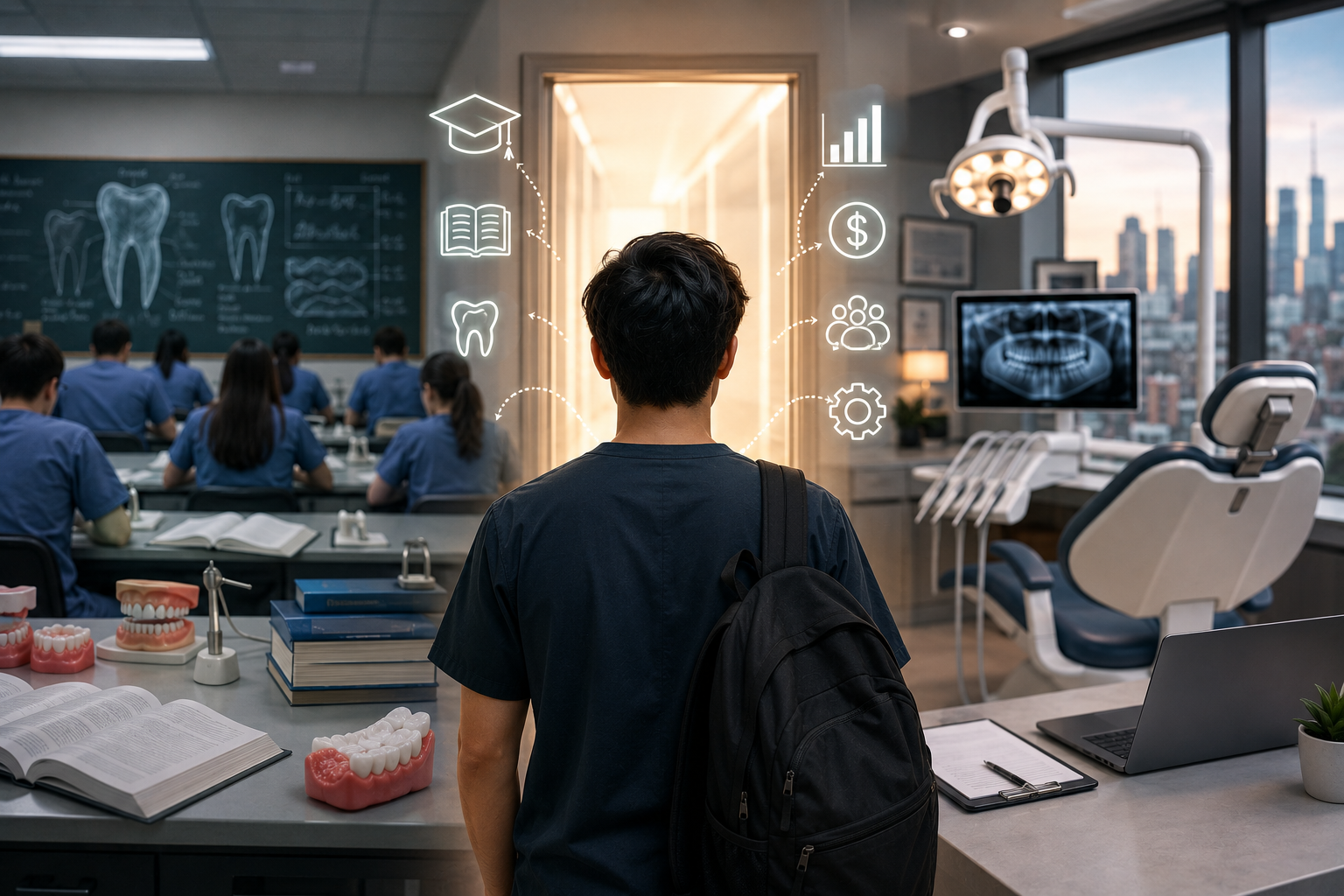
For decades, dental school has been considered the gateway to a respected and financially stable profession. Every year, thousands of students spend enormous amounts of time, effort, and money pursuing a dental degree with the expectation that they will graduate fully prepared to succeed in clinical practice.
But in 2026, a growing number of dentists are asking a difficult question:
Are dental schools truly preparing dentists for the real world?
The concern is becoming louder across the industry. Many new graduates say they leave dental school with strong theoretical knowledge but limited preparation for the realities of modern dentistry — especially when it comes to business management, patient communication, financial pressure, technology integration, and real-world clinical efficiency.
At the same time, dental schools face their own challenges:
- Rising education costs
- Rapid technological change
- Faculty shortages
- Expanding curriculum demands
- Increasing student debt
- Pressure to modernize training
The result is a widening gap between academic dentistry and real-world dental practice.
This gap is now shaping the future of the entire profession.
The Rising Cost of Becoming a Dentist
One of the biggest issues surrounding dental education today is cost.
Dental school tuition in the United States has increased dramatically over the past two decades. Many graduates now leave school carrying:
- $300,000
- $400,000
- Even $500,000+
in student debt.
According to the American Dental Education Association (ADEA), student debt continues to rise significantly across dental education programs.
This financial burden changes how graduates approach their careers from day one.
Instead of focusing purely on clinical growth, many young dentists immediately worry about:
- Loan repayment
- Income expectations
- Corporate job opportunities
- Production pressure
- Practice ownership risks
Debt is no longer just a financial issue —
it directly influences career decisions and mental health.
Strong in Theory, Weak in Real-World Practice?
Dental schools provide extensive education in:
- Anatomy
- Oral pathology
- Restorative dentistry
- Radiology
- Prosthodontics
- Periodontics
- Pharmacology
- Clinical sciences
Students spend years mastering the scientific foundation of dentistry.
However, many graduates report feeling underprepared for the realities of:
- Running a dental practice
- Managing patient expectations
- Handling insurance systems
- Communicating treatment costs
- Working efficiently under time pressure
- Managing difficult patients
- Leading teams
In school, students often focus on ideal clinical conditions.
Real-world dentistry is far more unpredictable.
Patients may:
- Have financial limitations
- Delay treatment
- Fear dentistry
- Decline recommendations
- Arrive with complex medical histories
- Expect fast and affordable solutions
Many new dentists discover that clinical skill alone is not enough to succeed.
The Business Side of Dentistry Is Often Missing
One of the biggest criticisms of dental education is the lack of business training.
Most dental schools spend very little time teaching:
- Practice management
- Marketing
- Hiring
- Leadership
- Financial systems
- Branding
- Insurance negotiations
- Patient acquisition
- Entrepreneurship
Yet modern dentistry is deeply connected to business operations.
A dentist today is not only a healthcare provider —
they are often also:
- A business owner
- A team leader
- A marketer
- A technology decision-maker
- A financial manager
Many graduates enter the workforce without understanding:
- Profit margins
- PPO systems
- Cash flow
- Staff management
- Practice growth strategy
This lack of preparation creates major stress during the early years of practice ownership.
New Dentists Often Struggle With Speed and Efficiency
Dental schools naturally prioritize precision and ideal technique.
But real-world dentistry requires balancing:
- Quality
- Efficiency
- Time management
- Patient comfort
- Financial sustainability
Many graduates discover that procedures performed slowly in school must be completed much faster in actual practice environments.
For example:
- Crown preparations
- Composite restorations
- Hygiene exams
- Emergency cases
must often be completed efficiently while maintaining quality care.
Some dentists report needing years after graduation to become truly comfortable with real-world workflow speed.
Corporate Dentistry Is Changing New Graduate Expectations
The rapid growth of Dental Service Organizations (DSOs) has also changed the transition from school to practice.
Many graduates now join corporate dental groups immediately after graduation because they offer:
- Guaranteed income
- Structured systems
- Mentorship
- Benefits
- Reduced business risk
For some dentists, DSOs provide valuable clinical experience and confidence-building opportunities.
However, critics argue that some corporate environments may prioritize:
- Production goals
- Treatment volume
- Revenue targets
over long-term clinical development.
This creates concern about whether new dentists are being shaped more by business systems than traditional mentorship models.
Technology Is Evolving Faster Than Education
Modern dentistry is undergoing rapid technological transformation.
Today’s dentists increasingly work with:
- AI diagnostics
- Digital scanners
- CBCT imaging
- CAD/CAM systems
- 3D printing
- Laser dentistry
- Cloud-based workflows
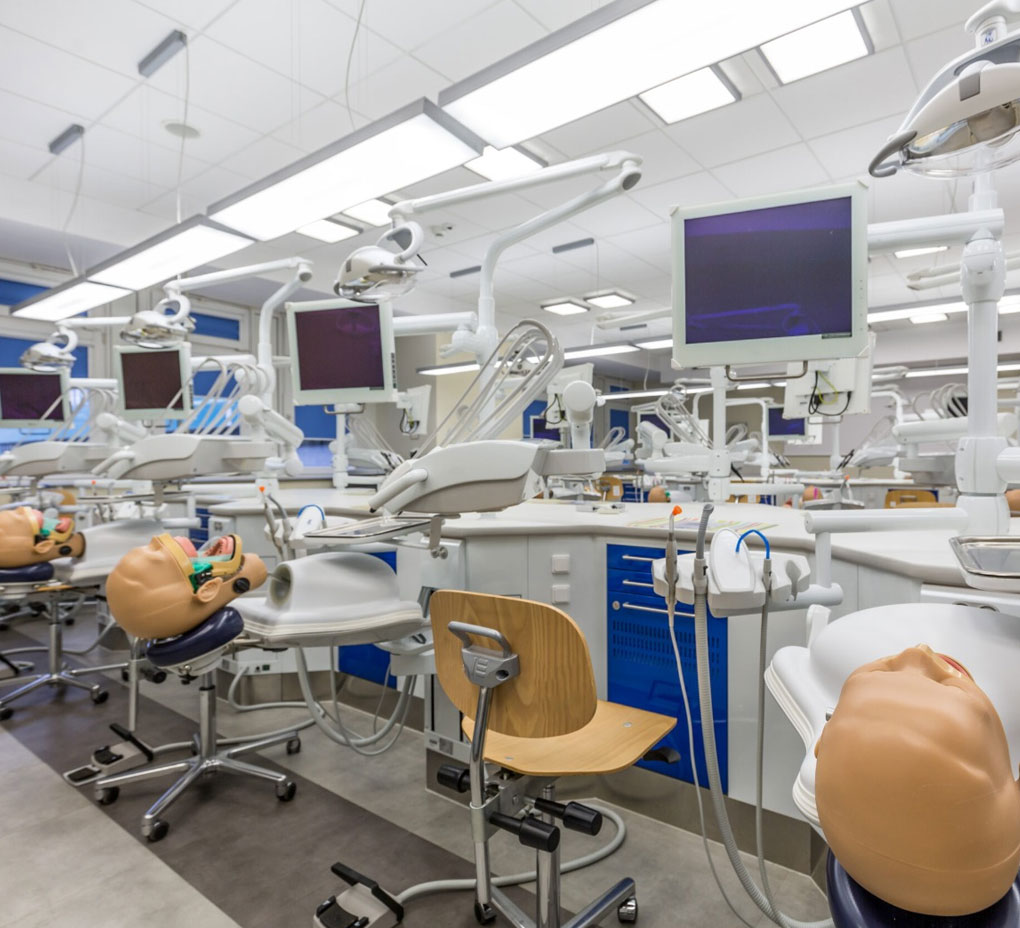
The challenge is that educational systems often move slower than industry innovation.
Some graduates report limited hands-on exposure to advanced technologies during school, only encountering them fully after entering private practice.
This creates another real-world gap:
Students graduate into a profession evolving faster than the classroom.
Patient Communication Skills Matter More Than Ever
One of the biggest surprises for many new dentists is how important communication skills are in modern dentistry.
Clinical expertise alone does not guarantee patient trust.
Dentists must also know how to:
- Explain treatment clearly
- Handle anxious patients
- Discuss finances professionally
- Build emotional trust
- Manage expectations
- Respond to online reviews
- Communicate ethically
Many dental schools still emphasize technical performance far more than interpersonal communication.
Yet in the real world:
Patient experience strongly influences success.
A highly skilled dentist with poor communication may struggle more than an average clinician with exceptional people skills.
Mental Health Challenges Among New Dentists
The transition from dental school into professional practice can be emotionally overwhelming.
New graduates often face:
- Financial anxiety
- Imposter syndrome
- Clinical pressure
- Fear of mistakes
- Production expectations
- Burnout
- Isolation
Dentistry already has historically high stress levels, and younger dentists are entering the profession during a time of:
- Staffing shortages
- Insurance pressure
- Corporate consolidation
- Economic uncertainty
Some experts believe dental education still underestimates the emotional realities of modern practice life.
Are Dental Schools Teaching Outdated Models?
Another growing criticism is that some educational systems still emphasize outdated practice models.
Traditional dental education was built around:
- Solo private practice ownership
- Long-term patient loyalty
- Conventional workflows
- Slower technological change
But dentistry in 2026 now includes:
- AI integration
- Social media branding
- Corporate dentistry
- Digital marketing
- Membership plans
- Remote consultations
- Patient review culture
Many young dentists believe schools should better prepare students for the modern digital economy surrounding dentistry.
What Dental Schools Are Doing Right
Despite criticisms, dental schools still provide essential foundations.
Dental education successfully teaches:
- Scientific knowledge
- Diagnostic thinking
- Ethical standards
- Infection control
- Clinical safety
- Treatment planning fundamentals
Without rigorous education standards, patient safety would be at risk.
The issue is not that dental schools are failing completely —
it is that the profession itself evolved rapidly.
Modern dentistry now requires far more than technical ability alone.
What Future Dental Education May Need
Experts increasingly believe dental education may need major modernization.
Future curriculum improvements could include:
- Practice management training
- Financial education
- Leadership development
- Communication psychology
- AI and digital dentistry
- Marketing fundamentals
- Mental health support
- Real-world case exposure
The future dentist will likely need a hybrid skill set combining:
- Clinical excellence
- Business intelligence
- Emotional communication
- Technological adaptability
The Reality Shock Many Graduates Experience
One of the most common experiences among new dentists is “reality shock.”
Dental school teaches ideal dentistry.
Real-world practice often involves:
- Insurance limitations
- Financial compromises
- Time pressure
- Patient fear
- Staffing issues
- Administrative overload
This transition can feel emotionally difficult for young professionals who expected clinical dentistry to be their only challenge.
Can Mentorship Solve the Gap?
Strong mentorship remains one of the most valuable solutions.
Experienced dentists can help new graduates learn:
- Clinical efficiency
- Patient communication
- Ethical decision-making
- Real-world treatment planning
- Business strategy
Unfortunately, mentorship quality varies widely depending on workplace environments. Some corporate systems provide excellent support.
Others provide minimal guidance
Final Thought
Dental schools are not completely failing future dentists.
But many graduates are entering a profession far more complicated than the one traditional education models were originally designed for.
Modern dentistry now requires:
- Clinical skill
- Business understanding
- Technology adaptation
- Emotional intelligence
- Financial awareness
- Communication mastery
The real-world dental industry is evolving rapidly through AI, corporate expansion, digital marketing, and changing patient expectations.
Educational systems must evolve alongside it.
Because the future dentist will need far more than the ability to restore teeth —
they will need the ability to navigate one of the most rapidly changing healthcare industries in America.
Key Takeaways
- Dental school debt is reaching record levels
- Many graduates feel underprepared for real-world practice
- Business and leadership education are often limited
- Technology is evolving faster than educational systems
- Communication skills are becoming critical in dentistry
- Corporate dentistry is reshaping early career paths
- Mental health challenges among new dentists are increasing
- Modern dentistry requires both clinical and entrepreneurial skills
- Mentorship plays a major role in bridging the education gap
- Future dental education may require major modernization