
The digital transformation of dentistry is accelerating rapidly in 2026, and one of the biggest operational changes happening inside modern clinics is the rise of electronic prescription systems.
Traditional handwritten prescriptions are steadily disappearing as dental practices adopt secure, cloud-based e-prescription software integrated with:
- AI-powered workflows
- Compliance systems
- Pharmacy networks
- Practice management platforms
- Controlled substance monitoring
- Real-time drug interaction alerts
Modern e-prescription software is no longer simply a digital replacement for paper prescriptions.
Today’s systems increasingly function as intelligent healthcare platforms capable of improving:
- Patient safety
- Workflow efficiency
- Medication accuracy
- Compliance management
- Documentation automation
For modern dental practices, electronic prescribing is becoming increasingly important because clinics now operate within highly regulated, digitally connected healthcare environments.
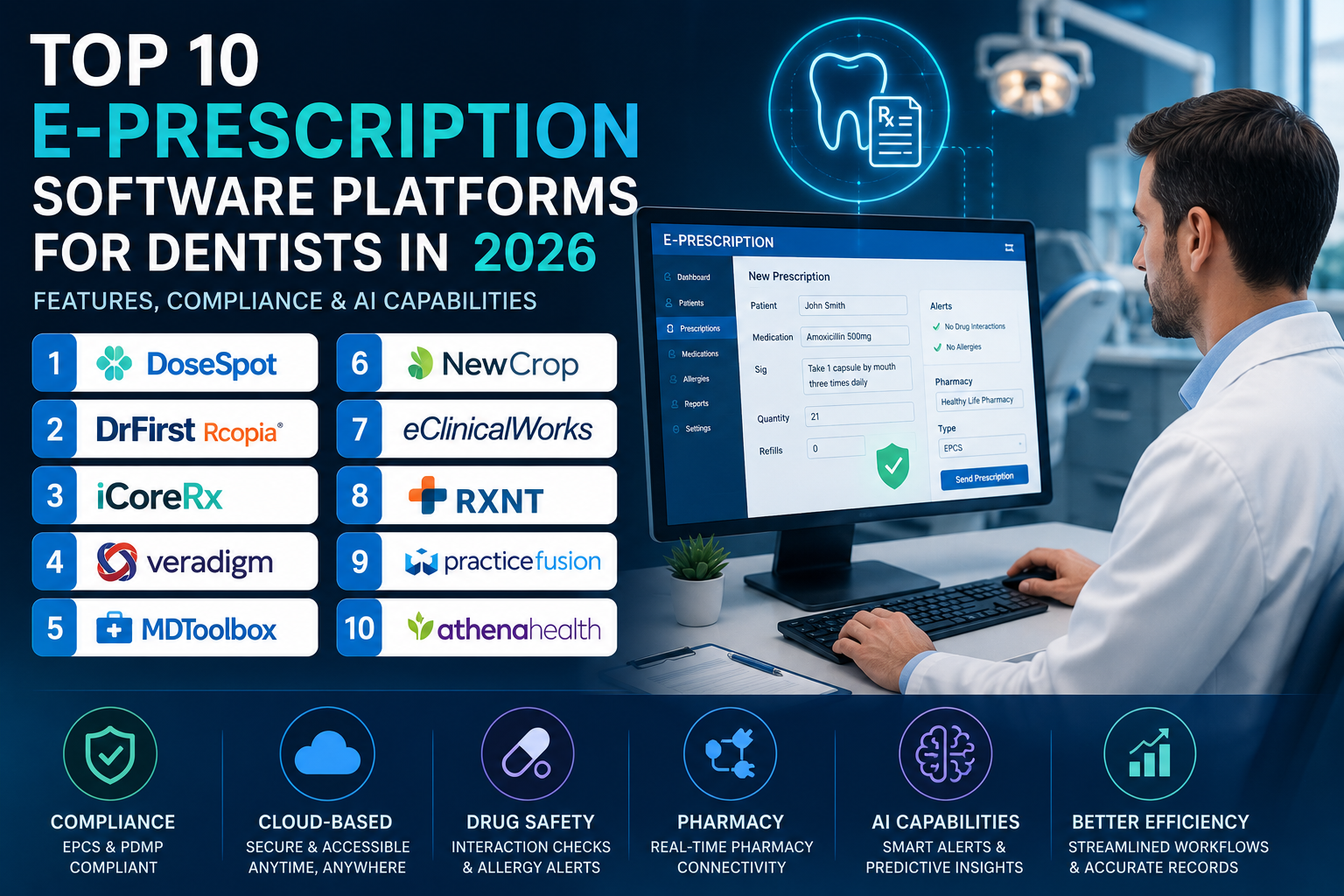
According to digital dentistry technology analysis by DenTrends.com, e-prescription platforms are becoming a foundational part of the future AI-powered dental clinic. Here are the leading e-prescription software platforms most widely used and respected by dentists in 2026.
1. DoseSpot
DoseSpot remains one of the most recognized e-prescribing systems in healthcare and continues expanding rapidly across modern dental software ecosystems.
The platform is heavily focused on:
- Controlled substance compliance
- Cloud-based workflows
- Real-time pharmacy connectivity
- API integration flexibility
DoseSpot supports:
- EPCS compliance
- Drug interaction alerts
- Allergy checking
- Prescription history analysis
- PDMP integration
One major reason dental software companies frequently integrate DoseSpot is its strong interoperability with cloud-based practice management systems. In 2026, integration flexibility has become extremely important because modern dental clinics increasingly rely on connected digital ecosystems rather than isolated software systems.
2. DrFirst Rcopia
DrFirst Rcopia remains one of the most established electronic prescribing platforms in healthcare.
The software focuses heavily on:
- Prescription accuracy
- Clinical decision support
- Compliance management
- Medication intelligence
Rcopia offers:
- Real-time pharmacy integration
- Controlled substance prescribing
- Medication history tracking
- Drug interaction analysis
- AI-assisted safety alerts
Large DSOs and multi-location dental organizations increasingly prefer enterprise-grade systems like Rcopia because of their strong compliance infrastructure and scalability. According to healthcare software trends covered by DenTrends.com, platforms like Rcopia represent the growing integration between dentistry and broader healthcare technology ecosystems.
3. iCoreRx
iCoreRx has become one of the most popular dental-focused e-prescription systems because it was specifically designed around dental workflows.
Unlike generalized medical prescribing software, iCoreRx focuses heavily on:
- Dental medication management
- Oral surgery workflows
- Sedation support
- Implant dentistry integration
- Dental-specific compliance systems
The platform integrates directly with multiple dental practice management systems and supports:
- EPCS compliance
- Pharmacy communication
- Controlled medication monitoring
- Secure cloud prescribing
Dental specialists performing:
- Oral surgery
- Sedation dentistry
- Implantology
- Endodontics
often prefer dental-specific prescribing platforms because they align better with real-world dental workflows.
4. Veradigm ePrescribe
Veradigm ePrescribe continues growing because of its focus on AI-assisted healthcare analytics and advanced interoperability.
The platform supports:
- Electronic prescribing
- Clinical decision support
- Real-time insurance eligibility
- Medication history tracking
- Predictive healthcare analytics
One major trend in 2026 is the increasing use of AI-driven prescribing intelligence.
Veradigm is investing heavily in:
- Predictive risk analysis
- Smart medication workflows
- Population health analytics
- AI-assisted safety monitoring
As dentistry becomes increasingly integrated with overall healthcare systems, platforms with advanced healthcare intelligence capabilities may become more valuable.
5. MDToolbox ePrescribe
MDToolbox has become highly respected among independent dental practices because of its simplicity and affordability.
The platform focuses strongly on:
- User-friendly workflows
- Fast prescription generation
- Controlled substance compliance
- Cloud accessibility
Smaller clinics often appreciate MDToolbox because it offers:
- Lower onboarding complexity
- Simple interface design
- Quick implementation
- Reliable compliance workflows
In 2026, many independent practices increasingly prioritize software that balances:
- Compliance
- Simplicity
- Affordability
- Cloud flexibility
without requiring enterprise-level infrastructure.
6. NewCrop eRx
NewCrop remains one of the most widely integrated prescribing engines within healthcare technology ecosystems.
The platform supports:
- Electronic prescribing
- Controlled substance workflows
- Drug interaction analysis
- Compliance tracking
- Real-time pharmacy communication
One of NewCrop’s biggest strengths is integration capability.
Many healthcare and dental software vendors use NewCrop as a backend e-prescription infrastructure layer inside larger workflow ecosystems. As cloud-based dental software expands rapidly, interoperability continues becoming increasingly important.
7. eClinicalWorks ePrescribing
eClinicalWorks Official Website
Although primarily known within medical healthcare, eClinicalWorks continues influencing integrated dental-medical workflows.
The platform offers:
- Electronic prescribing
- AI-assisted documentation
- Population health analytics
- Interoperable healthcare records
- Cloud-connected workflows
Larger dental organizations increasingly recognize the growing relationship between oral health and systemic healthcare integration.
Platforms like eClinicalWorks represent the future direction of connected healthcare ecosystems where:
- Dentistry
- Medicine
- Pharmacy systems
- AI analytics
operate together seamlessly.
8. RXNT ePrescribing
RXNT has gained popularity because of its strong cloud-based prescribing infrastructure and affordability for smaller healthcare providers.
The platform supports:
- Electronic prescribing
- Controlled substance compliance
- Mobile accessibility
- Prescription history monitoring
- Pharmacy connectivity
One major advantage of RXNT is flexibility.
Dentists increasingly value software capable of operating across:
- Desktop systems
- Tablets
- Mobile devices
especially in fast-moving clinical environments. RXNT also continues improving automation workflows and AI-assisted functionality.
9. Practice Fusion ePrescribing
Practice Fusion Official Website
Practice Fusion remains a widely recognized cloud healthcare platform with integrated e-prescription functionality.
The system supports:
- Electronic prescriptions
- Medication history
- Drug interaction alerts
- Cloud-based patient records
- Clinical workflow management
Its strong cloud infrastructure makes it attractive for clinics seeking simplified digital workflow ecosystems. As dental practices increasingly move toward cloud-first operations, software accessibility and remote management continue becoming important competitive factors
10. Athenahealth Eprescribing
Athenahealth remains one of the most advanced cloud healthcare ecosystems globally.
Its prescribing platform integrates:
- AI-driven workflows
- Clinical decision support
- Prescription analytics
- Real-time compliance management
- Population health systems
Athenahealth is especially strong in:
- Enterprise healthcare integration
- Predictive analytics
- Large-scale cloud infrastructure
While more common in medical healthcare, its influence on future integrated dental-medical ecosystems continues growing rapidly. According to healthcare digitization trends analyzed by DenTrends.com, platforms like Athenahealth reflect the broader movement toward fully connected AI-powered healthcare systems.
Why E-Prescription Software Matters More in 2026
Modern dentistry now involves increasingly complex medication management.
Dentists routinely prescribe:
- Antibiotics
- Sedation medications
- Pain management drugs
- Anti-inflammatory medications
- Emergency medications
At the same time, healthcare regulations surrounding controlled substances continue becoming stricter globally.
Electronic prescribing systems help reduce:
- Handwriting errors
- Prescription fraud
- Drug interaction risks
- Compliance violations
They also improve:
- Patient safety
- Workflow efficiency
- Documentation accuracy
- Pharmacy communication
As dentistry becomes more digital, prescription management is evolving from a convenience feature into a critical clinical infrastructure system.
AI Is Reshaping Dental Prescription Workflows
Artificial Intelligence is beginning to transform prescription workflows throughout healthcare.
Modern AI-assisted systems increasingly support:
- Drug interaction analysis
- Allergy detection
- Medication history intelligence
- Controlled substance monitoring
- Predictive safety alerts
Future prescribing systems may eventually provide:
- AI-generated medication recommendations
- Automated opioid risk scoring
- Predictive adverse reaction analysis
- Smart prescription optimization
According to AI healthcare coverage from DenTrends.com, prescription intelligence may become one of the fastest-growing AI sectors in digital dentistry over the next decade.
DenTrends Thoughts
Electronic prescribing software is becoming an essential component of modern dental practice infrastructure in 2026.
The best platforms now offer far more than digital prescription generation alone.
They increasingly provide:
- AI-assisted safety systems
- Controlled substance compliance
- Cloud connectivity
- Workflow automation
- Predictive healthcare analytics
- Real-time pharmacy integration
As digital dentistry continues evolving, connected prescription systems will likely become deeply integrated with:
- AI clinical workflows
- Voice charting
- Cloud practice management
- Predictive healthcare systems
According to digital dentistry technology trends analyzed by DenTrends.com, the future dental clinic will become increasingly intelligent, automated, and compliance-driven.
Because the future of dentistry is no longer simply becoming digital. It is becoming fully connected, AI-assisted, and operationally smarter than ever before.