
Orthodontics has undergone a remarkable transformation over the past decade. What was once dominated by traditional metal braces is now increasingly influenced by clear aligner systems, digital treatment planning, artificial intelligence, and advanced 3D scanning technologies.
As a result, one of the most common questions patients ask in 2026 is:
Should I choose Invisalign or traditional braces?
The answer depends on several factors, including the complexity of the case, lifestyle preferences, treatment goals, budget, and patient compliance.
Both Invisalign and braces are highly effective orthodontic solutions capable of creating healthier, straighter smiles. However, each treatment offers distinct advantages and limitations that patients should understand before making a decision. According to orthodontic trends analyzed by DenTrends.com, clear aligner therapy continues growing rapidly worldwide, but traditional braces remain the preferred option for many complex orthodontic cases.
How Orthodontics Has Changed in 2026
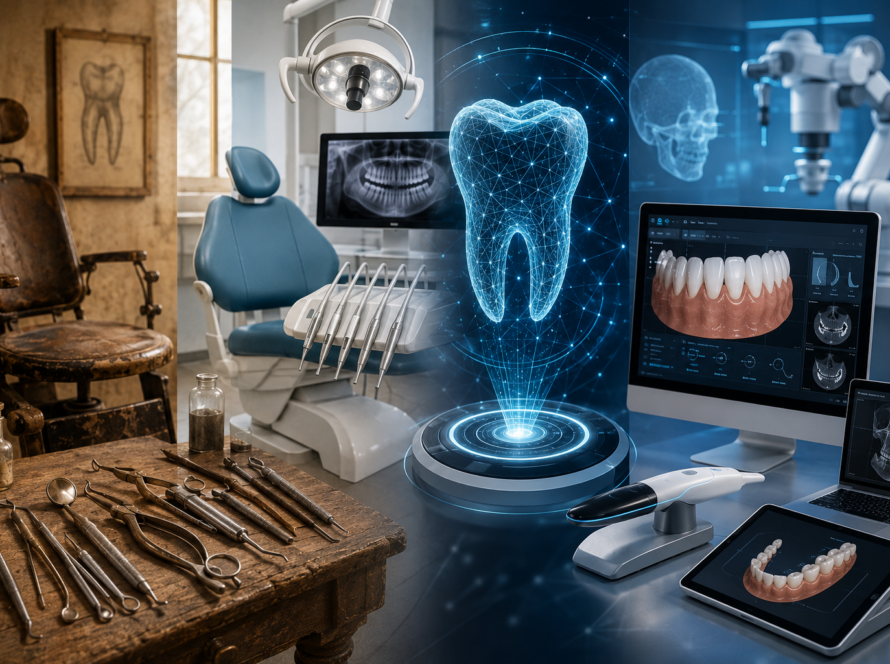
Modern orthodontics is no longer limited to wires and brackets.
Today’s orthodontists increasingly use:
- AI-powered treatment planning
- Intraoral scanners
- Digital simulations
- 3D treatment visualization
- Remote monitoring systems
Patients can now preview potential outcomes before treatment even begins. This digital revolution has significantly improved both Invisalign and braces treatment outcomes, making orthodontic care more precise, comfortable, and efficient than ever before.
What Is Invisalign?
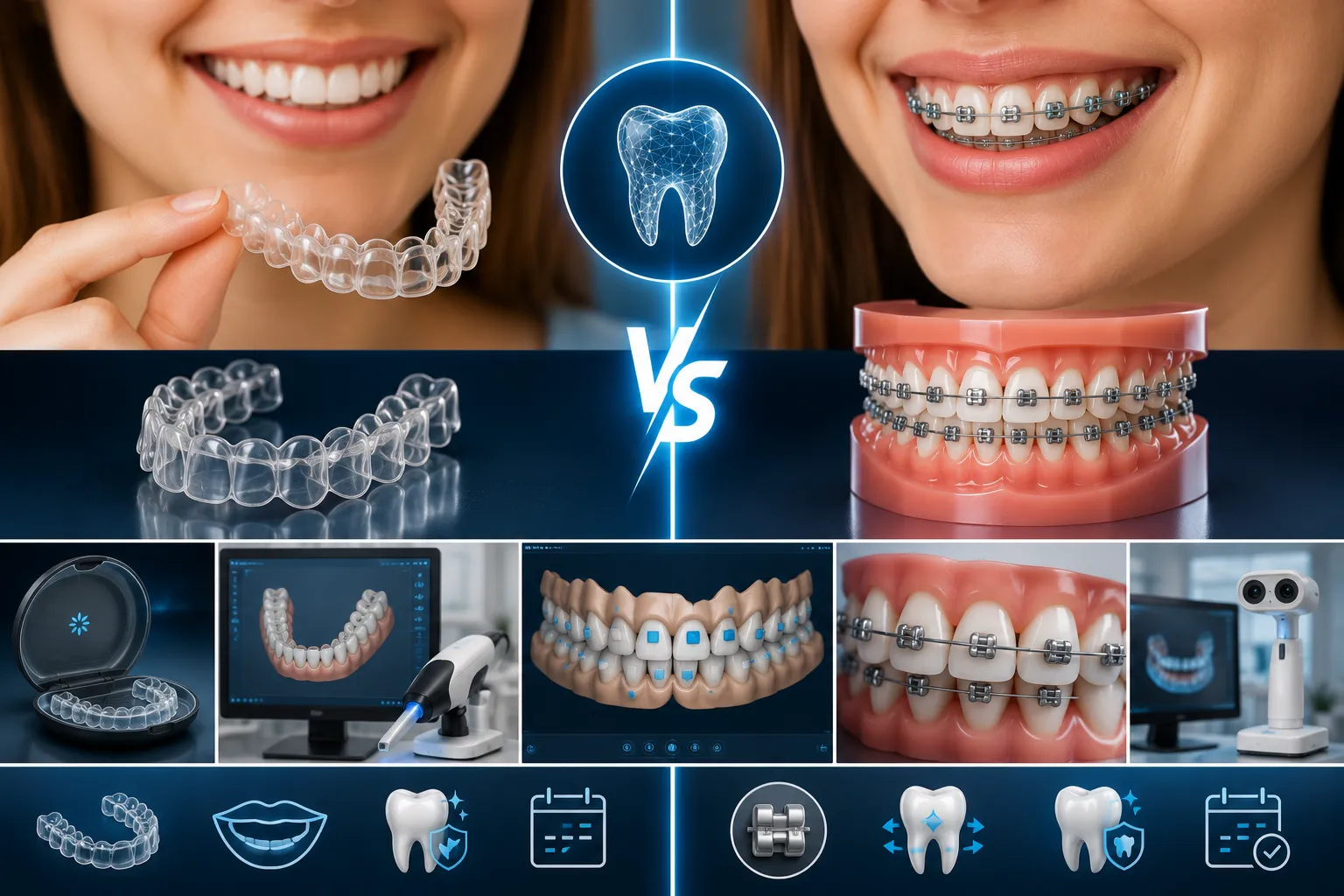
Invisalign is a clear aligner system that gradually moves teeth using a series of custom-made transparent trays.
Instead of metal brackets and wires, patients wear removable aligners that are replaced every one to two weeks as treatment progresses.
The system uses advanced digital planning to move teeth in carefully controlled stages.
Invisalign is commonly used to treat:
- Crowded teeth
- Gaps between teeth
- Mild to moderate bite issues
- Relapse after previous orthodontic treatment
One of its biggest advantages is aesthetics. Because the aligners are nearly invisible, many adults and teenagers prefer Invisalign over traditional braces.
What Are Traditional Braces?
Traditional braces use brackets bonded to the teeth and connected by wires that gradually guide teeth into their ideal positions.
Modern braces have evolved significantly and are now:
- Smaller
- More comfortable
- More efficient
- More aesthetically pleasing
Available options include:
- Metal braces
- Ceramic braces
- Self-ligating braces
Braces remain one of the most reliable orthodontic systems for correcting:
- Severe crowding
- Complex bite problems
- Tooth rotations
- Jaw alignment issues
Because braces are fixed to the teeth, treatment does not depend on patient compliance in the same way Invisalign does.
Appearance: Invisalign Wins
For many patients, appearance is the deciding factor.
Invisalign aligners are:
- Transparent
- Removable
- Difficult to notice
Most people will not realize a patient is undergoing orthodontic treatment.
Traditional braces, even modern ceramic versions, remain more visible.
This is one reason Invisalign has become particularly popular among:
- Working professionals
- Public speakers
- Business executives
- Adults seeking discreet treatment
For patients prioritizing aesthetics, Invisalign usually offers a clear advantage.
Comfort: Invisalign Has an Edge
Both systems create pressure as teeth move.
However, Invisalign generally causes:
- Less irritation
- Fewer mouth sores
- Greater overall comfort
Because aligners have smooth surfaces, they avoid many of the soft tissue irritations associated with brackets and wires.
Braces can sometimes cause:
- Cheek irritation
- Lip discomfort
- Wire-related soreness
That said, modern orthodontic materials have significantly improved comfort levels for braces patients as well.
Effectiveness: Braces Still Dominate Complex Cases
While Invisalign technology continues improving, traditional braces remain the gold standard for many difficult orthodontic cases.
Braces provide greater control over:
- Severe tooth movement
- Complex rotations
- Significant bite correction
- Impacted teeth management
For highly complicated orthodontic situations, braces often deliver more predictable results. According to orthodontic education coverage by DenTrends.com, complex malocclusions frequently benefit from the biomechanical advantages offered by fixed appliance systems.
Convenience: Invisalign Leads
One of Invisalign’s biggest benefits is flexibility.
Patients can remove aligners for:
- Eating
- Drinking
- Brushing
- Flossing
This means there are no food restrictions.
Braces patients often need to avoid:
- Sticky foods
- Hard candies
- Popcorn
- Chewing gum
because these foods can damage brackets and wires. Many patients appreciate the freedom Invisalign provides during everyday activities.
Oral Hygiene: Invisalign Makes It Easier
Maintaining oral hygiene during orthodontic treatment can be challenging.
With Invisalign:
- Aligners are removed before brushing
- Normal flossing remains possible
- Oral hygiene routines stay largely unchanged
Braces create additional cleaning challenges because food can become trapped around brackets and wires.
Patients with braces typically require:
- Special brushes
- Floss threaders
- Additional cleaning time
For patients concerned about oral hygiene, Invisalign often provides a significant advantage.
Treatment Time: Depends on the Case
Treatment duration varies widely.
Many Invisalign treatments take:
- 6 to 18 months
Traditional braces often require:
- 12 to 24 months
However, treatment time depends more on case complexity than appliance type.
Simple cases may finish quickly with either system. More complex cases may require extended treatment regardless of the chosen method.
Compliance: The Biggest Invisalign Challenge
The success of Invisalign depends heavily on patient cooperation.
Aligners should typically be worn:
- 20–22 hours per day
Patients who frequently remove aligners may experience:
- Slower progress
- Treatment delays
- Less predictable outcomes
Braces eliminate this issue because they are fixed in place. For younger patients or individuals who may struggle with compliance, braces often provide a more reliable solution.
Cost Comparison in 2026
Orthodontic treatment costs vary based on location and complexity.
Invisalign
Typical range:
- $3,500–$8,500+
Traditional Braces
Typical range:
- $3,000–$7,500+
In many cases, pricing is now relatively comparable. Patients should focus on treatment suitability rather than choosing solely based on cost.
How AI Is Transforming Orthodontics
Artificial Intelligence is becoming one of the biggest innovations in orthodontics.
Modern orthodontists increasingly use AI-powered systems for:
- Treatment planning
- Tooth movement prediction
- Progress monitoring
- Digital simulations
Intraoral scanners such as:
have largely replaced traditional impressions in many practices.
AI-assisted treatment planning allows orthodontists to create highly customized treatment strategies that improve efficiency and predictability. According to technology trends covered by DenTrends.com, AI-driven orthodontics is expected to become one of the defining innovations of the next decade.
Who Should Choose Invisalign?
Invisalign may be ideal for:
- Adults seeking discreet treatment
- Professionals
- Patients with mild to moderate orthodontic concerns
- Individuals committed to wearing aligners consistently
Patients prioritizing convenience and aesthetics
Who Should Choose Braces?
Traditional braces may be ideal for:
- Complex orthodontic cases
- Severe bite issues
- Significant tooth rotations
- Younger patients
Patients who may struggle with aligner compliance
DenTrends Thoughts
The Invisalign vs braces debate continues because both systems offer significant benefits.
Invisalign provides:
- Superior aesthetics
- Greater convenience
- Easier hygiene
- Enhanced comfort
Traditional braces provide:
- Exceptional control
- Greater effectiveness for complex cases
- Predictable biomechanics
- Reduced dependence on patient compliance
The best treatment is not determined by popularity or technology alone.
It is determined by the patient’s specific needs, goals, and clinical condition.
As digital orthodontics, artificial intelligence, and 3D treatment planning continue advancing, both Invisalign and braces are becoming more effective than ever before.
According to orthodontic insights published by DenTrends.com, the future of orthodontics is not about choosing between technology and tradition. It is about using the right solution to create healthier, more confident smiles.