
The dental profession is entering one of the most exciting periods in its history. Artificial intelligence, digital workflows, robotics, advanced diagnostics, cloud computing, and personalized treatment planning are fundamentally changing how dentistry is practiced around the world.
For decades, dental innovation focused primarily on improving materials and clinical techniques. Today, technology is transforming every aspect of the patient journey—from diagnosis and treatment planning to communication, education, and long-term care.
In 2026, the most successful dental practices are no longer defined solely by clinical expertise. They are increasingly distinguished by their ability to integrate advanced technologies that improve efficiency, accuracy, patient experience, and treatment outcomes.
According to technology trends analyzed by DenTrends.com, the next generation of dental practices will operate as highly connected digital ecosystems powered by intelligent software, real-time data, and advanced diagnostic capabilities.
Here are the technologies shaping the future of dentistry in 2026.
Artificial Intelligence (AI) Diagnostics
Artificial Intelligence has become one of the most transformative technologies in modern dentistry.
AI-powered platforms can assist clinicians by analyzing:
- Dental radiographs
- CBCT scans
- Periodontal conditions
- Caries detection
- Bone loss
- Treatment opportunities
Leading solutions such as:
are helping dentists improve diagnostic consistency while enhancing patient communication and treatment acceptance.
AI is not replacing dentists. Instead, it is becoming an intelligent clinical assistant that improves decision-making and efficiency.
Intraoral Scanners
Traditional impression materials are rapidly disappearing from modern practices.
Intraoral scanners now provide highly accurate digital impressions within minutes, improving both patient comfort and clinical precision.
Popular systems include:
Digital scanning supports:
- Restorative dentistry
- Orthodontics
- Implant planning
- Smile design
- Laboratory communication
Intraoral scanning has become one of the most important investments for future-focused dental practices.
Cone Beam Computed Tomography (CBCT)
Three-dimensional imaging continues to revolutionize diagnosis and treatment planning.
CBCT technology allows clinicians to visualize:
- Bone anatomy
- Nerves
- Airways
- Sinuses
- TMJ structures
Applications include:
- Implantology
- Oral surgery
- Endodontics
- Orthodontics
Leading systems include:
CBCT has become a cornerstone of modern digital dentistry.
AI Voice Charting and Clinical Documentation
One of the biggest frustrations for dentists remains clinical documentation.
New AI-powered systems can automatically generate:
- Clinical notes
- Treatment records
- Patient documentation
- Chart entries
Solutions such as:
allow clinicians to spend more time with patients and less time completing administrative tasks.
Many experts believe AI documentation will become standard in dental practices within the next few years.
Digital Smile Design
Cosmetic dentistry is becoming increasingly digital.
Digital Smile Design (DSD) allows dentists to:
- Analyze facial aesthetics
- Simulate treatment outcomes
- Preview smile transformations
- Improve patient communication
Patients can now visualize potential results before treatment begins.
This technology is helping create more personalized and predictable smile makeovers.
Facial Scanning Technology
Smile design is no longer focused solely on teeth.
Advanced facial scanners help dentists evaluate:
- Facial symmetry
- Smile dynamics
- Lip support
- Facial proportions
Popular solutions include:
Facial scanning is becoming increasingly important in:
- Cosmetic dentistry
- Implantology
- Full-mouth rehabilitation
- Orthodontics

3D Dental Printing
3D printing continues transforming dental laboratories and clinical workflows.
Modern printers can produce:
- Surgical guides
- Dental models
- Temporary restorations
- Orthodontic appliances
- Denture bases
Leading systems include:
The ability to manufacture products rapidly and accurately is reshaping dental production processes.
Robotic Implant Dentistry
Robotic-assisted surgery represents one of the most exciting emerging technologies in dentistry.
These systems assist clinicians with:
- Implant positioning
- Surgical accuracy
- Guided placement
- Real-time navigation
One notable example is:
While still an emerging market, robotic dentistry is expected to expand significantly over the next decade.
Cloud-Based Practice Management
The modern dental practice increasingly relies on cloud technology.
Cloud platforms provide:
- Remote access
- Centralized data
- Multi-location management
- Improved security
- Real-time reporting
Popular systems include:
Cloud-based systems are becoming the foundation of scalable dental operations.
Teledentistry and Virtual Consultations
Patients increasingly expect convenience and accessibility.
Teledentistry enables:
- Virtual consultations
- Treatment discussions
- Follow-up care
- Orthodontic monitoring
The technology expands access to care while improving patient engagement.
Many practices now use virtual consultations as part of their patient acquisition strategy.
Smart Dental Equipment and IoT Integration
Connected devices are entering dental practices.
Smart technologies now monitor:
- Equipment performance
- Sterilization cycles
- Maintenance schedules
- Usage patterns
Internet of Things (IoT) integration helps improve:
- Efficiency
- Equipment reliability
- Compliance management
This trend is expected to accelerate as dental practices become increasingly data-driven.
Regenerative Dentistry
One of the most exciting long-term innovations is regenerative dentistry.
Researchers continue exploring:
- Stem cell therapies
- Tissue engineering
- Biomaterials
- Regenerative endodontics
- Bone regeneration technologies
While many applications remain under development, regenerative therapies may eventually transform how dentists treat damaged tissues and missing structures.
The Rise of the Fully Digital Dental Practice
The future is not about adopting a single technology.
The future is about integration.
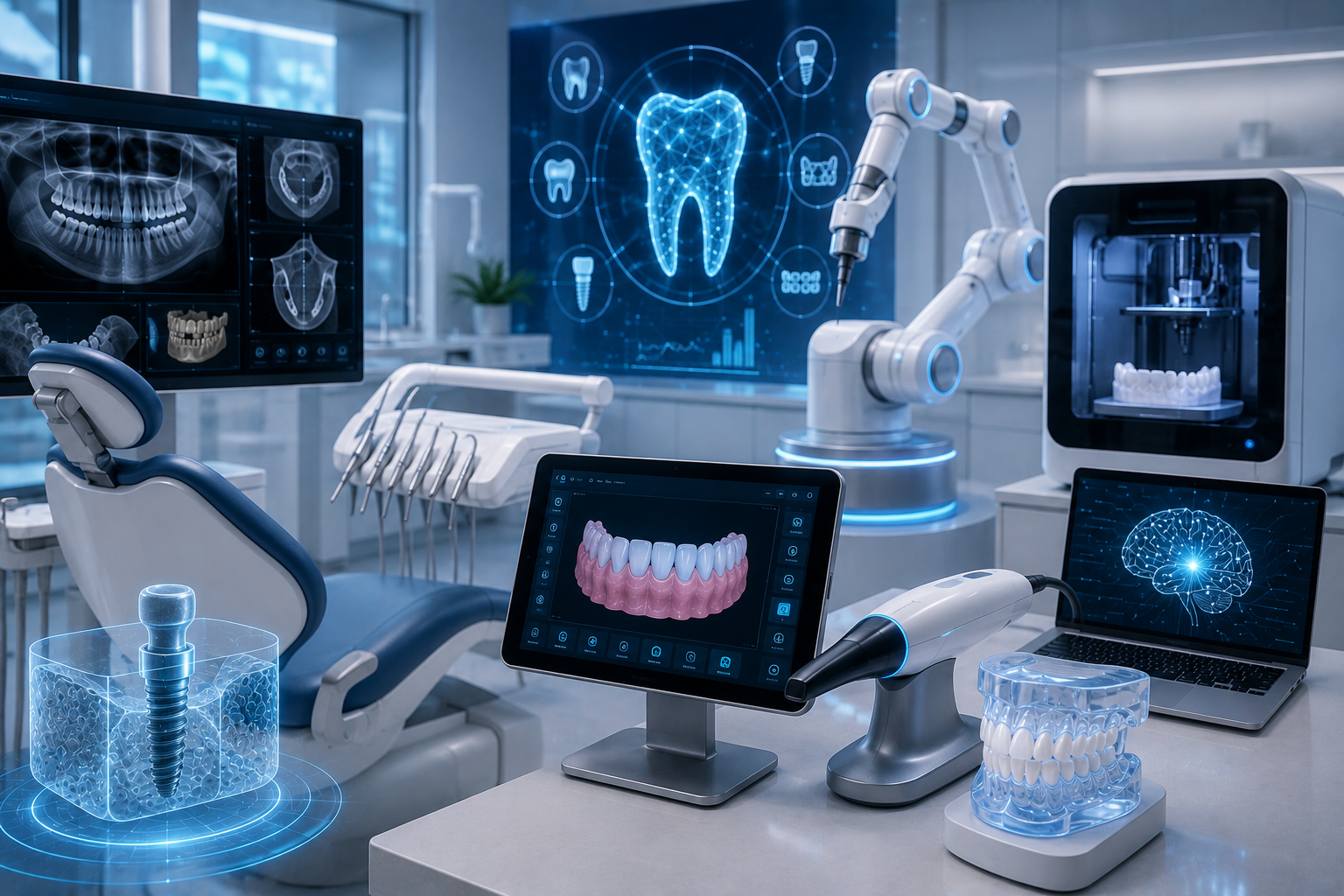
The most advanced practices in 2026 combine:
- AI diagnostics
- CBCT imaging
- Intraoral scanning
- Digital smile design
- Cloud software
- 3D printing
- Automated workflows
into a connected ecosystem that improves every stage of patient care.
This integrated model is becoming the new standard for modern dentistry.
Why Staying Informed Matters
Technology is evolving faster than ever.
Dentists who remain informed about:
- AI innovations
- New equipment
- Software platforms
- Digital workflows
will be better positioned to:
- Improve patient outcomes
- Increase efficiency
- Remain competitive
Platforms like DenTrends.com help dental professionals stay current with the latest developments shaping the future of oral healthcare.es. It is creating smiles that are healthy, functional, natural, and uniquely suited to each individual..
DenTrends Thoughts
Dentistry in 2026 is more digital, intelligent, and connected than at any point in history.
Artificial intelligence, advanced imaging, robotics, cloud software, facial scanning, and regenerative technologies are creating new possibilities for clinicians and patients alike.
While technology continues advancing rapidly, its ultimate purpose remains unchanged: improving patient care.
The practices that successfully combine clinical excellence with technological innovation will lead the next generation of dentistry. The future has already arrived—and it is transforming dentistry one technology at a time.