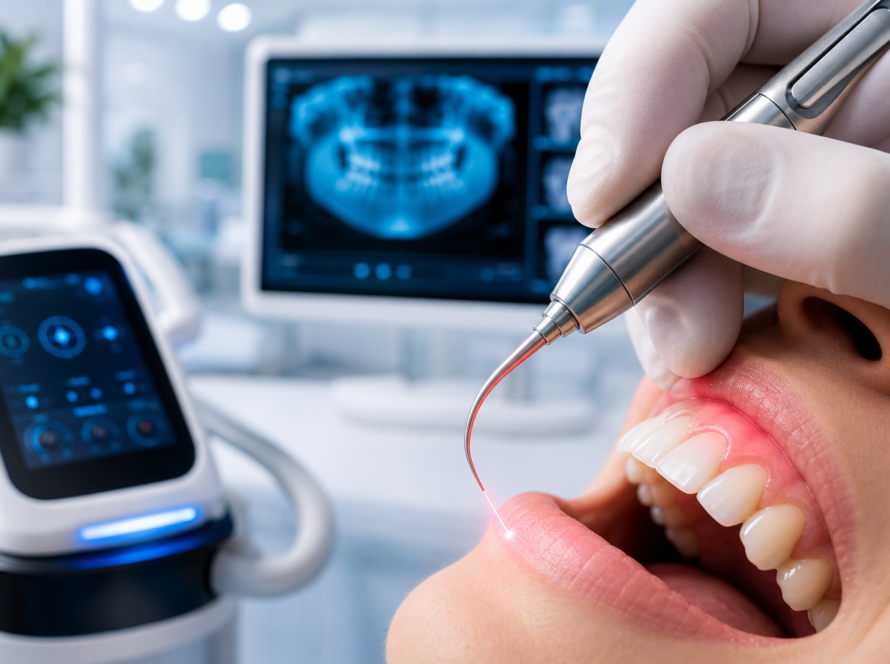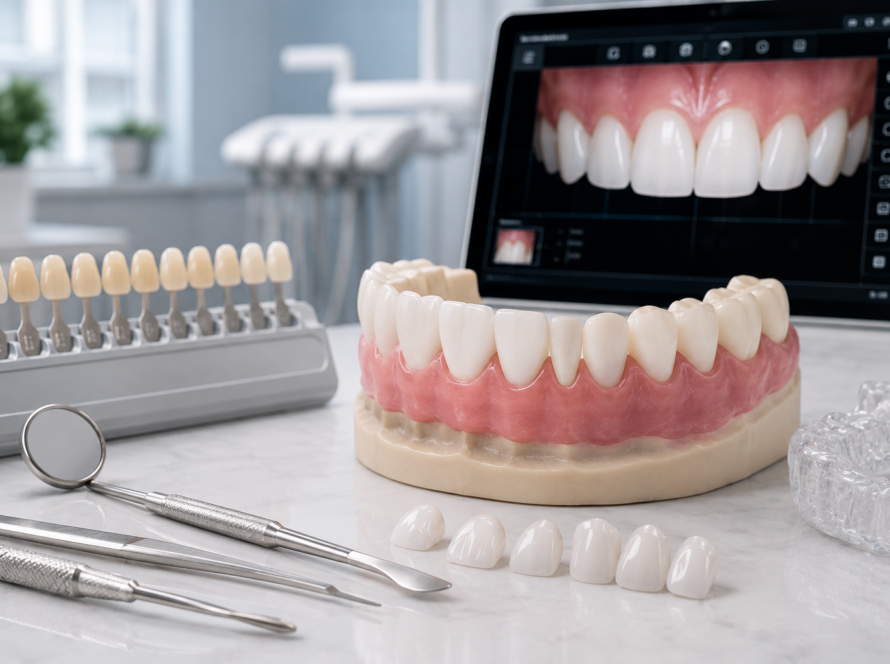

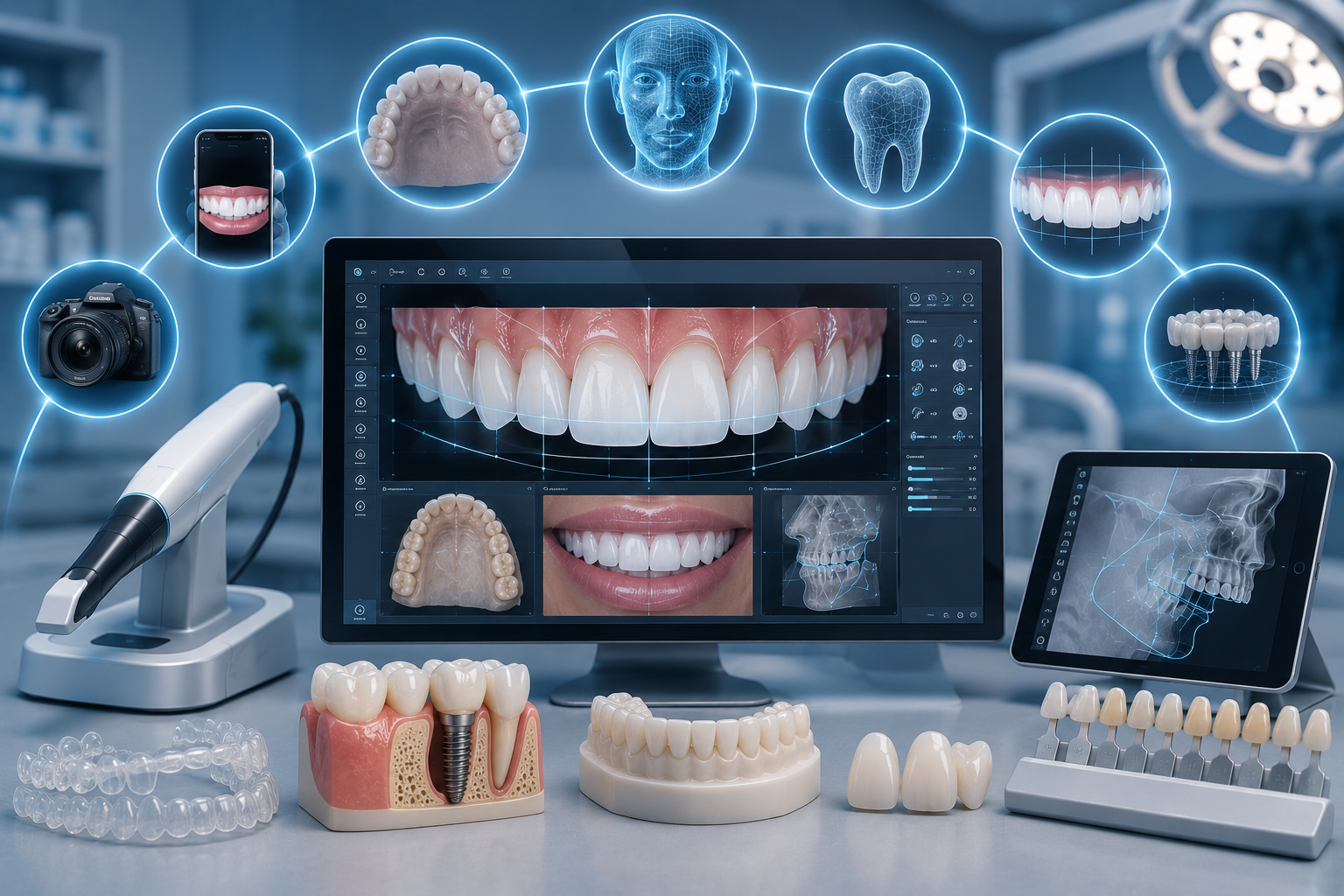
A beautiful smile is no longer created through artistic judgment alone. In 2026, cosmetic dentistry has entered a new era where advanced digital technologies allow dentists to plan, simulate, and execute smile transformations with remarkable precision. This evolution is known as Digital Smile Design (DSD)—a comprehensive digital workflow that integrates facial analysis, intraoral scanning, 3D imaging, Artificial Intelligence (AI), CAD/CAM technology, and digital treatment planning into one seamless process.
Rather than simply improving the appearance of teeth, Digital Smile Design enables clinicians to create smiles that harmonize with a patient’s facial features, personality, and functional needs. The result is a more predictable, personalized, and patient-centered approach to aesthetic dentistry.
According to cosmetic dentistry trends highlighted by DenTrends, Digital Smile Design has become the foundation of modern smile makeovers, full-mouth rehabilitation, implant dentistry, orthodontics, and restorative treatment planning.
What Is Digital Smile Design?
Digital Smile Design (DSD) is a comprehensive digital treatment planning protocol that combines photographs, videos, facial analysis, intraoral scans, CBCT imaging, and digital software to design an ideal smile before any clinical procedure begins.
Instead of relying solely on physical impressions or manual wax-ups, dentists can now visualize the final outcome digitally and involve patients throughout the treatment planning process.
This approach transforms cosmetic dentistry from an estimation-based process into a highly predictable digital workflow.
The Evolution of Smile Design
Traditional smile makeovers often depended heavily on the clinician’s artistic ability and patient imagination. Patients were asked to trust a treatment plan without seeing realistic previews of the expected results.
Digital Smile Design has fundamentally changed this experience.
Today, patients can preview their future smile before treatment begins, allowing dentists to make adjustments based on patient preferences while improving communication and treatment acceptance.
The ability to “test drive” a smile has become one of the most significant innovations in cosmetic dentistry.
Step 1: Comprehensive Patient Consultation
Every successful smile makeover begins with understanding the patient.
Dentists evaluate:
- Chief concerns
- Smile expectations
- Lifestyle
- Facial characteristics
- Functional requirements
- Oral health condition
The consultation focuses not only on aesthetics but also on long-term oral health and functional stability.
Modern cosmetic dentistry begins by listening before designing.
Step 2: Digital Photography and Video Analysis
High-resolution facial photography has become an essential part of smile design.
Photographs are taken from multiple angles to analyze:
- Facial symmetry
- Smile line
- Lip dynamics
- Tooth display
- Midline
- Gingival architecture
Video recordings provide additional information by capturing natural facial expressions, speech patterns, and dynamic smiling.
Unlike static photographs, video allows dentists to evaluate how the smile functions during everyday movements.
Step 3: Intraoral Digital Scanning
Traditional impression materials have largely been replaced by digital intraoral scanners.
These scanners generate highly accurate three-dimensional models of the patient’s teeth within minutes.
Digital scans eliminate many of the inaccuracies associated with conventional impressions while improving patient comfort.
The digital model becomes the foundation for designing restorations, orthodontic treatment, and implant-supported prosthetics.
Step 4: Facial Scanning
Modern Digital Smile Design extends beyond teeth.
Facial scanning technology captures detailed information about:
- Facial proportions
- Soft tissue contours
- Lip support
- Jaw relationships
- Smile harmony
By integrating facial scans with intraoral scans, dentists can create restorations that complement the entire face rather than focusing solely on individual teeth.
This holistic approach produces more natural and aesthetically pleasing results.
Step 5: Artificial Intelligence in Smile Analysis
Artificial Intelligence is becoming an increasingly valuable component of Digital Smile Design.
AI-assisted software can analyze:
- Tooth proportions
- Smile symmetry
- Midline position
- Gingival levels
- Facial balance
- Aesthetic ratios
Some systems also provide treatment simulations and suggest improvements based on established aesthetic principles.
AI enhances precision while allowing dentists to maintain complete clinical control over the final treatment plan.
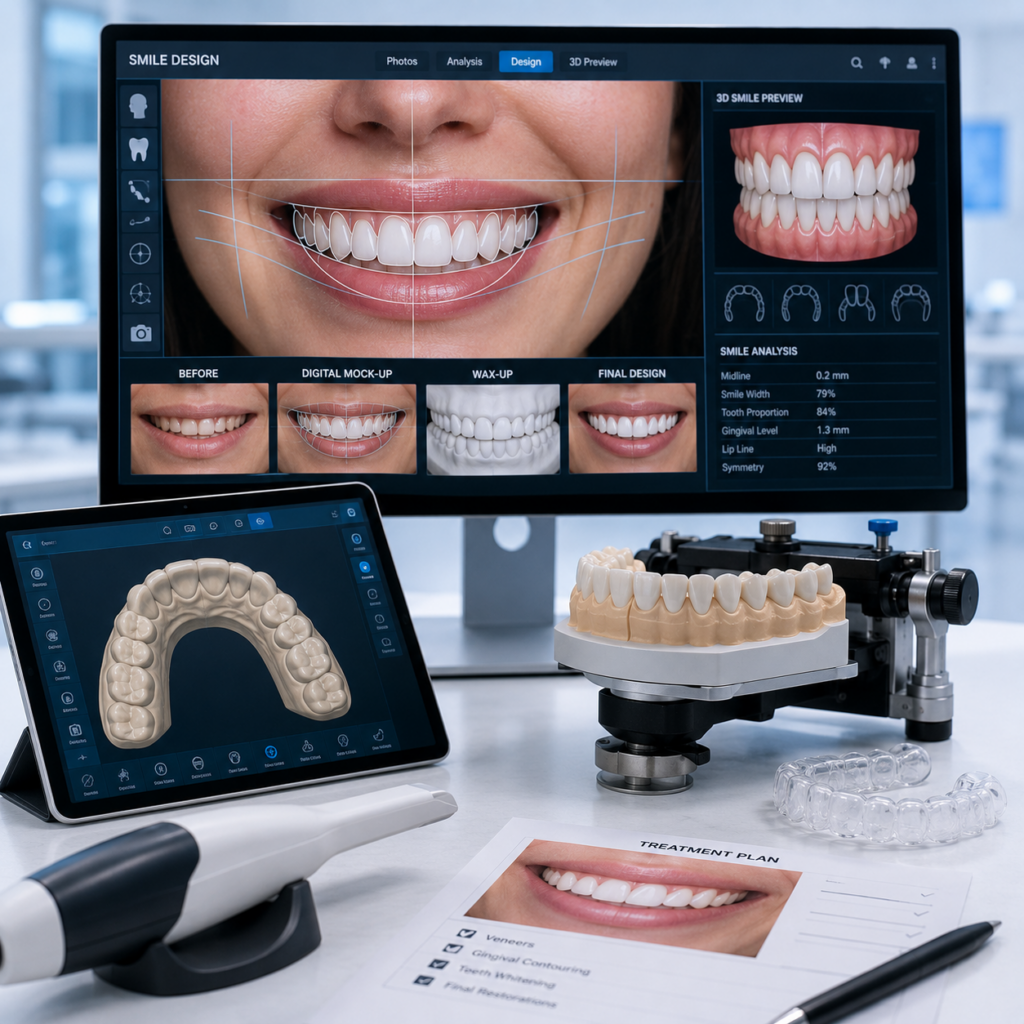
Step 6: Digital Treatment Simulation
One of the most exciting features of Digital Smile Design is virtual smile simulation.
Patients can preview proposed treatments including:
- Veneers
- Composite bonding
- Teeth whitening
- Orthodontics
- Dental implants
- Full smile makeovers
Seeing realistic simulations helps patients understand expected outcomes and actively participate in treatment decisions.
This improves communication, confidence, and case acceptance.
Step 7: Multidisciplinary Treatment Planning
Digital Smile Design often brings together multiple dental specialties.
Depending on the case, treatment may involve:
- Cosmetic dentistry
- Orthodontics
- Periodontics
- Implantology
- Prosthodontics
- Oral surgery
Digital planning allows every specialist to collaborate using the same digital records, improving coordination and treatment efficiency.
This multidisciplinary workflow ensures that aesthetic and functional goals are achieved together.
Step 8: CAD/CAM Restoration Design
Once the digital smile is approved, restorations are designed using advanced CAD/CAM software.
This technology enables highly precise fabrication of:
- Veneers
- Crowns
- Bridges
- Implant restorations
- Inlays
- Onlays
Computer-aided manufacturing improves fit, strength, and esthetics while reducing laboratory turnaround time.
The digital workflow minimizes human error and enhances restorative quality.
Step 9: 3D Printing and Mock-Ups
Three-dimensional printing has become an integral part of Digital Smile Design.
Dentists can produce:
- Diagnostic models
- Surgical guides
- Temporary restorations
- Smile mock-ups
Many patients are able to wear a temporary version of their new smile before permanent treatment begins.
This allows both patient and dentist to evaluate aesthetics, phonetics, and function before final restorations are fabricated.
Step 10: Final Treatment and Long-Term Monitoring
After patient approval, the final restorations are delivered using the digital treatment plan as a guide.
Digital records remain valuable long after treatment is completed.
Future monitoring may include:
- Digital scans
- Occlusal analysis
- AI-assisted evaluations
- Photographic comparisons
These records help maintain long-term stability while simplifying future restorative work if needed.
Benefits of the Full Digital Workflow
The Digital Smile Design workflow provides significant advantages for both patients and clinicians.
Patients benefit from:
- Better understanding of treatment
- Improved communication
- Personalized smile design
- More predictable outcomes
- Greater confidence before treatment
Dentists benefit from:
- Enhanced treatment planning
- Increased accuracy
- Improved interdisciplinary collaboration
- Better laboratory communication
- Higher case acceptance
- Reduced remakes
Digital workflows improve every stage of the cosmetic dentistry process.
Who Can Benefit from Digital Smile Design?
Digital Smile Design is suitable for many types of patients, including those seeking:
- Smile makeovers
- Porcelain veneers
- Composite bonding
- Teeth whitening
- Orthodontic treatment
- Dental implants
- Full-mouth rehabilitation
- Cosmetic gum contouring
Whether addressing a single tooth or a complete smile transformation, digital planning enhances precision and predictability.
The Future of Digital Smile Design
Digital Smile Design continues to evolve rapidly.
Future developments are expected to include:
- Real-time AI smile simulations
- Augmented reality patient visualization
- Virtual reality treatment planning
- Fully cloud-based collaboration
- Predictive aesthetic analytics
- Robotic-assisted restorative workflows
- Personalized smile algorithms
As digital dentistry advances, smile design will become even more customized, efficient, and biologically respectful.
DenTrends Thoughts
Digital Smile Design represents far more than cosmetic software—it is a complete digital workflow that is redefining modern dentistry.
By integrating photography, facial scanning, intraoral scanning, CBCT imaging, AI analysis, CAD/CAM technology, and 3D printing, dentists can plan and deliver smile transformations with exceptional precision and predictability.
The full digital workflow improves communication, preserves natural tooth structure, enhances interdisciplinary collaboration, and creates smiles that are not only beautiful but also functional and long-lasting.
In 2026, Digital Smile Design is no longer the future of cosmetic dentistry—it has become the new standard of care.
References
- Digital Smile Design (Official Website)
https://digitalsmiledesign.com - American Academy of Cosmetic Dentistry (AACD)
https://www.aacd.com - Journal of Esthetic and Restorative Dentistry
https://onlinelibrary.wiley.com/journal/17088240 - International Journal of Esthetic Dentistry
https://www.quintessence-publishing.com - 3Shape – Digital Dentistry Solutions
https://www.3shape.com - Medit – Digital Intraoral Scanning Technology
https://www.medit.com - Formlabs Dental – Digital Workflow and 3D Printing
https://dental.formlabs.com