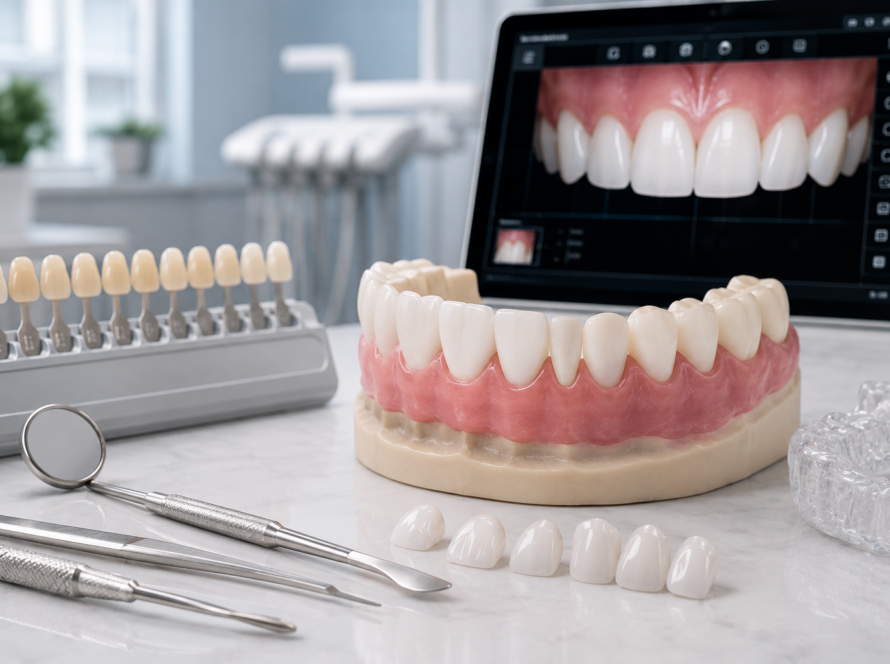

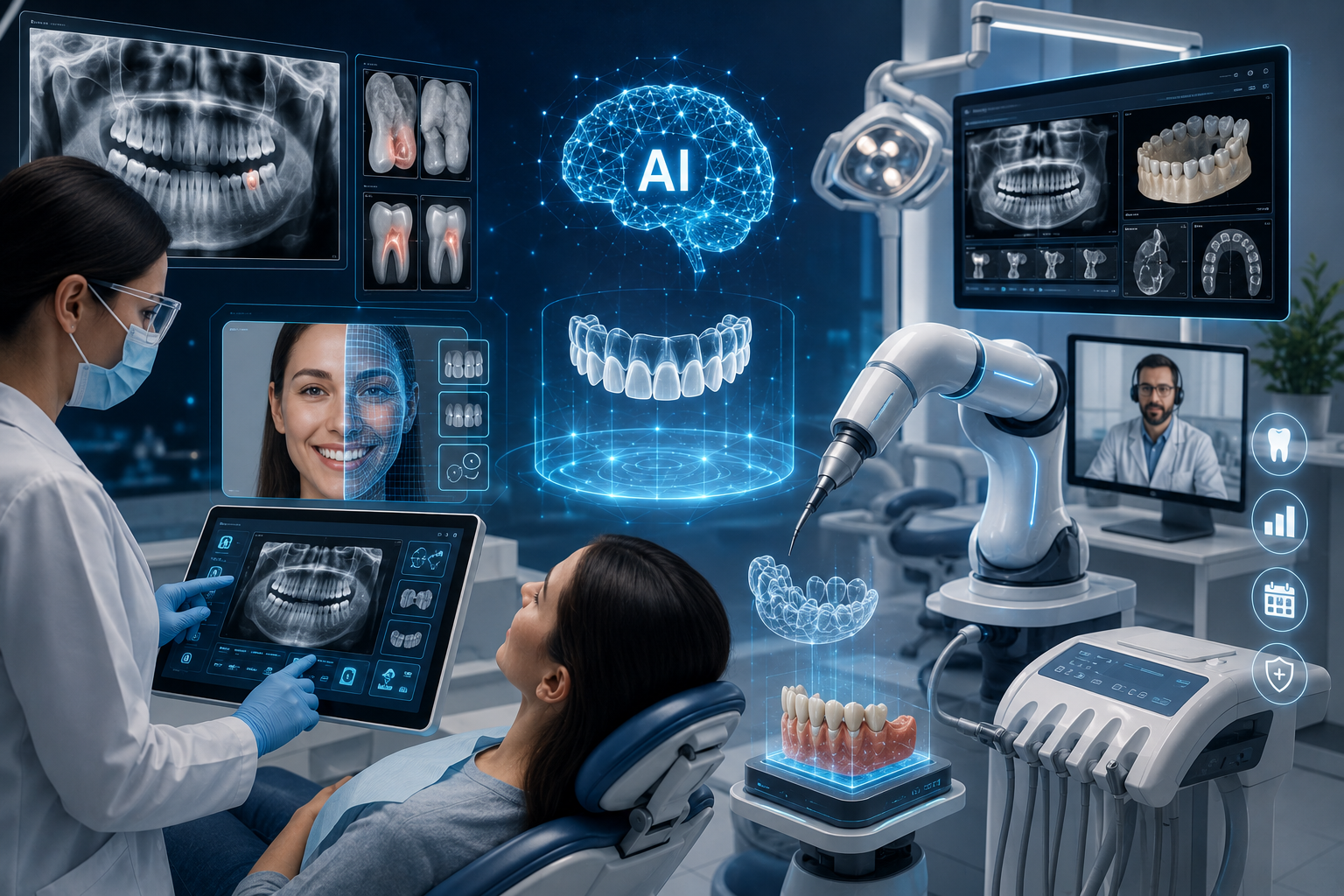
In 2026, Artificial Intelligence (AI) has shifted from a futuristic concept to the operational heartbeat of the modern American dental practice. With the American Dental Association (ADA) actively shaping standards for “objective dentistry,” AI is no longer just a tool—it is a clinical and administrative partner that ensures precision, standardizes care, and addresses the critical labor shortages currently facing the US healthcare sector.
1. Understanding AI in Modern Dentistry: An Overview
Modern dental AI in the US primarily utilizes Computer Vision (CV) and Natural Language Processing (NLP). Computer Vision acts as a “second set of eyes” for radiographs, while NLP powers the “ambient scribes” that listen to clinical exams to automate documentation. By 2026, over 50% of high-volume US practices have integrated at least one AI diagnostic or administrative platform
2. Key Innovations: Transforming Procedures and Patient Care
The integration of AI into clinical workflows has moved beyond simple detection to predictive execution.
- AI-Assisted Treatment Planning: Systems now analyze a patient’s entire history—including CBCT scans, intraoral photos, and medical history—to suggest optimal treatment plans.
- Robotic-Assisted Surgery: In 2026, AI-driven robotic systems (like Yomi) assist in dental implant placement with micron-level accuracy, adjusting in real-time for patient movement.
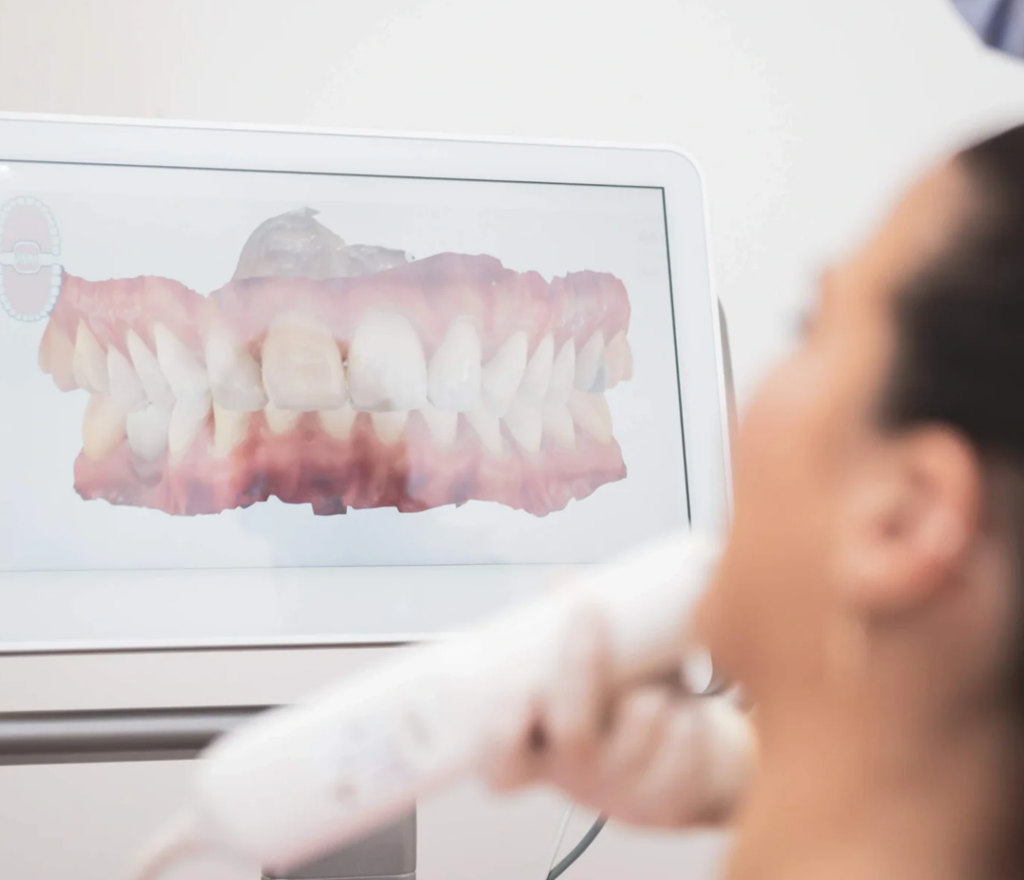
Digital Smile Design: AI can now generate 3D simulations of post-treatment results in seconds, allowing patients to see their “new smile” before the first procedure begins, which has increased case acceptance rates by up to 20%.
3. Improving Accuracy: Early Detection and Prevention
AI’s greatest contribution to public health is its role in preventive dentistry.
- Smart Monitoring: Patients now use AI-powered apps to take weekly smartphone photos of their teeth; the AI alerts the dentist if it detects signs of gingivitis or aligner tracking issues.
- Early Cavity Detection: FDA-cleared AI tools like Overjet and Pearl identify incipient decay that is often invisible to the human eye on traditional 2D bitewings.
- Oral Cancer Screening: AI algorithms now analyze intraoral images to flag suspicious mucosal changes, significantly improving early-stage detection where survival rates are highest.
4. Impact on Practice Management and Patient Experience
AI is the primary solution to the 11% reduction in practice capacity caused by US dental labor shortages.
- Ambient Scribes: Tools like Bola AI or Denti.AI listen to the dentist during an exam and automatically populate the electronic health record (EHR), saving 3–8 minutes per patient.
- AI Receptionists: 24/7 empathetic voice agents handle inbound calls, verify insurance in real-time, and book appointments directly into the Practice Management System (PMS) without human intervention.
- Revenue Cycle Management (RCM): AI now automates insurance claim submissions and identifies “under-coded” procedures, reducing claim denials by nearly 30%.
5. Challenges and Ethical Considerations
Despite the benefits, the “AI Revolution” faces significant hurdles:
- Data Privacy (HIPAA): The use of patient data to “train” AI models requires strict de-identification protocols.
- The “Black Box” Problem: Dentists must remain the final authority. The ADA emphasizes that AI is a decision-support tool, not a replacement for clinical judgment.
- Bias in Algorithms: There is ongoing scrutiny to ensure AI datasets include diverse populations to avoid diagnostic biases across different ethnicities and age groups.
6. Looking Ahead: The Future Beyond 2026
By 2030, we expect to see “Autopilot Dentistry“ for routine tasks. Emerging trends include:
- Generative AI for Lab Work: 3D printers will use generative designs to create crowns and dentures that are perfectly bio-matched to a patient’s unique wear patterns.
- Whole-Health Integration: Dental AI will sync with wearable health tech (like smartwatches) to monitor the link between oral inflammation and systemic conditions like heart disease and diabetes
Final Thought
In 2026, the competitive edge for US dental practices lies in the synergy between human empathy and machine precision. Practices that embrace AI see higher diagnostic accuracy, reduced staff burnout, and a superior patient experience. As the ADA continues to develop foundational standards for these technologies, AI is set to become as fundamental to dentistry as the X-ray was a century ago.
Source:
Based on the “2026 Trends and Insights” report from Pearl AI and the ADA’s 2026 Response to the Department of Health and Human Services (HHS) on AI adoption in clinical care