
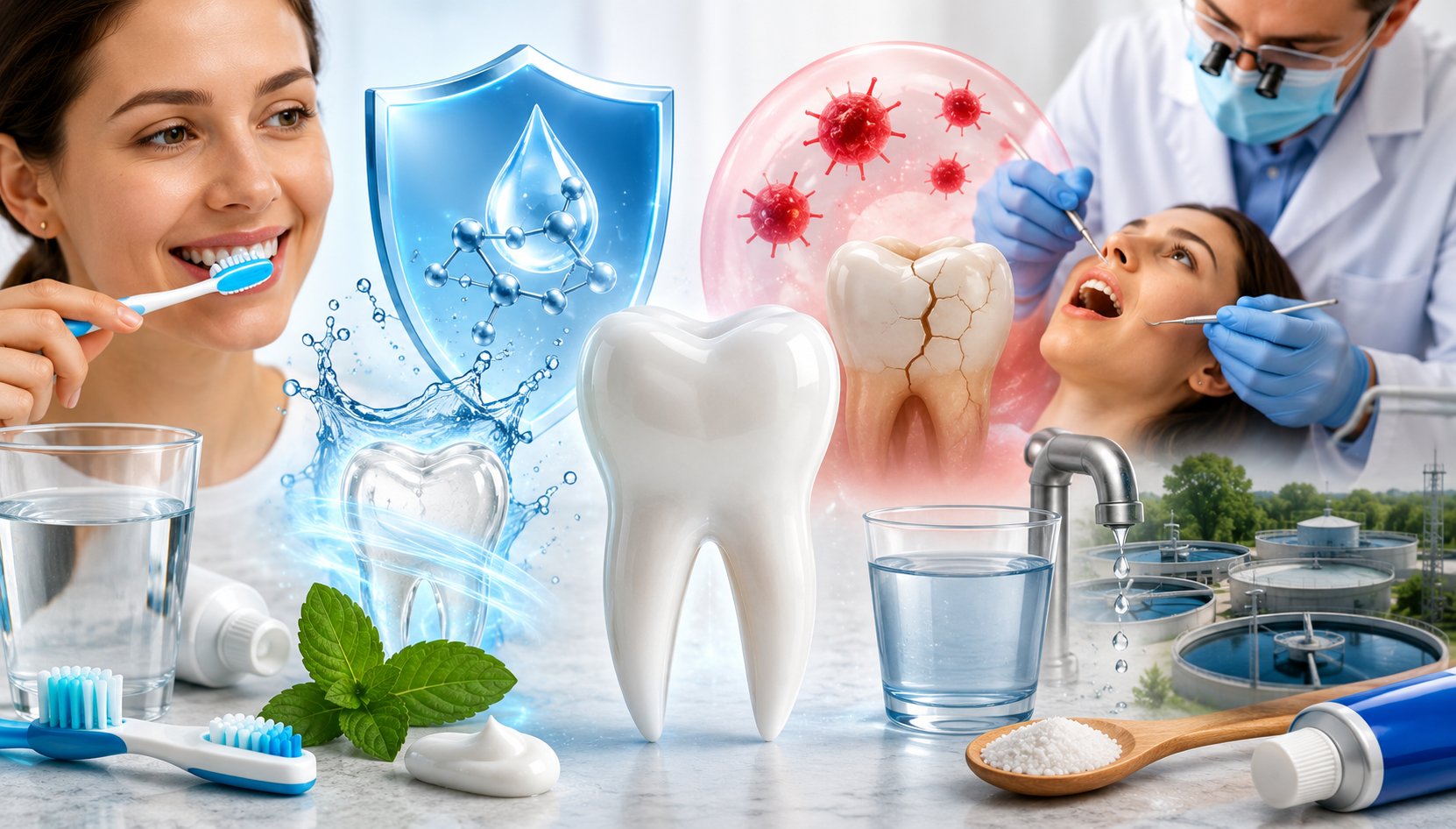
Fluoride has been one of the most debated topics in dentistry for decades. While many dental professionals consider it one of the greatest public health achievements for preventing tooth decay, some patients have concerns about its safety, particularly in drinking water and oral care products.
So, what does the scientific evidence actually say?
The overwhelming consensus among major dental and public health organizations is that fluoride is safe and effective when used at recommended levels. At the same time, dentists recognize that fluoride is not appropriate in excessive amounts, especially for young children during tooth development. Understanding both the benefits and the limitations allows patients to make informed decisions based on evidence rather than misinformation.
What Is Fluoride?
Fluoride is a naturally occurring mineral found in:
- Drinking water
- Soil
- Certain foods
- Tea
- Fish
- Toothpaste
- Mouth rinses
- Professional dental products
Its primary role in dentistry is to strengthen tooth enamel and reduce the risk of cavities.
How Does Fluoride Protect Teeth?
Fluoride works through several mechanisms:
1. Strengthens Enamel
Fluoride helps convert hydroxyapatite into fluorapatite, a mineral that is more resistant to acid attacks from bacteria.
2. Promotes Remineralization
Early enamel damage can often be repaired by replacing lost minerals before a cavity forms.
3. Slows Demineralization
Fluoride makes enamel less likely to dissolve when exposed to acids produced by plaque bacteria.
4. Reduces Bacterial Activity
Fluoride can reduce the acid-producing activity of cavity-causing bacteria, lowering the risk of tooth decay.
Why Many Dentists Recommend Fluoride
Numerous clinical studies have shown that fluoride:
- Reduces dental caries in children and adults
- Helps protect newly erupted permanent teeth
- Lowers cavity risk in high-risk patients
- Supports long-term oral health
- Is effective in both community and clinical settings when used appropriately
For these reasons, fluoride remains a cornerstone of preventive dentistry.
Common Sources of Fluoride
Daily Sources
- Fluoride toothpaste
- Fluoridated drinking water (where available)
- Mouth rinses
Professional Dental Care
- Fluoride varnish
- Fluoride gel
- Fluoride foam
- Prescription-strength fluoride toothpaste
Dentists recommend different fluoride products based on an individual’s cavity risk.
Common Concerns About Fluoride
Although fluoride has well-established benefits, concerns continue to be discussed.
Dental Fluorosis
Excess fluoride intake during tooth development can cause dental fluorosis.
Most cases are:
- Mild
- Cosmetic
- Characterized by faint white streaks or spots on enamel
Severe fluorosis is uncommon in communities where fluoride exposure is appropriately managed.
Skeletal Fluorosis
Very high, long-term fluoride exposure—well above recommended levels—can affect bones and joints.
This condition is rare in countries with regulated fluoride levels.
Neurodevelopment and Other Health Concerns
Some observational studies have explored possible associations between high fluoride exposure and developmental outcomes. However, these studies often involve exposure levels substantially higher than those used in optimally fluoridated community water systems or have methodological limitations.
Major organizations, including the American Dental Association (ADA), the World Health Organization (WHO), and the Centers for Disease Control and Prevention (CDC), continue to support the use of fluoride at recommended levels while also encouraging ongoing research.
Community Water Fluoridation
Community water fluoridation has been used for decades to help reduce tooth decay.
Supporters note that it:
- Benefits entire communities
- Helps reduce oral health inequalities
- Is cost-effective
- Reaches people who may have limited access to dental care
Some communities have chosen not to fluoridate water or have reconsidered their policies. These decisions often involve local public health priorities, economics, and public opinion in addition to scientific evidence.
Fluoride vs. Hydroxyapatite
An increasingly discussed alternative is nano-hydroxyapatite (nHAp).
| Fluoride | Nano-Hydroxyapatite |
| Extensive long-term clinical evidence | Growing but smaller evidence base |
| Strong cavity prevention | Supports enamel remineralization |
| Widely recommended by dental organizations | Promising option, especially for some patients |
| Available in many toothpastes | Increasingly available in premium formulations |
Some dentists recommend hydroxyapatite-containing products for selected patients, but fluoride toothpaste remains the standard recommendation in many national clinical guidelines.
What Dentists Commonly Recommend
Most dentists advise:
- Brush twice daily with fluoride toothpaste
- Use only a pea-sized amount for young children
- Supervise children to minimize swallowing toothpaste
- Consider professional fluoride treatments if cavity risk is high
- Discuss alternatives with your dentist if you have specific concerns or preferences
Recommendations should be individualized based on age, cavity risk, medical history, and fluoride exposure.
When Fluoride Is Most Beneficial
Fluoride is particularly valuable for people who:
- Have frequent cavities
- Wear braces
- Experience dry mouth
- Have exposed root surfaces
- Have a high-sugar diet
- Receive radiation therapy to the head and neck
- Are at increased risk for tooth decay
The Future of Preventive Dentistry
Preventive dentistry continues to evolve with:
- Bioactive remineralizing materials
- Nano-hydroxyapatite technologies
- Personalized caries risk assessment
- AI-assisted preventive care
- Smart oral health monitoring
- Improved fluoride delivery systems
Future prevention may combine fluoride with other evidence-based technologies rather than relying on a single approach., although these relationships are complex and continue to be studied
DenTrends Thoughts
The fluoride debate often generates strong opinions, but the current scientific consensus is that fluoride is a safe and effective tool for preventing tooth decay when used at recommended levels. Like any health intervention, benefits and risks depend on the dose, source, and individual circumstances.
Dentists increasingly emphasize personalized preventive care. For some patients, fluoride remains the most appropriate choice, while others may benefit from additional or alternative remineralizing strategies. The best approach is to discuss your oral health needs with a dental professional and make decisions based on high-quality scientific evidence rather than social media claims or anecdotal reports.
References
- World Health Organization (WHO) – Oral Health
https://www.who.int/news-room/fact-sheets/detail/oral-health - American Dental Association (ADA) – Fluoride Resources
https://www.ada.org - Centers for Disease Control and Prevention (CDC) – Community Water Fluoridation
https://www.cdc.gov/fluoridation - National Institute of Dental and Craniofacial Research (NIDCR)
https://www.nidcr.nih.gov - Cochrane Oral Health – Fluoride for Preventing Dental Caries
https://www.cochranelibrary.com