
Dentistry has entered a new era where precision, comfort, and minimally invasive treatment are redefining patient care. Among the most significant technological advances is laser dentistry, a field that has transformed the way dentists manage soft-tissue procedures. From gingival contouring and periodontal therapy to frenectomies and lesion removal, modern dental lasers are replacing traditional scalpels in many clinical situations.
In 2026, laser technology has become an integral part of the modern dental practice. Combined with digital diagnostics, AI-assisted treatment planning, and advanced imaging, laser dentistry enables clinicians to perform procedures with greater precision, less discomfort, faster healing, and improved clinical outcomes.
According to technology trends featured by DenTrends, soft-tissue lasers are rapidly becoming standard equipment in progressive dental practices worldwide, supporting a shift toward minimally invasive, patient-centered care.
What Is Laser Dentistry?
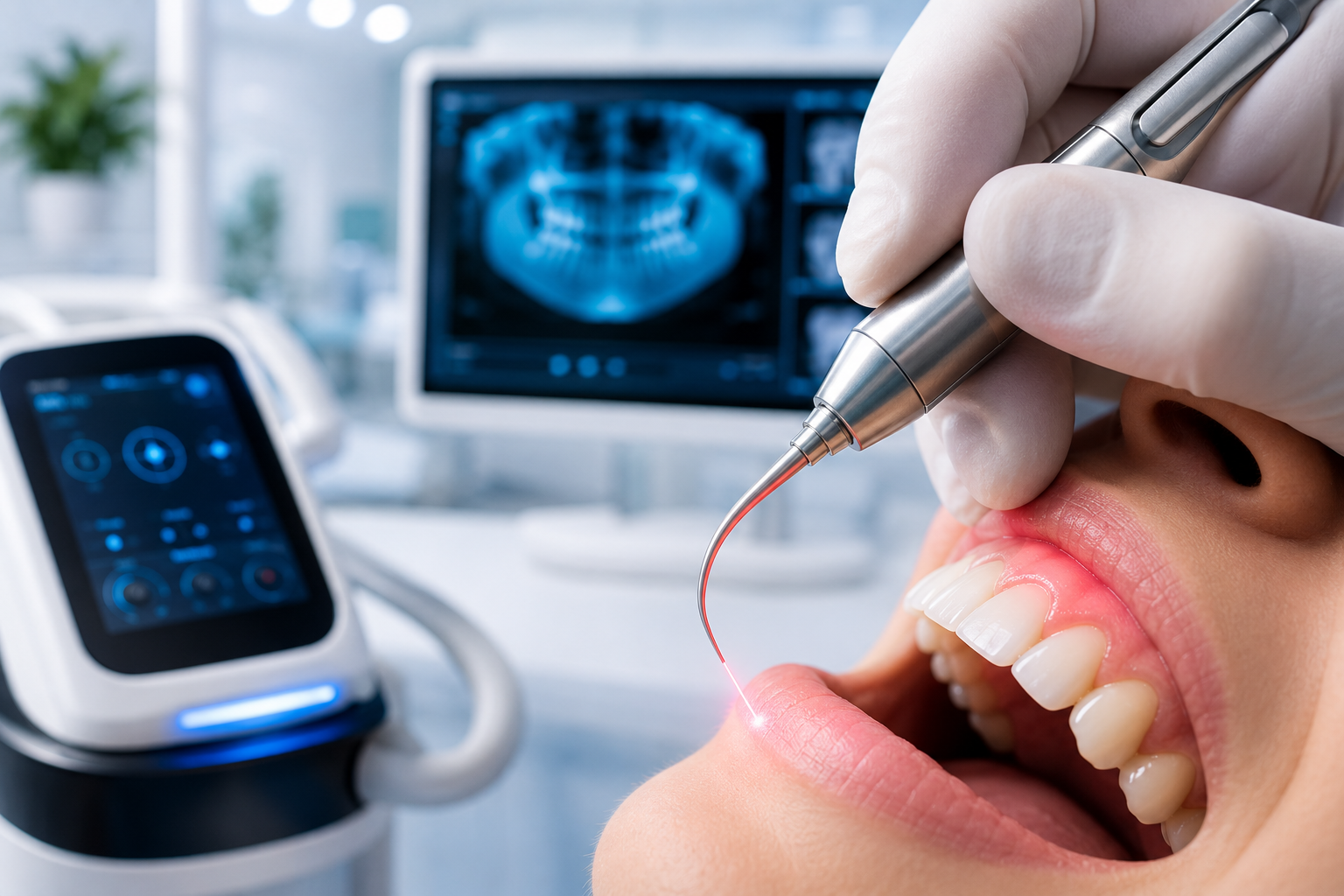
Laser dentistry involves the use of concentrated light energy to cut, reshape, remove, or disinfect oral tissues with exceptional precision.
Unlike conventional scalpels, lasers can simultaneously cut and coagulate soft tissue, significantly reducing bleeding and minimizing trauma to surrounding structures.
Modern dental lasers are used for both soft-tissue and hard-tissue applications, although soft-tissue procedures remain the most widely adopted.
The ability to perform many treatments with less pain and faster recovery has made laser dentistry increasingly attractive to both clinicians and patients.
Understanding the New Soft-Tissue Toolkit
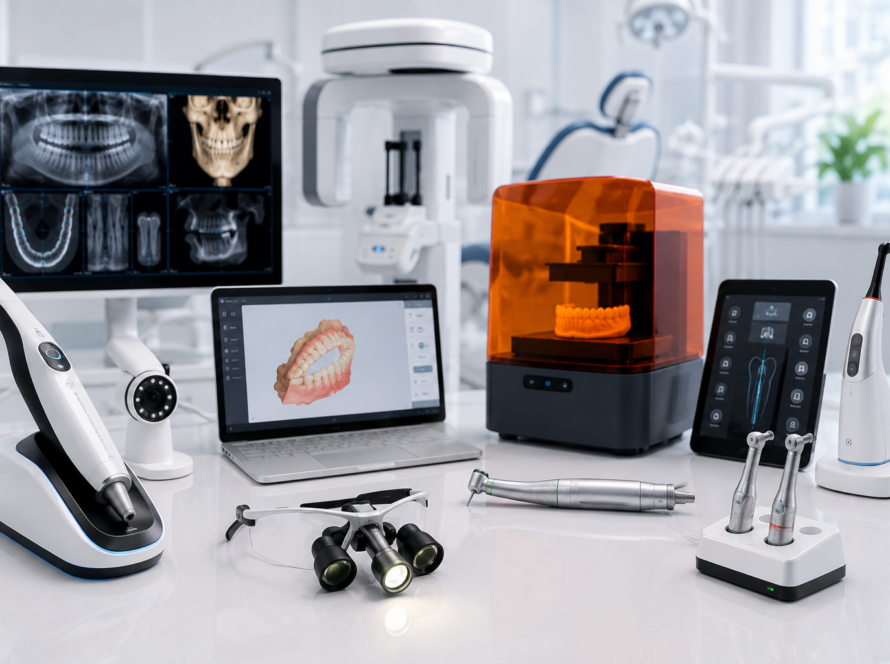
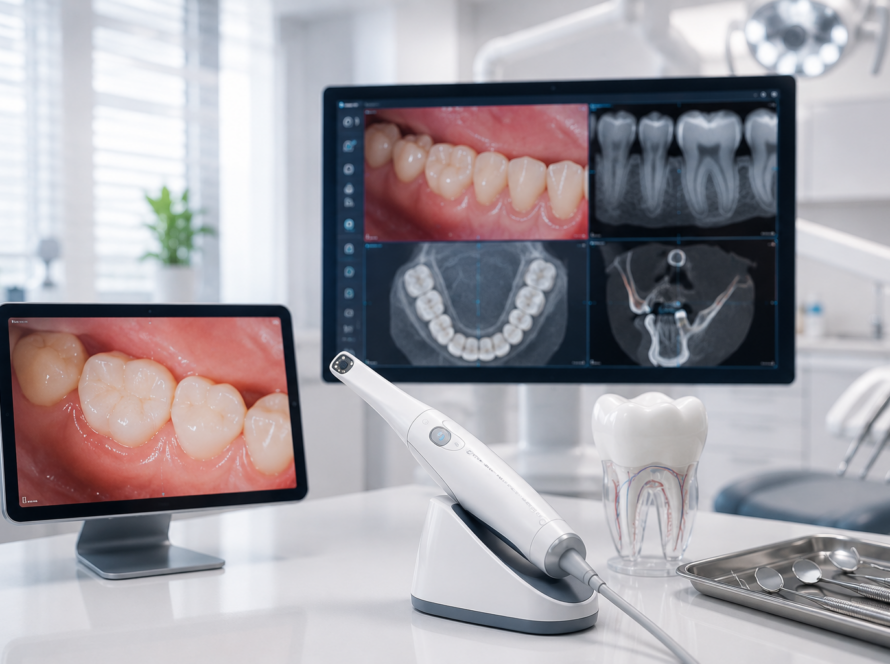
The modern soft-tissue toolkit extends beyond the laser itself. It includes a complete digital workflow that combines advanced diagnostics, magnification, and minimally invasive technologies to improve clinical precision.
Today’s soft-tissue toolkit may include:
- Soft-tissue diode lasers
- CO₂ lasers
- Nd:YAG lasers
- Er:YAG lasers
- Intraoral cameras
- Digital photography
- CBCT imaging
- AI-assisted diagnostics
- Surgical loupes or microscopes
- Digital patient records
Together, these technologies allow clinicians to diagnose, plan, perform, and monitor soft-tissue procedures with remarkable accuracy.
Types of Dental Lasers
Different laser wavelengths are designed for different clinical applications.
Diode Lasers
Diode lasers are among the most commonly used soft-tissue lasers.
They are ideal for:
- Gingivectomy
- Gingival contouring
- Crown lengthening
- Soft-tissue incision
- Hemostasis
- Bacterial reduction
Their compact design and affordability make them popular in general practice.
CO₂ Lasers
CO₂ lasers provide excellent precision for superficial soft-tissue surgery.
Common uses include:
- Soft-tissue excision
- Lesion removal
- Frenectomy
- Biopsy procedures
They produce minimal bleeding and excellent visibility during surgery.
Nd:YAG Lasers
Nd:YAG lasers are frequently used in periodontal therapy due to their ability to reduce bacterial contamination within periodontal pockets.
Applications include:
- Periodontal treatment
- Sulcular debridement
- Soft-tissue surgery
- Bacterial reduction
Er:YAG Lasers
Er:YAG lasers are unique because they can be used on both soft tissue and hard tissue.
They are suitable for:
- Bone surgery
- Cavity preparation
- Soft-tissue procedures
- Implant-related applications
Their versatility makes them increasingly valuable in advanced practices.
Soft-Tissue Procedures Performed with Lasers
Laser dentistry now supports a wide variety of clinical procedures.
Gingival Contouring
Patients with uneven or excessive gum tissue often benefit from laser gum reshaping.
Laser contouring improves:
- Smile symmetry
- Tooth proportions
- Cosmetic appearance
The procedure typically involves minimal bleeding and rapid healing.
Crown Lengthening
Laser-assisted crown lengthening exposes additional tooth structure to facilitate restorative procedures.
Compared to traditional surgery, laser treatment often provides:
- Improved visibility
- Better tissue control
- Reduced postoperative discomfort
Frenectomy
Lasers have become increasingly popular for performing frenectomies in both children and adults.
The procedure is commonly used to correct:
- Tongue-tie (ankyloglossia)
- Lip-tie
Laser frenectomy often requires little or no suturing and allows patients to resume normal activities more quickly.
Periodontal Therapy
Modern periodontal treatment increasingly incorporates laser technology.
Laser-assisted periodontal therapy can help:
- Reduce bacterial load
- Remove diseased tissue
- Improve pocket decontamination
- Support healing
Lasers are typically used as an adjunct to conventional periodontal treatment rather than a replacement for scaling and root planing.
Soft-Tissue Lesion Removal
Benign oral lesions may be removed using soft-tissue lasers.
Benefits include:
- Excellent surgical precision
- Reduced bleeding
- Improved visibility
- Faster healing
Tissue samples requiring diagnosis should still be submitted for histopathological examination.
Implant Soft-Tissue Management
Lasers are increasingly used around dental implants for:
- Tissue shaping
- Second-stage implant exposure
- Soft-tissue sculpting
- Peri-implant maintenance
Proper laser selection is essential to avoid damage to implant surfaces.
Advantages of Laser Dentistry
Laser-assisted procedures offer numerous benefits compared with conventional surgical techniques.
Patients often experience:
- Reduced bleeding
- Less postoperative discomfort
- Minimal swelling
- Faster healing
- Lower infection risk
- Reduced need for sutures
- Improved comfort during treatment
For many procedures, local anesthesia requirements may also be reduced.
These advantages contribute to greater patient satisfaction and improved treatment acceptance.
Digital Integration Enhances Precision
Laser dentistry becomes even more powerful when combined with digital technologies.
Modern workflows integrate:
- Digital smile design
- Intraoral scanning
- CBCT imaging
- AI diagnostics
- Digital photography
These technologies help dentists visualize treatment areas, plan procedures accurately, and monitor healing over time.
Digital documentation also improves patient education and interdisciplinary communication.
Are Dental Lasers Safe?
When used by properly trained clinicians, dental lasers are considered safe and effective.
Protective eyewear must be worn by both the dental team and patient during treatment.
Successful laser therapy depends on:
- Appropriate wavelength selection
- Proper clinical training
- Correct power settings
- Evidence-based treatment protocols
Laser systems should complement sound clinical judgment rather than replace traditional surgical principles.
Limitations of Laser Dentistry
Although highly versatile, lasers are not appropriate for every procedure.
Certain clinical situations may still require:
- Conventional surgical instruments
- Rotary handpieces
- Manual periodontal instrumentation
- Traditional restorative techniques
Additionally, clinicians require dedicated training to use laser systems safely and effectively.
Investment costs may also be a consideration for smaller practices.
The Future of Laser Dentistry
Laser technology continues to evolve rapidly.
Future developments are expected to include:
- AI-guided laser settings
- Robotic-assisted laser surgery
- Integrated digital workflows
- Smart laser feedback systems
- Enhanced soft-tissue regeneration
- Improved periodontal applications
- Greater integration with CAD/CAM and Digital Smile Design
As these technologies mature, laser-assisted dentistry is expected to play an even greater role in minimally invasive oral healthcare.ent will always depend on the combination of technology and professional expertise
DenTrends Thoughts
Laser dentistry is transforming soft-tissue treatment by offering greater precision, improved patient comfort, and faster healing compared with many conventional surgical techniques.
Combined with digital diagnostics, AI-powered planning, and modern imaging technologies, lasers have become an essential component of the new soft-tissue toolkit in contemporary dentistry.
While not every procedure can or should be performed with a laser, their expanding role in cosmetic dentistry, periodontics, implantology, and oral surgery reflects the profession’s ongoing commitment to minimally invasive, patient-focused care.
As technology continues to advance, laser dentistry is poised to remain at the forefront of innovation, helping clinicians deliver safer, more efficient, and more predictable treatment outcomes.
References
- Academy of Laser Dentistry (ALD)
https://www.laserdentistry.org - American Dental Association (ADA) – Lasers in Dentistry
https://www.ada.org - U.S. Food & Drug Administration (FDA) – Dental Laser Devices
https://www.fda.gov - Journal of Laser Dentistry
https://www.laserdentistryjournal.com - Journal of Periodontology
https://aap.onlinelibrary.wiley.com/journal/19433670 - International Journal of Oral Science
https://www.nature.com/ijos/