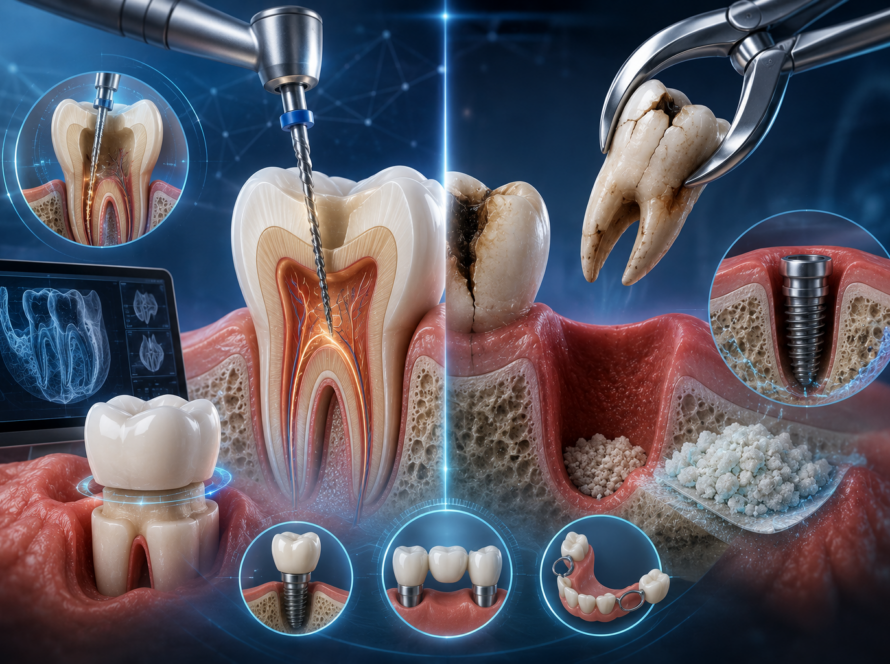

Dental implantology has undergone a remarkable transformation over the past two decades. What was once largely dependent on the clinical experience and judgment of individual dentists is now evolving into a highly data-driven discipline powered by artificial intelligence (AI), digital imaging, cloud computing, and predictive analytics. This new approach—known as predictive implantology—is changing how dentists diagnose, plan, place, and monitor dental implants.
Instead of simply reacting to clinical problems, predictive implantology enables clinicians to anticipate risks, personalize treatment, and improve long-term outcomes before surgery even begins. In 2026, this digital-first philosophy is helping implant dentists achieve greater precision, fewer complications, and higher patient satisfaction.
According to implant technology trends highlighted by DenTrends, predictive implantology represents the next major evolution in digital implant dentistry.
What Is Predictive Implantology?
Predictive implantology is the use of digital technologies, artificial intelligence, advanced imaging, and patient-specific data to forecast treatment outcomes before implant surgery is performed.
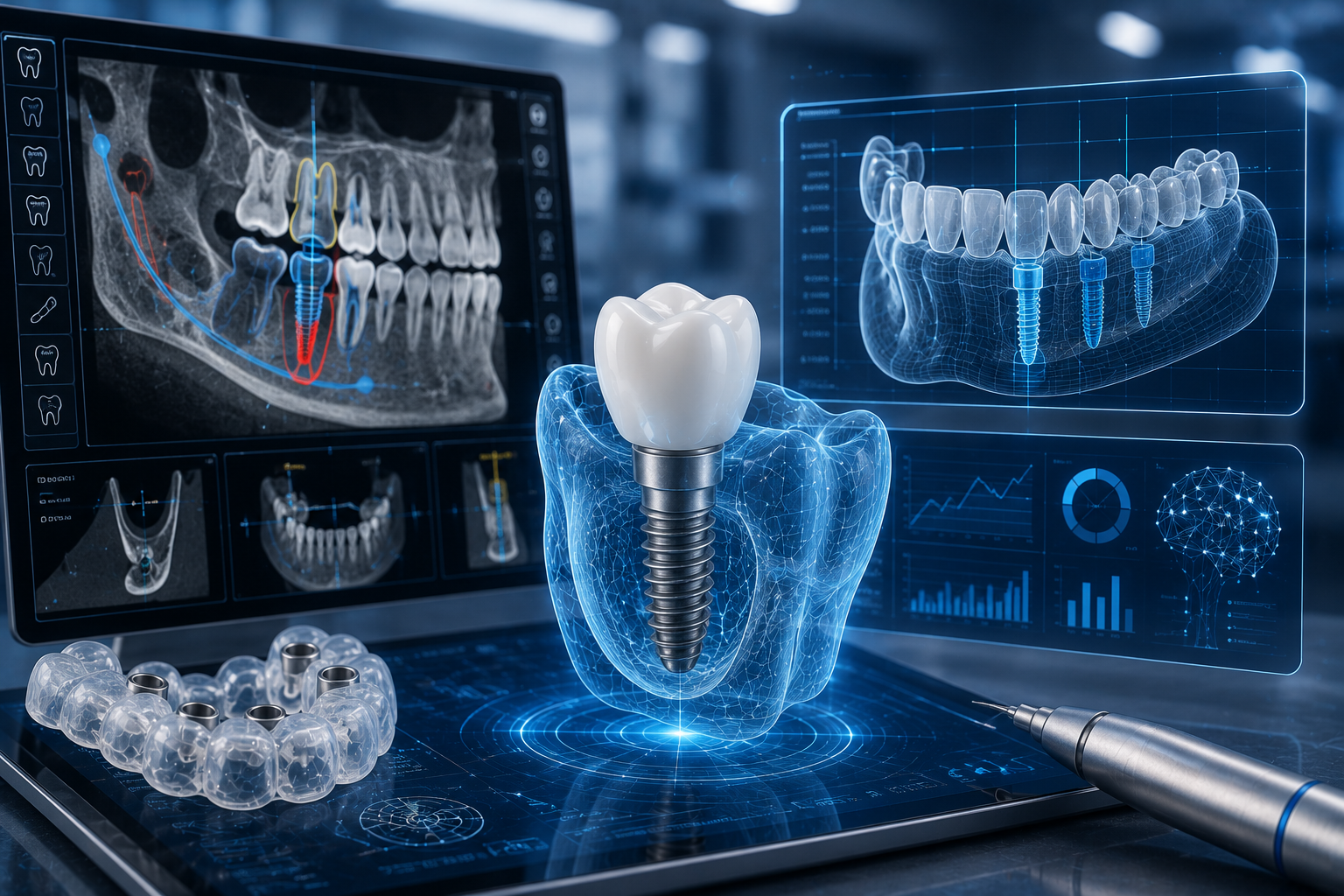
Rather than relying solely on clinical experience, dentists now combine multiple digital datasets—including CBCT scans, intraoral scans, facial scans, occlusal analysis, and medical history—to simulate treatment and identify potential risks.
The objective is simple: place the right implant, in the right position, for the right patient, with the highest probability of long-term success.
The Shift from Reactive to Predictive Dentistry
Traditional implant planning often depended on two-dimensional radiographs and manual measurements. While successful in many cases, clinicians sometimes encountered unexpected challenges during surgery, such as limited bone volume, proximity to anatomical structures, or compromised implant positioning.
Modern digital workflows allow these issues to be identified before treatment begins.
Predictive dentistry focuses on anticipating complications rather than correcting them after they occur.
This shift leads to:
- Improved surgical precision
- Reduced treatment time
- Better esthetic outcomes
- Lower complication rates
- Greater patient confidence
Artificial Intelligence Is Revolutionizing Implant Planning
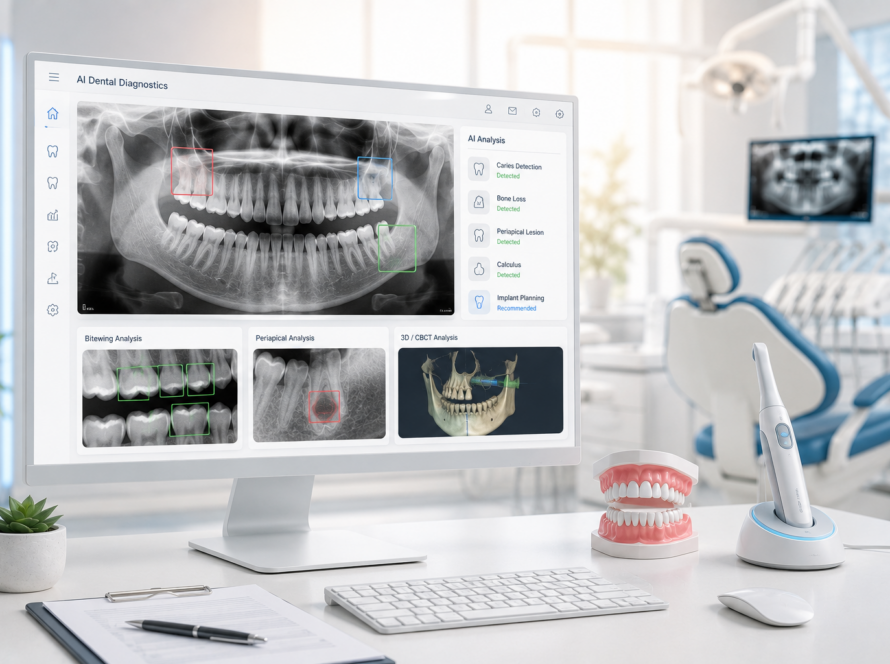
Artificial Intelligence has become one of the most powerful tools in implant dentistry.
AI-powered software can automatically analyze:
- CBCT scans
- Bone density
- Available bone volume
- Anatomical landmarks
- Nerve pathways
- Maxillary sinus location
- Adjacent teeth
- Implant positioning
Some platforms also recommend optimal implant size, angulation, and placement based on anatomical data.
Leading AI solutions include technologies from companies such as:
- Diagnocat
- Pearl AI
- Overjet
These systems function as intelligent decision-support tools that assist clinicians while preserving final clinical judgment.
CBCT Imaging: The Foundation of Predictive Implantology
Cone Beam Computed Tomography (CBCT) remains the cornerstone of digital implant planning.
Unlike traditional X-rays, CBCT provides three-dimensional visualization of:
- Bone quality
- Bone volume
- Nerve canals
- Sinus anatomy
- Root structures
- Jaw relationships
This detailed anatomical information allows dentists to evaluate implant feasibility with far greater confidence than conventional radiography.
CBCT has become indispensable for complex implant cases.
Intraoral Scanners Create Fully Digital Workflows
Digital impressions have largely replaced conventional impression materials in implant dentistry.
Modern intraoral scanners capture highly accurate digital models of the patient’s mouth within minutes.
These scans integrate seamlessly with:
- CBCT imaging
- CAD/CAM software
- Implant planning software
- Surgical guide fabrication
- Digital laboratories
The result is a fully digital workflow that minimizes errors while improving patient comfort.
Facial Scanning Improves Esthetic Outcomes
Successful implant dentistry extends beyond osseointegration.
Patients increasingly expect implants that blend naturally with their smile and facial appearance.
Facial scanning allows dentists to evaluate:
- Smile line
- Lip dynamics
- Facial symmetry
- Tooth display
- Soft tissue relationships
This information helps clinicians design implant restorations that complement the patient’s overall facial aesthetics.
Digital Surgical Guides Increase Accuracy
Predictive planning is only valuable if it can be accurately transferred to surgery.
Computer-generated surgical guides allow clinicians to place implants according to the digital treatment plan with exceptional precision.
Benefits include:
- Controlled angulation
- Accurate implant depth
- Reduced surgical trauma
- Shorter procedure times
- Improved prosthetic positioning
Guided surgery has become a standard component of many modern implant workflows.
Predicting Implant Risk Before Surgery
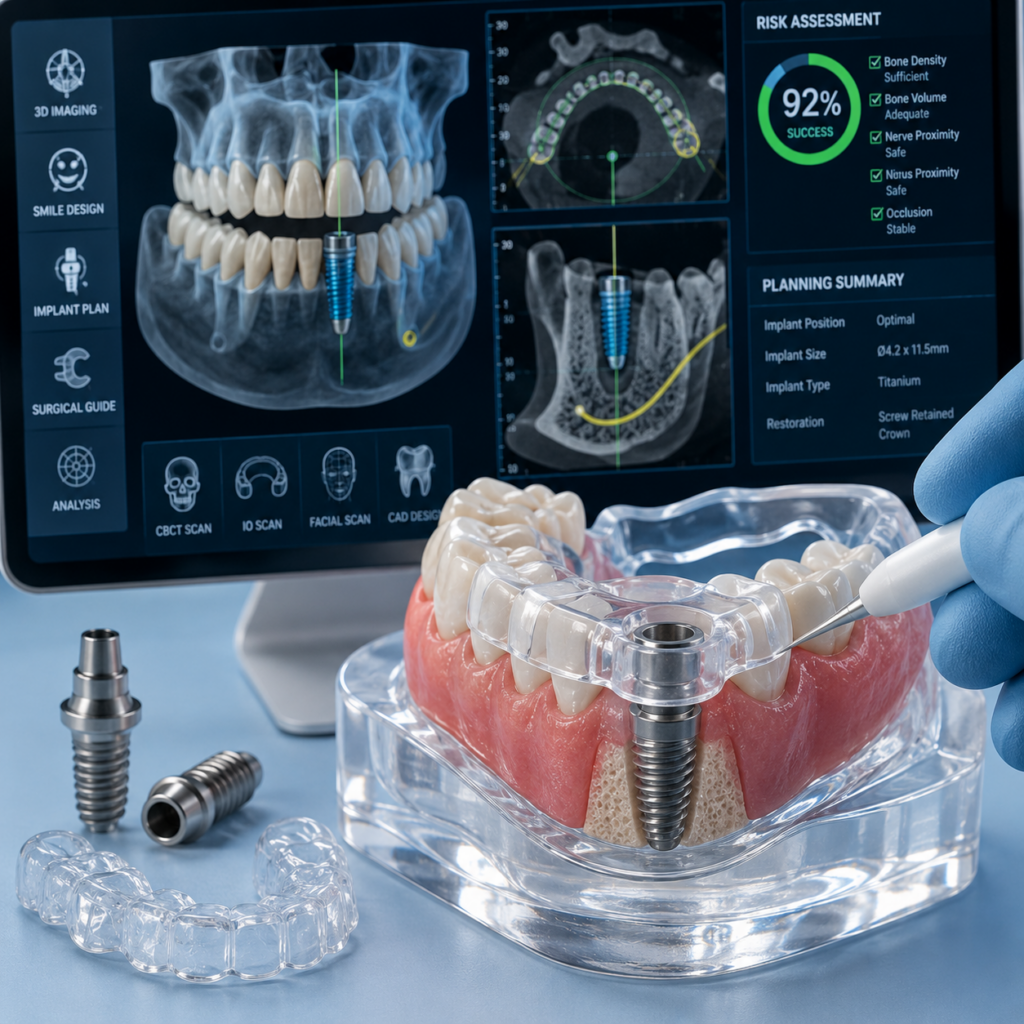
One of the most exciting aspects of predictive implantology is risk assessment.
By analyzing multiple patient variables, digital systems can help identify potential concerns before treatment begins.
These may include:
- Poor bone density
- Bruxism
- Smoking history
- Diabetes
- Periodontal disease
- Occlusal overload
- Limited restorative space
Understanding these factors enables clinicians to modify treatment plans, improve patient education, and increase the likelihood of long-term success.
AI-Assisted Prosthetic Design
Digital dentistry now extends beyond implant placement.
AI-supported CAD/CAM software assists in designing implant-supported restorations that optimize:
- Occlusion
- Emergence profile
- Contact points
- Esthetics
- Function
This integrated approach improves both restorative quality and patient satisfaction.
Monitoring Implant Health with Digital Technology
Predictive implantology continues even after surgery.
Modern digital monitoring includes:
- Digital radiographic comparisons
- AI-assisted bone level analysis
- Periodontal measurements
- Intraoral scanning for tissue changes
- Cloud-based patient records
These technologies allow dentists to identify early signs of complications before clinical symptoms develop.
Preventive maintenance becomes more effective when supported by continuous digital monitoring.
Benefits for Patients
Patients experience numerous advantages through predictive implantology.
These include:
- More accurate treatment planning
- Better esthetic outcomes
- Fewer surgical surprises
- Reduced treatment complications
- Faster recovery
- Increased confidence
- Improved communication through digital simulations
Patients also appreciate seeing virtual treatment plans before surgery begins, helping them understand the proposed procedure and expected results.
The Future of Predictive Implant Dentistry
Researchers continue exploring technologies that may further transform implantology.
Future innovations may include:
- Machine learning for implant success prediction
- AI-generated treatment plans
- Robotic implant placement
- Smart implants with embedded sensors
- Augmented reality surgical navigation
- Personalized biomaterials
- Real-time implant monitoring
These developments have the potential to make implant dentistry safer, more predictable, and increasingly personalized.
Challenges and Ethical Considerations
Despite its advantages, predictive implantology also presents challenges.
Dentists must ensure:
- Patient data privacy
- Accurate AI validation
- Proper clinical oversight
- Continuous professional education
- Responsible integration of technology
Artificial Intelligence should support—not replace—the knowledge, experience, and judgment of trained implant clinicians. Successful treatment will always depend on the combination of technology and professional expertise
DenTrends Thoughts
Predictive implantology represents one of the most significant advancements in modern implant dentistry.
By combining artificial intelligence, CBCT imaging, intraoral scanning, facial analysis, digital workflows, and guided surgery, clinicians can now predict treatment outcomes with greater confidence than ever before.
This shift from reactive treatment to proactive planning is improving surgical precision, enhancing patient communication, and increasing long-term implant success. As digital technologies continue to evolve, predictive implantology will become an essential component of everyday dental practice, helping clinicians deliver safer, smarter, and more personalized care for every patient.
References
- International Team for Implantology (ITI) – Evidence-based implant dentistry resources
https://www.iti.org - American Academy of Implant Dentistry (AAID) – Implant planning and clinical guidelines
https://www.aaid.com - International Journal of Oral & Maxillofacial Implants (JOMI)
https://www.quintpub.com/journals/omi - Clinical Oral Implants Research
https://onlinelibrary.wiley.com/journal/16000501 - European Association for Osseointegration (EAO) – Digital implant dentistry and consensus reports
https://www.eao.org - Diagnocat – AI-powered dental imaging and implant planning
https://diagnocat.com