
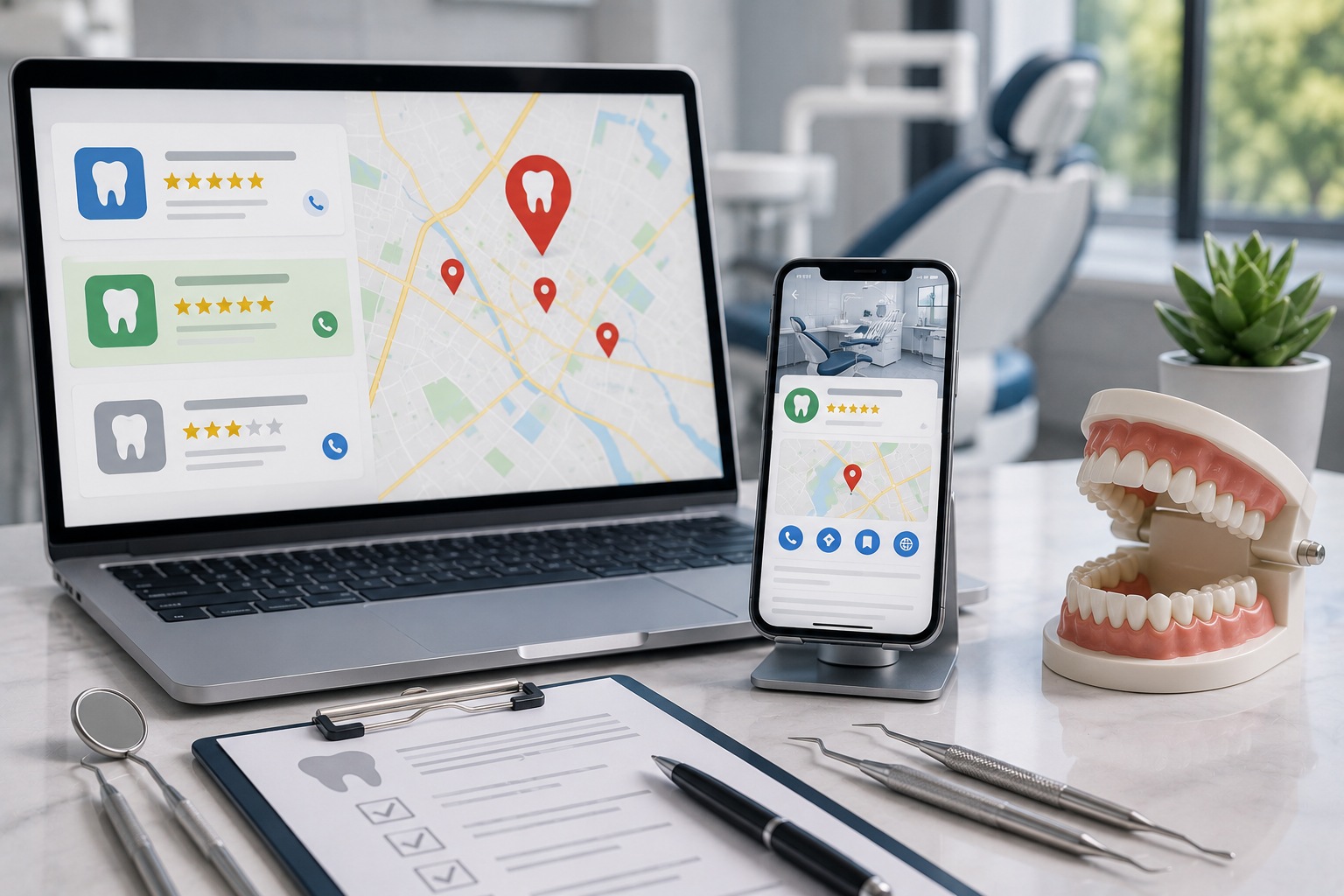
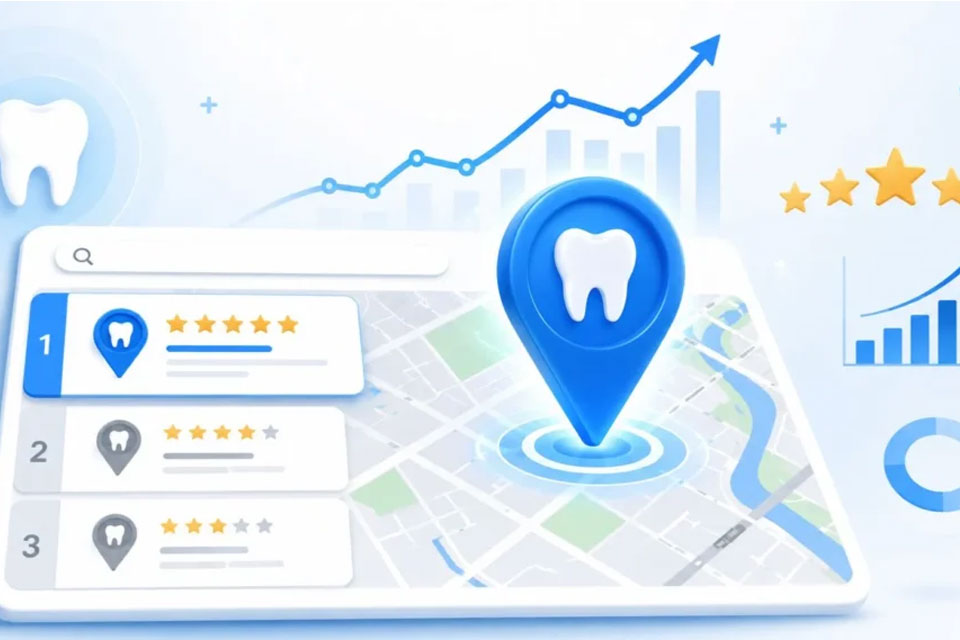
Ranking at the top of Google Maps has become one of the most valuable marketing advantages a dental practice can achieve in 2026.
When potential patients search for terms such as:
- Dentist near me
- Dental implants near me
- Emergency dentist
- Invisalign provider
- Cosmetic dentist
Google often displays the Local Map Pack before traditional organic search results.
The practices appearing in these top positions receive:
- More website visits
- More phone calls
- More appointment requests
- More patient trust
- Higher conversion rates
For many dental clinics, Google Maps now generates more new patient leads than social media, paid advertising, or traditional marketing.
According to local search trends analyzed by DenTrends.com, Google Business Profile optimization and local SEO have become essential growth strategies for modern dental practices.
The good news is that ranking #1 on Google Maps is not determined solely by practice size or marketing budget. Small and independent dental clinics can often outrank larger competitors by implementing the right local SEO strategy.
Why Google Maps Rankings Matter
When patients need dental treatment, they typically want a provider nearby.
Google understands this intent and prioritizes local search results.
Research consistently shows that a large percentage of local searches result in:
- Calls
- Directions requests
- Website visits
- Appointments
within a short period.
This means Google Maps traffic often represents highly motivated patients who are actively looking for treatment.
Unlike traditional advertising, these patients are already searching for dental services.
The goal is simply to ensure your practice appears before competitors.
Optimize Your Google Business Profile Completely
The foundation of Google Maps SEO is a fully optimized Google Business Profile (GBP).
Many dentists create a profile but leave important sections incomplete.
Google prefers profiles that provide comprehensive information.
Every dental practice should ensure:
- Practice name is accurate
- Address is consistent
- Phone number is correct
- Website is connected
- Business hours are updated
- Categories are selected properly
- Services are listed in detail
The primary category should usually be:
Dentist
Additional categories may include:
- Cosmetic Dentist
- Dental Implants Provider
- Pediatric Dentist
- Orthodontist
- Emergency Dental Service
depending on the practice.
A complete profile sends strong trust signals to Google.
Get More High-Quality Reviews
Reviews remain one of the strongest Google Maps ranking factors.
Google views reviews as indicators of:
- Trust
- Reputation
- Patient satisfaction
- Local authority
The quantity, quality, and frequency of reviews all matter.
Practices should develop systems that encourage happy patients to leave reviews consistently.
The most successful dental practices often:
- Ask immediately after treatment
- Send automated review requests
- Use QR codes
- Simplify the review process
However, quantity alone is not enough.
Detailed reviews mentioning specific treatments such as:
- Dental implants
- Invisalign
- Teeth whitening
- Root canals
can improve relevance for those services.
Build Service-Specific Pages
Many dental websites make the mistake of having only a generic services page.
Modern local SEO requires dedicated pages for major treatments.
Examples include:
- Dental Implants
- Invisalign
- Veneers
- Teeth Whitening
- Root Canal Treatment
- Emergency Dentistry
- Pediatric Dentistry
Each page should answer common patient questions while demonstrating expertise.
According to SEO analysis covered by DenTrends.com, service-specific content remains one of the strongest ranking signals for local healthcare businesses.
Use Local Keywords Naturally
Google wants to understand where you provide services.
Local keywords help reinforce geographic relevance.
Examples include:
- Dental Implants in Orlando
- Cosmetic Dentist in Miami
- Invisalign Provider in Chicago
- Emergency Dentist in Dallas
However, keyword stuffing should be avoided.
Modern SEO focuses on natural, helpful content rather than repetitive keyword usage.
Location references should appear:
- In page titles
- Meta descriptions
- Service pages
- Blog content
- Image alt text
where appropriate.
Create Location-Based Content
One of the most effective local SEO strategies is publishing location-focused content.
Dental practices can create articles such as:
- Best Dental Implant Options in Orlando
- How Much Does Invisalign Cost in Miami?
- Emergency Dental Care in Tampa
- Top Reasons Patients Choose Cosmetic Dentistry in Dallas
This helps Google associate the practice with local searches.
Regular content publishing also strengthens topical authority.
Add High-Quality Photos Regularly
Google Business Profiles with active photo updates often perform better.
Photos increase:
- Engagement
- Trust
- Click-through rates
Recommended images include:
- Exterior office photos
- Reception area
- Treatment rooms
- Team members
- Before-and-after cases (where permitted)
- Technology and equipment
Modern patients often evaluate a practice visually before contacting the office.
Fresh images signal an active business.
Earn Local Citations
A citation is any online mention of your practice’s:
- Name
- Address
- Phone number
Common citation sources include:
- Yelp
- Healthgrades
- Zocdoc
- Bing Places
- Local business directories
Consistency is critical.
Even small differences in practice information can create confusion for search engines.
Google uses citation consistency as a trust factor.
Improve Website Speed
Fast websites create better user experiences.
Google increasingly prioritizes:
- Mobile usability
- Loading speed
- Technical performance
Patients are unlikely to wait for a slow website to load.
Website improvements should include:
- Image optimization
- Fast hosting
- Mobile responsiveness
- Core Web Vitals optimization
Technical SEO remains an important component of local ranking success.
Use Schema Markup
Schema markup helps search engines understand business information more clearly.
Dental practices should implement:
- Local Business Schema
- Dentist Schema
- Review Schema
- FAQ Schema
Proper structured data improves visibility and enhances search understanding.
Modern SEO agencies increasingly consider schema implementation a standard requirement.
Build Local Backlinks
Backlinks remain one of Google’s strongest ranking signals.
Local backlinks can come from:
- Chambers of commerce
- Community organizations
- Local news websites
- Sponsorships
- Healthcare directories
A few high-quality local backlinks often provide more value than dozens of low-quality links.
Local authority helps strengthen Google Maps rankings significantly.
Publish Patient-Focused Blog Content
Many dentists underestimate the power of educational content.
Publishing articles on topics such as:
- Dental Implant Costs
- Invisalign vs Braces
- Teeth Whitening Options
- Root Canal Myths
- Emergency Dental Care
helps establish expertise and generate organic traffic.
Content also supports:
- Service pages
- Internal linking
- Topical authority
This is one reason platforms like DenTrends.com continue emphasizing content marketing as a critical growth strategy for modern dental practices.
AI and Google Maps Rankings in 2026
Artificial Intelligence is changing local search rapidly.
Google increasingly evaluates:
- Content quality
- User engagement
- Search intent
- Experience signals
AI-powered search systems favor businesses that provide:
- Accurate information
- Helpful content
- Strong reputation signals
Future local SEO will likely become even more dependent on:
- Expertise
- Authority
- Trustworthiness
rather than traditional ranking tricks.
The Real Secret to Ranking #1
Many dentists assume ranking #1 on Google Maps requires expensive marketing.
The reality is simpler.
The practices that dominate local search typically excel in three areas:
Relevance
How closely your services match search intent.
Distance
How close your location is to the searcher.
Prominence
How well-known and trusted your practice appears online.
Google repeatedly emphasizes these three factors.
Everything discussed in this article ultimately strengthens one or more of them.
DenTrends Thoughts
Google Maps has become one of the most powerful patient acquisition channels in modern dentistry.
Practices that consistently optimize their Google Business Profile, collect reviews, publish useful content, improve website performance, and build local authority are far more likely to dominate local search results.
According to local dental marketing trends analyzed by DenTrends.com, the most successful dental practices in 2026 view Google Maps not as a marketing tool, but as a core business growth engine.
Because when patients search for a dentist, the practice that appears first often earns the appointment.