
The American dental industry is undergoing a major digital transformation. Smart dental clinics—powered by automation, artificial intelligence (AI), cloud computing, and connected technologies—are redefining how dental care is delivered, managed, and experienced. From AI-assisted diagnostics to automated appointment systems and teledentistry platforms, modern dental practices are increasingly investing in technologies that improve efficiency, reduce operational costs, and enhance patient outcomes.
For dental service organizations (DSOs), independent practices, and technology vendors, automation is no longer optional. It is becoming a competitive necessity.
What Is a Smart Dental Clinic?
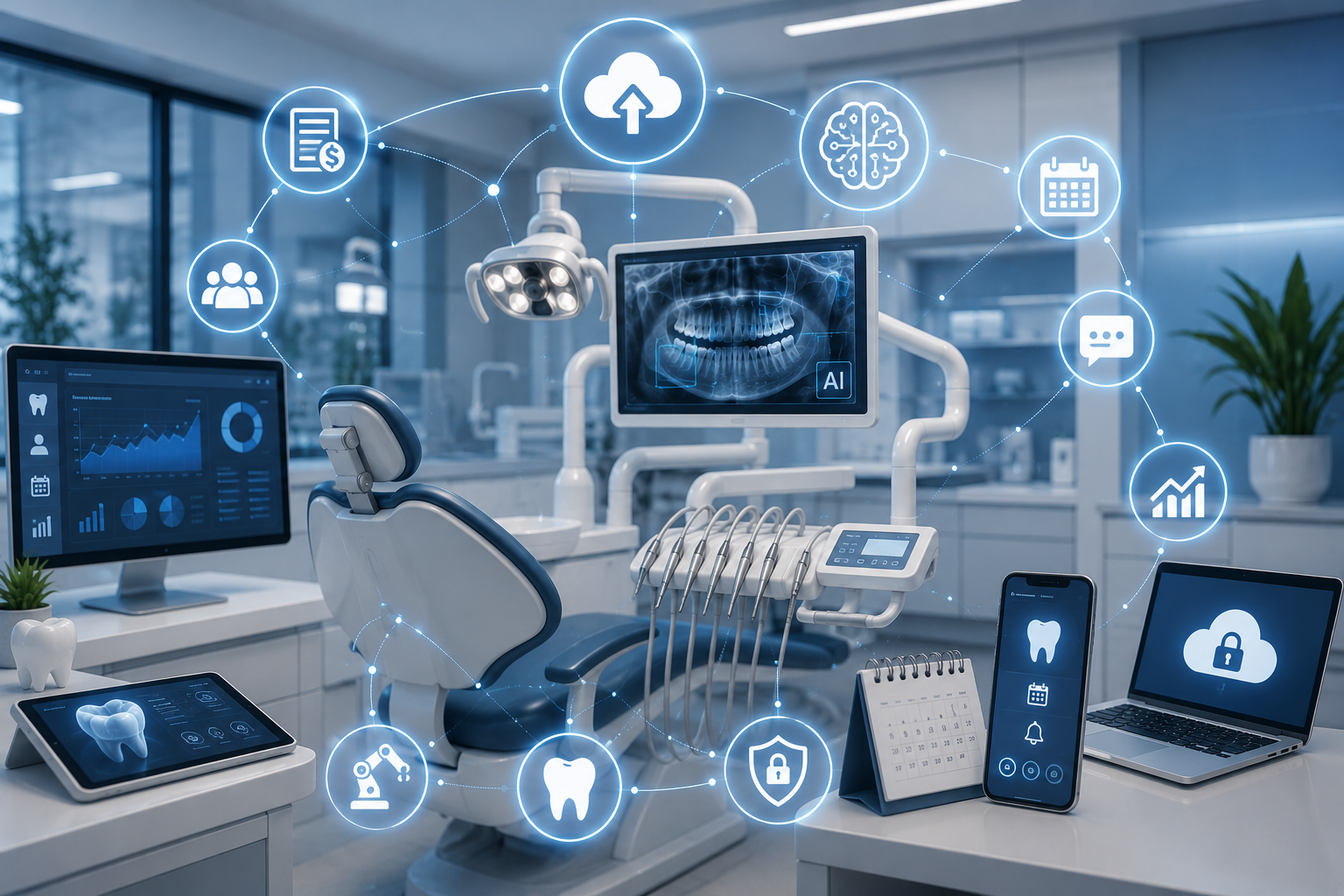
A smart dental clinic uses integrated digital technologies and automation systems to optimize clinical workflows, patient communication, diagnostics, billing, and administrative operations. These clinics combine software, AI tools, cloud platforms, and connected devices to create a more efficient and data-driven healthcare environment.
Core components of smart dental clinics typically include:
- AI-powered diagnostic imaging
- Cloud-based practice management systems
- Automated scheduling and patient communication
- Digital treatment planning
- Internet of Things (IoT)-enabled dental devices
- Teledentistry platforms
- Revenue cycle automation
- Data analytics and predictive reporting
The growing adoption of these technologies is reshaping the US dental ecosystem and accelerating the move toward fully digital dentistry. (Oral Health Group)
Why Automation Is Growing in US Dental Clinics
Several market factors are driving automation adoption in American dental practices:
1. Staffing Shortages and Administrative Burden
Dental clinics across the US continue to face staffing challenges, especially in front-desk operations and insurance administration. Automation helps reduce repetitive manual work such as appointment confirmations, insurance verification, billing follow-ups, and patient reminders.
Industry discussions among automation professionals and clinic operators reveal that missed calls, scheduling overload, and no-shows remain major operational pain points for dental offices. (Reddit)
2. Rising Patient Expectations
Patients increasingly expect a healthcare experience similar to digital retail and banking—online booking, instant communication, mobile reminders, digital forms, and virtual consultations. Clinics adopting smart workflows are better positioned to meet these expectations.
Research from digital dentistry providers indicates that patients value personalized and technology-enabled care experiences. (3Shape)
3. Growth of DSOs and Multi-Location Practices
Large dental groups and DSOs require centralized data management and scalable operations. Cloud-based automation platforms enable real-time reporting, standardized workflows, and remote management across multiple locations.
The US dental practice management software market is projected to reach $1.55 billion by 2030, reflecting strong demand for digital infrastructure. (Grand View Research)
Key Automation Trends in Smart Dental Clinics
AI-Powered Diagnostics and Imaging
Artificial intelligence is becoming one of the most transformative technologies in dentistry. AI-powered imaging systems can analyze radiographs, detect caries, identify periodontal disease, and assist with treatment planning.
Modern AI tools help dentists improve diagnostic accuracy while reducing interpretation time. According to industry reports, many dental practices implementing AI report increased clinician confidence and improved patient trust. (DrBicuspid.com)
Advanced multimodal AI systems are also being developed to support comprehensive oral disease diagnosis across multiple imaging modalities. Emerging research suggests AI-assisted workflows can significantly reduce diagnostic time while supporting clinical decision-making. (arXiv)
Benefits of AI Diagnostics
- Faster image analysis
- Improved diagnostic consistency
- Enhanced patient education
- Reduced human error
- Better treatment acceptance rates
As AI becomes more integrated into everyday practice management systems, smart dental clinics are expected to rely increasingly on predictive analytics and automated clinical recommendations.
Cloud-Based Practice Management Systems
Cloud-based dental software has rapidly become the backbone of smart dental clinics in the US.
Unlike traditional on-premise systems, cloud platforms allow dentists and staff to access patient records, schedules, imaging, and financial data securely from any location. These systems support remote collaboration, centralized reporting, and seamless software updates.
Industry data shows cloud adoption is accelerating across US dental practices, particularly among DSOs and multi-clinic groups. (Clerri)
Key Features of Cloud Dental Platforms
- Centralized patient records
- Real-time appointment management
- Integrated billing and insurance processing
- Automated backups and cybersecurity updates
- Multi-location accessibility
- AI and analytics integration
Cloud infrastructure also enables easier integration with teledentistry platforms, patient communication tools, and IoT-enabled devices.
Automated Patient Communication Systems
Patient engagement automation is one of the fastest-growing trends in smart dentistry.
Dental clinics are increasingly deploying automated systems for:
- Appointment confirmations
- Recall reminders
- Review requests
- Post-treatment follow-ups
- SMS and email communication
- Missed-call text-back systems
Automation helps reduce no-show rates and minimizes front-desk workload. According to industry discussions, AI-powered communication systems are producing measurable improvements in appointment booking and operational efficiency. (Reddit)
Many modern platforms now include conversational AI assistants capable of handling routine patient inquiries, scheduling requests, and basic intake tasks.
However, clinics must ensure these systems remain HIPAA-compliant and secure when handling protected health information (PHI). Experts consistently emphasize compliance and data governance as critical considerations for automation adoption. (Reddit)
Teledentistry and Remote Care
Teledentistry gained momentum during the pandemic and continues to expand across the United States.
Smart dental clinics now use virtual consultations for:
- Initial screenings
- Orthodontic monitoring
- Follow-up evaluations
- Emergency triage
- Patient education
AI-enhanced teledentistry platforms are further improving remote diagnostics and patient monitoring capabilities. Recent research highlights how AI can support image analysis, treatment scheduling, and virtual patient interaction in teledentistry environments. (ResearchGate)
Industry surveys suggest that virtual consultations are becoming standard practice for many clinics seeking to improve accessibility and patient retention. (stateofdental.com)
Advantages of Teledentistry Automation
- Expanded patient reach
- Reduced chair-time bottlenecks
- Improved access in rural areas
- Faster case triaging
- Enhanced patient convenience
IoT and Smart Dental Devices
The Internet of Things (IoT) is playing an increasingly important role in connected dental clinics.
Smart dental devices can now collect, transmit, and analyze operational and clinical data in real time. Examples include:
- Smart imaging systems
- Connected sterilization units
- IoT-enabled dental chairs
- Sensor-equipped equipment monitoring
- Smart toothbrush ecosystems linked to patient records
Industry analysts note that IoT integration is helping clinics improve equipment maintenance, workflow coordination, and preventive care monitoring. (scanoai.com)
As connected ecosystems mature, dental clinics are expected to adopt more predictive maintenance tools and real-time operational dashboards.
Revenue Cycle Management (RCM) Automation
Financial automation is another major trend reshaping smart dental practices.
AI and automation tools are helping clinics streamline:
- Insurance verification
- Claims processing
- Billing workflows
- Payment collection
- Denial management
Automated revenue cycle systems reduce administrative errors and improve cash flow by accelerating reimbursements and minimizing claim denials. (carerevenue.com)
Data-driven analytics also help practice owners identify operational inefficiencies and optimize financial performance.
Data Analytics and Predictive Insights
Smart dental clinics are increasingly using analytics platforms to improve business decision-making and patient care.
Modern dental analytics tools can provide insights into:
- Treatment acceptance rates
- Patient retention
- Appointment utilization
- Revenue forecasting
- Hygiene recall performance
- Operational bottlenecks
The integration of AI with analytics platforms is enabling predictive modeling that supports proactive patient engagement and practice growth strategies. (Grand View Research)
Challenges Facing Smart Dental Clinics
Despite rapid growth, automation adoption in dentistry still faces several challenges.
Data Privacy and HIPAA Compliance
Healthcare data security remains a critical concern. Any AI or automation platform handling patient information must comply with HIPAA regulations and cybersecurity standards.
Industry professionals consistently identify privacy management as one of the biggest implementation challenges. (Reddit)
Integration Complexity
Many clinics still operate legacy systems that do not easily integrate with modern AI tools or cloud platforms. Integration difficulties can slow adoption and increase implementation costs.
Staff Training and Change Management
Successful automation requires staff training and workflow adaptation. Clinics that fail to align technology with operational processes may experience resistance and inefficiencies during implementation.
Cost of Implementation
Although automation can generate long-term savings, initial investment costs for software, hardware, cybersecurity, and integration can be substantial for smaller practices.
The Future of Smart Dentistry in the US
The future of smart dental clinics will likely center around fully integrated ecosystems where AI, cloud software, imaging platforms, and patient communication tools operate seamlessly together.
Emerging technologies expected to shape the next phase of dental automation include:
- AI-assisted treatment planning
- Voice-enabled clinical documentation
- Predictive oral health analytics
- Robotics-assisted dentistry
- Advanced multimodal diagnostic AI
- Personalized patient engagement systems
Experts believe the most successful dental practices will be those that combine automation with patient-centered care rather than relying solely on technology adoption. (DrBicuspid.com)
As the US dental market becomes increasingly digital, smart clinics will continue to gain a strategic advantage through operational efficiency, improved diagnostics, enhanced patient experiences, and scalable practice management.
Final Thought
Smart dental clinics are transforming the future of oral healthcare in the United States. Automation technologies—from AI diagnostics and cloud-based management systems to teledentistry and automated patient communication—are reshaping how dental practices operate and engage with patients.
While challenges such as compliance, integration, and implementation costs remain, the long-term benefits of automation are becoming increasingly clear. Clinics that invest in smart technologies today are positioning themselves for stronger operational performance, better patient outcomes, and long-term competitiveness in an evolving dental landscape.
For dental professionals, DSOs, and technology providers, the era of smart dentistry is no longer a future concept—it is already underway.
Sources:
- Oral Health Group – Tech Stack Revolution: Cloud and AI in Dentistry for 2026
- BMC Artificial Intelligence – Redefining Oral Healthcare Through AI
- Grand View Research – U.S. Dental Practice Management Software Market
- DrBicuspid – Top Dental Trends Reshaping Dentistry
- 3Shape – 2025 Digital Dentistry Trends
- ResearchGate – AI-Driven Evolution in Teledentistry
- Clerri – Dental Practice Technology Adoption Statistics
- scanO – From IoT to AI: Smart Tools in Dental Practices