
A beautiful smile can significantly boost confidence, improve first impressions, and enhance overall facial aesthetics. Thanks to advancements in cosmetic dentistry, patients now have multiple options to correct chipped, stained, uneven, or slightly misaligned teeth.
Among the most popular cosmetic treatments are composite bonding and dental veneers. Both can transform a smile, but they differ in materials, durability, cost, longevity, and treatment approach.
Choosing the right option depends on your aesthetic goals, budget, oral health, and long-term expectations.
According to cosmetic dentistry experts featured by DenTrends, understanding the advantages and limitations of each treatment is essential before making an investment in your smile.
What Is Composite Bonding?
Composite bonding is a minimally invasive cosmetic procedure in which a tooth-colored composite resin is carefully applied, sculpted, and polished directly onto the natural tooth.
The procedure can improve:
- Chipped teeth
- Small gaps
- Minor discoloration
- Uneven edges
- Slightly misshapen teeth
- Small fractures
Because the resin is bonded directly to the tooth, little or no enamel removal is usually required.
Composite bonding is often completed in a single dental visit, making it one of the quickest cosmetic treatments available.
What Are Dental Veneers?
Dental veneers are thin shells made from porcelain or ceramic that are permanently bonded to the front surface of teeth.
They are custom-designed to improve:
- Tooth color
- Shape
- Size
- Alignment
- Smile symmetry
Porcelain veneers are fabricated in a dental laboratory after digital scans or impressions are taken.
Modern veneers provide exceptional aesthetics and closely mimic the translucency and appearance of natural enamel.
Appearance: Veneers Offer Superior Aesthetics
Both treatments produce beautiful cosmetic results.
However, porcelain veneers generally provide a more natural appearance because ceramic materials reflect light similarly to natural enamel.
Modern veneers offer:
- Excellent translucency
- Superior color stability
- Natural texture
- Highly customized aesthetics
Composite bonding also delivers attractive results but may lose polish over time and can be more susceptible to staining.
For patients seeking the highest level of cosmetic excellence, veneers often provide the most lifelike outcome.
Tooth Preparation
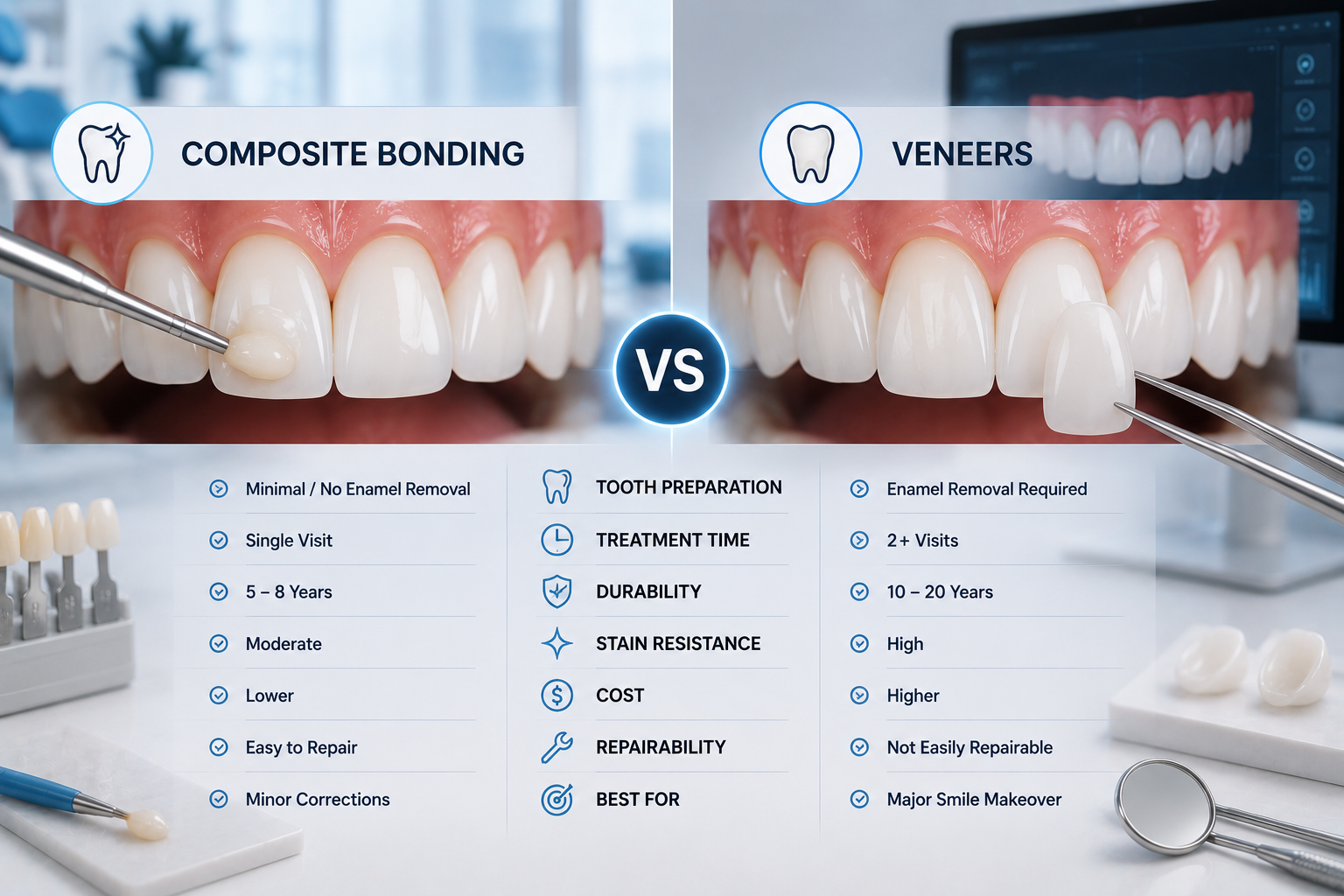
One of the biggest advantages of composite bonding is its conservative nature.
In many cases:
- No drilling is required
- Minimal enamel removal occurs
- The procedure may be reversible
Traditional veneers usually require removal of a thin layer of enamel to ensure proper fit and appearance.
Although minimal-preparation veneer techniques continue to evolve, veneers remain a more permanent treatment option.
Patients wishing to preserve maximum natural tooth structure often prefer composite bonding.
Treatment Time
Composite bonding is typically completed during a single appointment.
The dentist applies the resin directly to the tooth, shapes it artistically, hardens it with a curing light, and polishes the final restoration.
Veneers usually require two or more visits:
- Consultation and digital planning
- Tooth preparation
- Impression or digital scan
- Laboratory fabrication
- Final bonding appointment
Patients seeking immediate cosmetic improvement often choose composite bonding for its speed.
Durability and Longevity
Porcelain veneers are generally more durable than composite bonding.
Composite Bonding
Average lifespan:
5–8 years
With proper maintenance, some restorations may last longer.
Porcelain Veneers
Average lifespan:
10–20 years
High-quality ceramic restorations combined with excellent oral hygiene can provide decades of successful service.
For long-term durability, veneers generally outperform composite bonding.
Resistance to Staining
Coffee, tea, wine, tobacco, and colored beverages can gradually stain composite resin.
Periodic polishing may restore appearance, but staining remains a long-term consideration.
Porcelain veneers are highly resistant to discoloration and maintain their brightness for many years.
Patients seeking long-lasting whiteness often prefer veneers.
Repairability
One significant advantage of composite bonding is ease of repair.
If bonding chips or fractures, dentists can often add new composite directly to the restoration without replacing the entire treatment.
Porcelain veneers cannot usually be repaired as easily.
A fractured veneer often requires complete replacement.
This makes composite bonding a flexible option for younger patients or those with active lifestyles.
Cost Comparison
Composite bonding is generally less expensive than porcelain veneers.
Composite Bonding
- Lower initial investment
- Single appointment
- Cost-effective cosmetic improvement
Porcelain Veneers
- Higher initial cost
- Laboratory fabrication
- Longer lifespan
- Superior aesthetics
Although veneers require a greater upfront investment, their durability may provide better long-term value for some patients.
Which Treatment Is Better for Young Patients?
Dentists often recommend composite bonding for younger individuals because it preserves natural enamel and can be modified as the patient ages.
As cosmetic needs change over time, bonding can be repaired, replaced, or upgraded with minimal impact on tooth structure.
Veneers are generally more appropriate once facial growth and long-term aesthetic goals have stabilized.
Can Composite Bonding Replace Veneers?
For minor cosmetic concerns, composite bonding may provide excellent results without the need for veneers.
However, patients with:
- Severe discoloration
- Large restorations
- Significant wear
- Extensive aesthetic concerns
may achieve more predictable and durable outcomes with porcelain veneers.
An experienced cosmetic dentist can determine which option best matches individual needs.
Digital Smile Design Is Changing Cosmetic Dentistry
Modern cosmetic dentistry increasingly relies on digital technology.
Using:
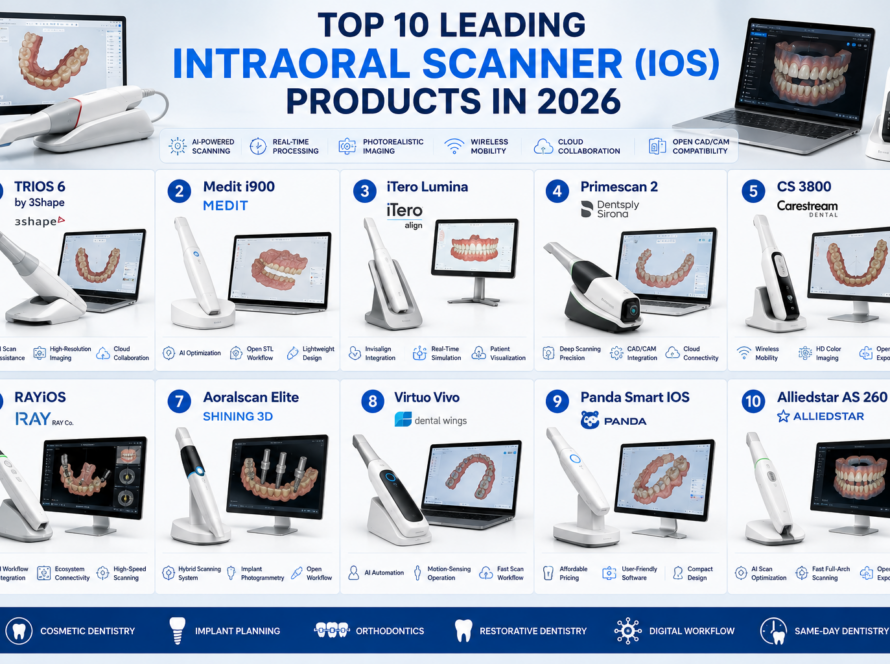
- Intraoral scanners
- Facial scanners
- AI-assisted smile analysis
- Digital Smile Design software
dentists can preview treatment outcomes before procedures begin.
These technologies help personalize both composite bonding and veneer treatments, resulting in smiles that complement each patient’s facial features and personality.
The Future of Conservative Smile Makeovers
The trend in cosmetic dentistry is moving toward minimally invasive treatment.
Rather than aggressively preparing teeth, dentists increasingly focus on preserving healthy enamel whenever possible.
Advances in adhesive dentistry, composite materials, and ceramic technology continue expanding treatment options that combine aesthetics with conservation of natural tooth structure.
The future of smile makeovers is personalized, digital, and biologically respectful.
DenTrends Thoughts
The idea of reversing small cavities without drilling is no longer science fiction. Advances in remineralization science, nano-hydroxyapatite technology, and preventive dentistry are enabling dentists to preserve natural tooth structure and intervene earlier than ever before.
However, success depends on one crucial factor: timing. Early-stage enamel lesions can often be repaired, but established cavities cannot regenerate on their own.
The future of dentistry lies not only in treating disease but in preventing it. By combining early diagnosis, evidence-based preventive therapies, and patient education, modern dentistry is moving toward a more conservative, healthier, and minimally invasive approach to oral care.