
Artificial Intelligence Is Transforming Dental Diagnosis
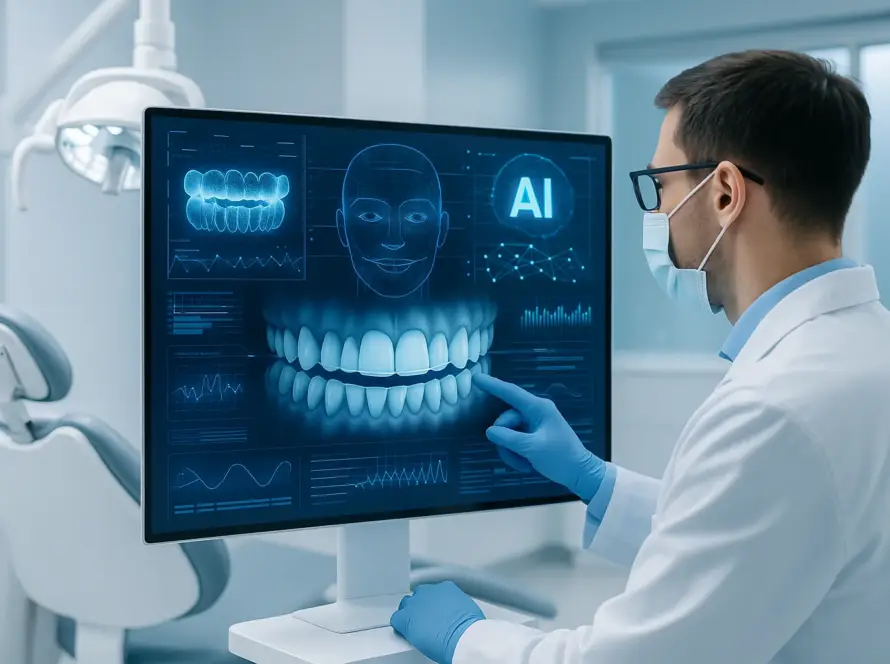
Artificial Intelligence (AI) is rapidly reshaping modern healthcare — and dentistry is no exception. From advancing diagnostic precision to enabling predictive care, AI is revolutionizing how dental professionals detect, analyze, and treat oral health conditions. This technological evolution is helping dentists deliver faster, more accurate diagnoses and creating new possibilities for preventive and personalized care worldwide.
What Is AI in Dental Diagnosis?
At its core, Artificial Intelligence refers to computer systems designed to perform tasks that typically require human intelligence — such as pattern recognition, decision-making, and interpretation of complex data. In dentistry, AI utilizes machine learning, deep learning, and computer vision to analyze radiographs, 3D scans, and patient records with unparalleled speed and accuracy.
AI systems learn from large annotated datasets and can detect subtle signs of dental diseases — often earlier than the human eye. The result? More confident clinical decisions backed by data-driven insights.
1. Enhancing Diagnostic Accuracy
Accurate diagnosis is critical to successful dental care — and AI excels here:
AI with Radiographic Imaging
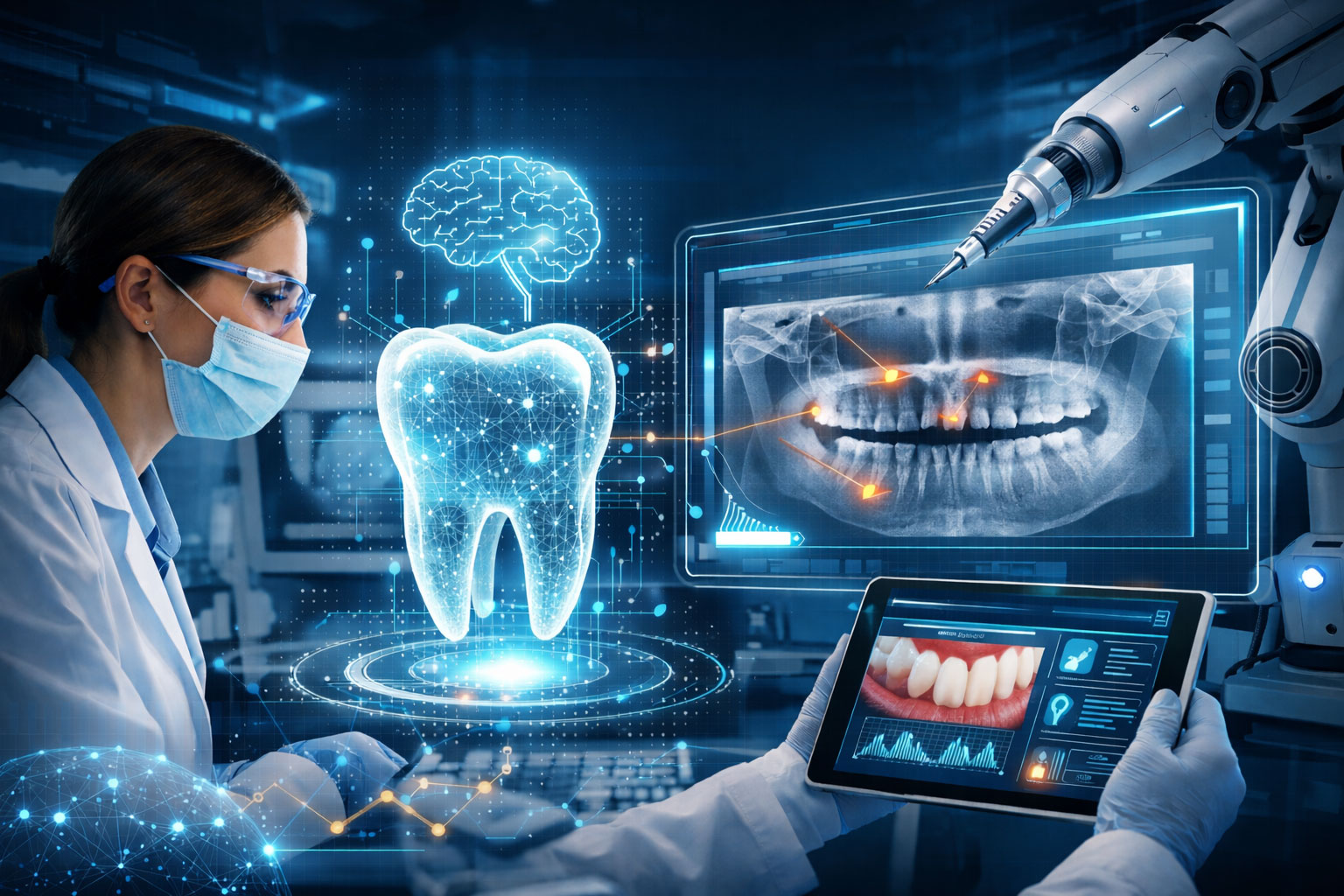
AI-powered tools analyze X-rays, CT scans, and panoramic images to detect dental issues including:
- Cavities (dental caries)
- Periodontal (gum) disease
- Periapical lesions
- Bone loss and impacted teeth
These algorithms use deep learning to differentiate between healthy and diseased areas — sometimes with greater precision than traditional visual examination. Studies show that AI models can significantly improve diagnostic sensitivity and specificity, helping dentists catch issues at earlier stages.

2. Early Detection and Preventive Interventions
Traditional dental diagnosis often depends on clinician expertise and manual interpretation — which can sometimes miss early, subtle signs of disease. AI changes this by:
- Identifying decay and fractures earlier
- Highlighting patterns of disease risk that humans might overlook
- Predicting progression of dental conditions before symptoms develop
Such early detection not only safeguards oral health but also reduces the need for extensive treatments later.
3. Predictive Analytics and Personalized Treatment
AI doesn’t just spot problems — it can predict what might happen next. By analyzing historical data, patient health records, and imaging results, AI models forecast:
✔️ Likelihood of future dental disease
✔️ Optimal treatment paths
✔️ Risk of complications
This enables dentists to tailor care plans to each patient — making treatment more efficient and outcome-focused.
4. Speeding Up Clinical Workflows
AI significantly reduces time-intensive tasks that previously slowed down dental diagnosis:
- Automated image analysis processes scans in seconds, not minutes
- Machine learning algorithms quickly sift through thousands of images
- AI tools assist with reporting and highlight findings that require clinician review
Dentists can now spend more time on patient care and less on repetitive interpretation tasks, improving both productivity and precision.
5. Supporting Clinical Education and Research
AI also plays a growing role in dental education and research:
🧪 AI simulations help dental students learn diagnostic techniques
🧪 Multinational datasets enhance the training of models used in global practice.
🧪 AI research platforms allow international collaboration to improve dental diagnostics
These advancements accelerate innovation and help bridge gaps in training and expertise across countries.
Challenges and Future Outlook
Despite its promise, AI faces some obstacles in dentistry:
- Data privacy and security concerns
- Need for diverse global datasets
- Integration with existing dental systems
- Ethical and regulatory oversight for clinical use
However, as research grows and standards improve, the role of AI is expected to expand — leading to more accurate diagnostic tools, personalized patient care, and smarter dental workflows worldwide.
Conclusion
AI is not here to replace dentists — but to empower them. By enhancing diagnostic accuracy, enabling early detection, and supporting personalized treatment planning, artificial intelligence is transforming dental diagnosis into a more precise, efficient, and patient-centered process. As technology continues to evolve, AI promises to be a cornerstone of oral healthcare innovation across the globe.