
Dentistry is no longer a local industry.
In 2026, dental technology, clinical education, AI systems, digital workflows, implant innovations, and cosmetic dentistry trends spread globally within hours through search engines, digital publishing, webinars, social media, and online education platforms.
A dentist in Brazil may adopt a workflow developed in South Korea. A clinic in Germany may invest in scanner technology from Denmark. An implantologist in India may study guided surgery techniques pioneered in the United States.
Modern dentistry has become deeply interconnected across countries, cultures, and languages.
Yet despite this global transformation, a major problem still exists within dental media and publishing:
Most dental educational content is still dominated by English.
This creates a massive information gap for millions of dental professionals worldwide who prefer reading in their native language.
The future of dental publishing will not belong only to English-language platforms.
It will belong to dental media brands capable of educating the global dental community through multilingual publishing ecosystems.
This is why the next generation of dental media platforms — including DenTrends.com — must increasingly focus on becoming available in multiple international languages beyond English. Because the future dental audience is global.
Why English-Only Dental Publishing Is Becoming Limited
For decades, English has dominated scientific and dental publishing.
Most major:
- Research journals
- Implant education systems
- Technology platforms
- Clinical conferences
- Dental magazines
operate primarily in English.
While this helped standardize global communication, it also created barriers for many dental professionals who:
- Understand clinical concepts better in their native language
- Learn faster through localized education
- Prefer reading complex topics comfortably
- Feel disconnected from English-heavy educational systems
Modern dentistry is becoming too global for a single-language publishing model.
A dentist may understand conversational English but still struggle with:
- Advanced implantology terminology
- AI workflow education
- Digital dentistry systems
- Clinical research interpretation
Complex dental education becomes far more accessible when presented in the reader’s native language.
Dentistry Is Growing Rapidly in Non-English Markets
One of the biggest changes happening in global dentistry is the rapid growth of emerging dental economies.
Countries across:
- Asia
- Latin America
- Middle East
- Africa
- Eastern Europe
are experiencing massive growth in:
- Digital dentistry adoption
- Cosmetic dentistry demand
- Implantology
- AI workflows
- Dental tourism
- Dental education
Many of these markets contain millions of dentists and students who actively search online for:
- Dental technology updates
- Product comparisons
- Clinical education
- AI dentistry trends
- Workflow solutions
But a significant percentage of this audience prefers consuming educational content in their local language.
This creates enormous opportunity for multilingual dental publishing platforms. According to global digital publishing observations analyzed by DenTrends.com, multilingual SEO and localized dental content may become one of the most important growth drivers for future dental media brands.
Why Multilingual Dental Publishing Matters
Dental education becomes significantly more effective when dentists can learn in the language they think naturally in.
A multilingual dental magazine does more than simply translate words.
It:
- Expands accessibility
- Increases global reach
- Improves comprehension
- Builds trust
- Connects cultures
- Accelerates technology adoption
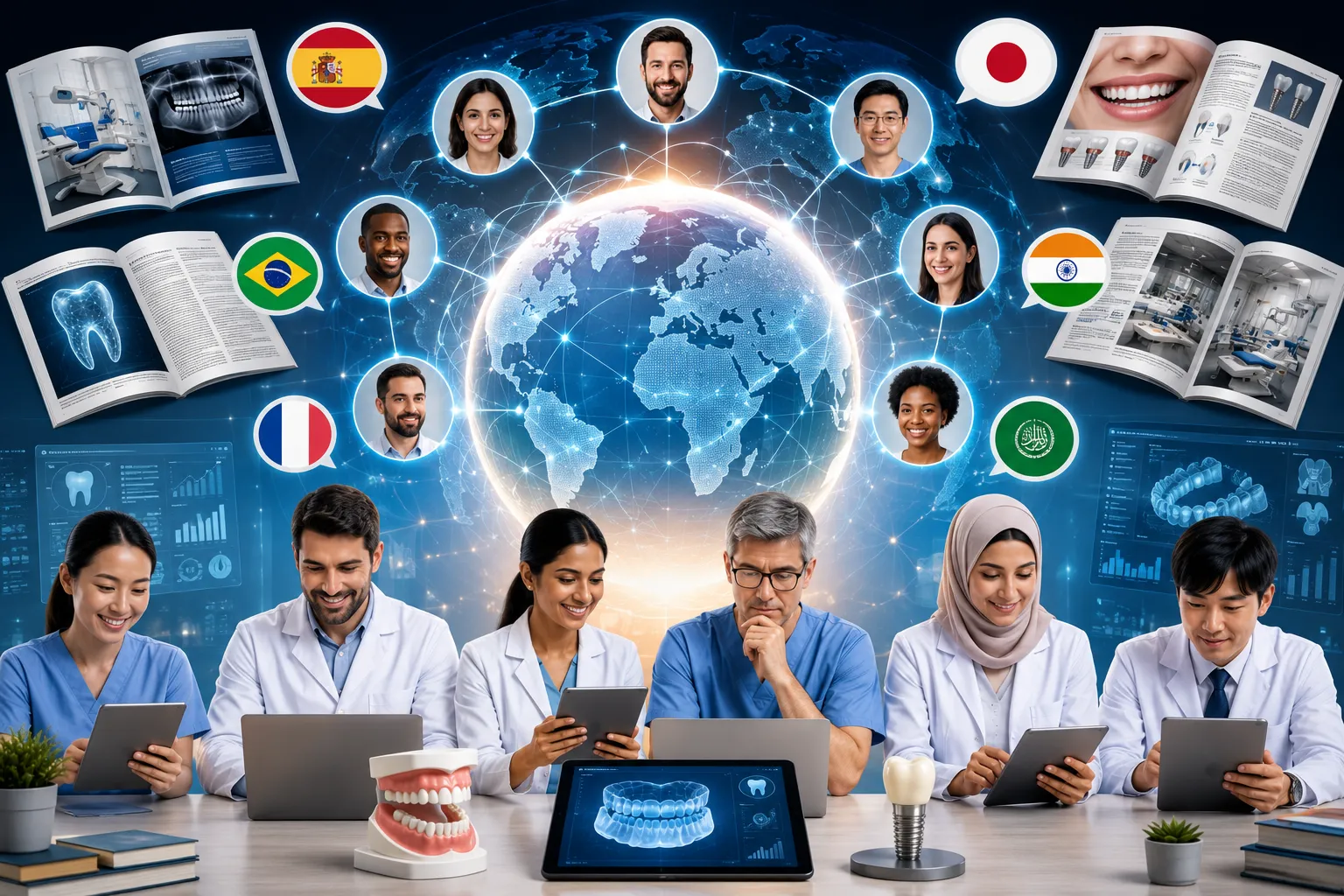
Imagine a dentist in:
- Spain reading implant workflows in Spanish
- Brazil learning AI dentistry in Portuguese
- Japan exploring digital scanners in Japanese
- France studying cosmetic workflows in French
- India reading advanced clinical insights in regional languages
This dramatically improves engagement and educational impact.
The future of dental publishing is not simply global visibility. It is global understanding.
The New Global Dental Reader
The modern dental reader is very different from previous generations.
Today’s dentists are:
- Mobile-first readers
- Search-engine learners
- Video consumers
- Technology researchers
- Social-media connected professionals
Many younger dentists no longer wait for printed journals.
They search online instantly for:
- Best intraoral scanners
- AI diagnostic software
- Implant system comparisons
- Cosmetic dentistry trends
- Digital workflow education
And they increasingly prefer educational platforms that feel:
- Localized
- Easy to understand
- Regionally relevant
- Culturally familiar
The future dental publisher must therefore become: International but locally understandable.
Why AI Will Accelerate Multilingual Dental Publishing
Artificial Intelligence is making multilingual publishing easier than ever before.
Modern AI systems now support:
- Translation workflows
- Voice localization
- Multilingual SEO
- Personalized content delivery
- International search visibility
In the future, AI may allow dental media platforms to instantly adapt articles into:
- Different languages
- Regional dialects
- Country-specific workflows
- Local educational preferences
This means dental publishing companies that adopt multilingual strategies early may gain enormous competitive advantages globally.
Future AI-driven search engines will likely prioritize:
- Accessibility
- Localization
- Language relevance
This creates huge opportunities for multilingual dental platforms.
Why DenTrends.com Should Expand Beyond English
As a future-focused dental media platform, DenTrends.com is naturally positioned for multilingual growth because its content already focuses heavily on:
- Dental technology
- AI dentistry
- Digital workflows
- Product exploration
- Future industry trends
These topics have universal global relevance.
A dentist in:
- Germany
- Brazil
- India
- South Korea
- Mexico
- Saudi Arabia
may all search for the same technology solutions —
but prefer reading in completely different languages.
This creates a major opportunity for DenTrends to evolve into:
A global multilingual dental intelligence platform.
Rather than serving only English-speaking audiences, multilingual publishing could allow DenTrends to become accessible to:
- International dentists
- Dental students
- Implantologists
- Cosmetic dentists
Digital dentistry professionals worldwide
The 10 Most Important Languages for Future Dental Publishing
To become truly global, future dental media platforms should increasingly support major international languages beyond English.
The strongest opportunities in dentistry currently include:
- Spanish
- Portuguese
- French
- German
- Arabic
- Hindi
- Japanese
- Korean
- Chinese
- Russian
These languages collectively represent enormous portions of the global dental market.
For example:
- Spanish expands access across Latin America and Spain
- Portuguese reaches Brazil’s massive dental industry
- Arabic supports growing Middle Eastern dental markets
- Korean and Japanese connect with highly advanced digital dentistry regions
- Hindi supports one of the world’s fastest-growing dental populations
A dental platform available in multiple languages becomes significantly more scalable globally.
Localized Dental Publishing Builds Trust
One of the biggest advantages of multilingual publishing is trust.
Readers naturally feel more connected to platforms that:
- Respect their language
- Understand regional needs
- Provide culturally relevant communication
This becomes especially important in dentistry because clinical education often involves:
- Complex terminology
- Technical workflows
- Scientific interpretation
- Patient communication systems
Localized content improves:
- Readability
- Engagement
- Educational retention
- User loyalty
The future of dental media may depend heavily on how effectively platforms build international trust.
SEO and Multilingual Dentistry
Search engine optimization is becoming one of the biggest reasons multilingual publishing matters.
Millions of dentists search Google daily in their own language for:
- Implant systems
- Dental scanners
- AI software
- Veneers
- Orthodontics
- CBCT imaging
- Practice management software
A multilingual platform can capture global organic traffic far beyond English-speaking markets.
For dental publishing companies, multilingual SEO represents:
- Massive traffic growth
- Global brand visibility
- International authority
- Expanded advertising opportunities
Future dental publishing will likely become deeply connected with:
- AI search optimization
- Semantic localization
Region-specific educational content
The Future Dental Magazine Will Be Global
Traditional dental magazines were often designed around:
- One country
- One language
- One regional audience
But future dental publishing will increasingly become:
- International
- AI-driven
- Search-optimized
- Multilingual
- Digitally connected
The future dental reader may expect:
- Instant translation
- Localized recommendations
- Region-specific content
- Personalized educational feeds
Modern dental media companies must adapt to this shift or risk becoming regionally limited.
DenTrends Thoughts
The future of dentistry is global.
And the future of dental publishing must become global too.
Modern dentists increasingly seek:
- Faster education
- Technology insights
- Product exploration
- AI workflow analysis
- Digital dentistry trends
But they also increasingly prefer learning in the language they understand best.
This is why multilingual dental publishing may become one of the most important transformations in future dental media.
Platforms like DenTrends.com have strong long-term potential because they already align with the areas shaping modern dentistry:
- AI
- Digital workflows
- Technology ecosystems
- Future-focused publishing
Expanding these insights into multiple international languages could position DenTrends as:
A truly global dental intelligence platform for the next generation of dentistry.
Because the future dental magazine will no longer belong to one country or one language alone. It will belong to the entire global dental community.