
Speaker: DenTrends
Session Type: Dental Implants Biological & Mechanical Foundations
Dental Implants Foundations
Dental implants are more than artificial tooth replacements—they are biocompatible systems designed to integrate with living bone and restore function in the maxilla and mandible. This DenTalk session focuses on the biology, mechanics, and long-term advantages that make implants the gold standard in modern dentistry.
What Is a Dental Implant?
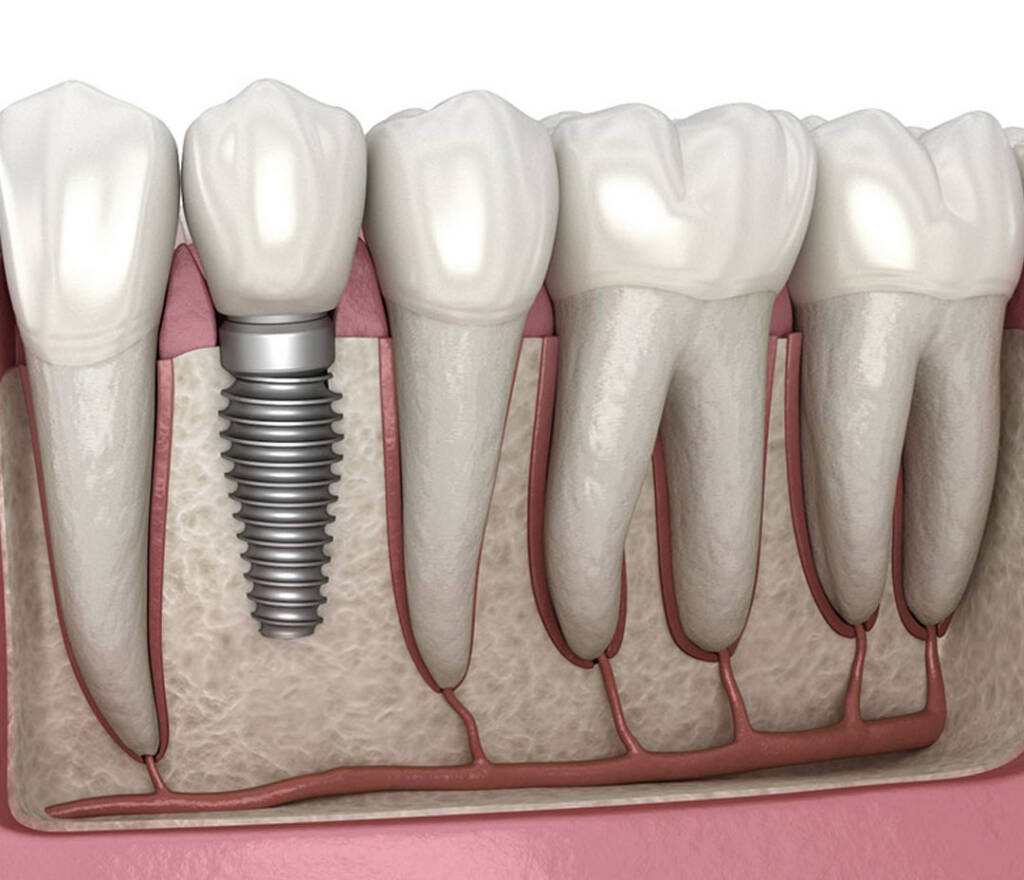
A dental implant is a biocompatible device placed into the jawbone to support a prosthetic tooth or restoration. Unlike removable dentures or bridges, implants are designed to integrate directly with bone tissue, providing stable and long-lasting tooth replacement.
Biological Foundations of Implant Healing
Successful implant integration depends heavily on biology.
Key biological contributors include:
- Blood vessels supplying nutrients and oxygen
- Blood platelets initiating healing and regeneration
- Fibroblasts, which produce connective tissue fibers essential for stability
The implant site rapidly becomes a mineralizing tissue zone, where fiber orientation and cellular activity determine long-term success.
Osteointegration & Bone Remodeling
A core principle of implant dentistry is osteointegration—the chemical and mechanical bonding between bone and implant surface.
Important features:
- Peri-implant bone is rich in blood vessels
- Newly formed cells populate tubule-like spaces between bone fibers
- Controlled bone remodeling stabilizes the implant over time
Minor relative movement can occur during healing, but excessive movement compromises integration and leads to failure.
Chemical & Mechanical Bonding
Implant stability is achieved through:
- Calcium-based chemical bonding between implant surface and bone minerals
- Mechanical interlocking within mineralized bone tissue
This dual bonding mechanism allows implants to mimic the anchorage of natural teeth—without relying on a periodontal ligament.
Health Factors Influencing Implant Success
Long-term implant survival depends on:
- Adequate blood supply
- Absence of infection
- Stable mechanical support
- Healthy surrounding soft tissues
Unlike natural teeth, implants lack a periodontal ligament, meaning their success relies entirely on direct bone contact and tissue health.
Advantages of Dental Implants
Compared to conventional restorations like dentures and bridges, implants offer:
- ✔️ Superior mechanical stability
- ✔️ Better force distribution during chewing
- ✔️ Preservation of jawbone by preventing resorption
- ✔️ Improved comfort and natural feel
- ✔️ Higher long-term patient satisfaction
Functional & Practical Benefits
When properly integrated, implants:
- Improve mastication efficiency
- Tolerate functional stresses
- Reduce risks of loosening or bone failure
- Support durable, natural restorations
DenTalk Conclusion
Dental implants succeed at the intersection of biology and biomechanics. Understanding blood supply, bone remodeling, chemical bonding, and mechanical forces is essential for predictable outcomes. When these principles are respected, implants deliver unmatched stability, function, and longevity—making them the cornerstone of modern restorative dentistry.